Automotive Manufacturing Guide: Production Methods, Assembly Lines, Machinery and Automation
Automotive manufacturing is the industrial process of designing, producing, assembling, and testing vehicles such as cars, trucks, buses, and electric vehicles. It combines mechanical engineering, electronic systems, industrial machinery, material processing, and automated production technologies to transform raw materials and individual components into complete vehicles.
Context
Automotive manufacturing is the industrial process of designing, producing, assembling, and testing vehicles such as cars, trucks, buses, and electric vehicles. It combines mechanical engineering, electronic systems, industrial machinery, material processing, and automated production technologies to transform raw materials and individual components into complete vehicles.
The development of automotive manufacturing began with small-scale vehicle production, where workers assembled most components manually. As demand for motor vehicles increased, manufacturers introduced standardized parts, moving assembly lines, and specialized machinery. These developments changed vehicle production by allowing factories to manufacture larger quantities with more consistent processes.
Modern automotive manufacturing involves several interconnected stages, including metal forming, welding, painting, component installation, engine assembly, electrical integration, and final inspection. Each stage uses specialized equipment and coordinated production methods to maintain manufacturing quality and operational consistency.
Today, automotive factories produce vehicles with different powertrain technologies, including petrol, diesel, hybrid, battery-electric, and hydrogen fuel-cell systems. Manufacturing facilities must therefore support different materials, electronic components, battery technologies, and production requirements.
Importance
Automotive manufacturing plays an important role in transportation, industrial development, employment, and international trade. It supports a large network of industries involved in steel production, rubber processing, electronics, plastics, glass, batteries, and mechanical components.
The industry also affects everyday transportation. Passenger cars, commercial vehicles, agricultural vehicles, and public transportation systems depend on organized manufacturing processes to maintain consistent vehicle performance, safety, and reliability.
Several important challenges make modern automotive manufacturing significant:
Production efficiency: Manufacturers must coordinate machinery, workers, materials, and assembly operations to maintain consistent production.
Vehicle safety: Manufacturing processes must ensure that structural components, braking systems, steering mechanisms, and electronic controls meet applicable safety requirements.
Environmental considerations: Factories are increasingly examining energy consumption, industrial emissions, water usage, and material waste.
Technological development: Electric vehicles, connected systems, and advanced driver assistance technologies require new manufacturing equipment and technical knowledge.
Supply chain management: Automotive production depends on the timely availability of thousands of components from different suppliers.
Automotive manufacturing also influences industrial automation. Robots, computer-controlled machines, digital inspection systems, and production management software help coordinate complex factory operations.
Recent Updates
Automotive manufacturing has experienced considerable technological changes between 2024 and 2026. Electrification, artificial intelligence, industrial robotics, digital production systems, and sustainable manufacturing practices are influencing how factories are designed and operated.
Electric Vehicle Manufacturing
Electric vehicle production has become an important area of automotive industrial development. Unlike conventional vehicles, battery-electric vehicles require high-voltage battery packs, electric motors, power electronics, battery management systems, and specialized electrical testing equipment.
Manufacturers are adapting production facilities to accommodate these components. Battery assembly, cell testing, thermal management integration, and electrical safety inspection are becoming important manufacturing activities.
Hybrid vehicle production also requires coordination between conventional engine components and electric propulsion systems.
Industrial Automation and Robotics
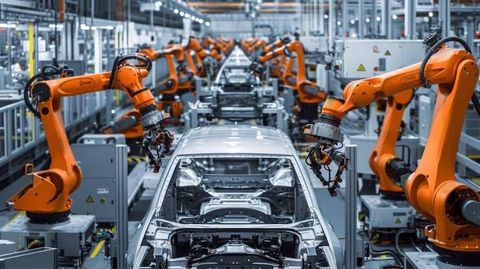
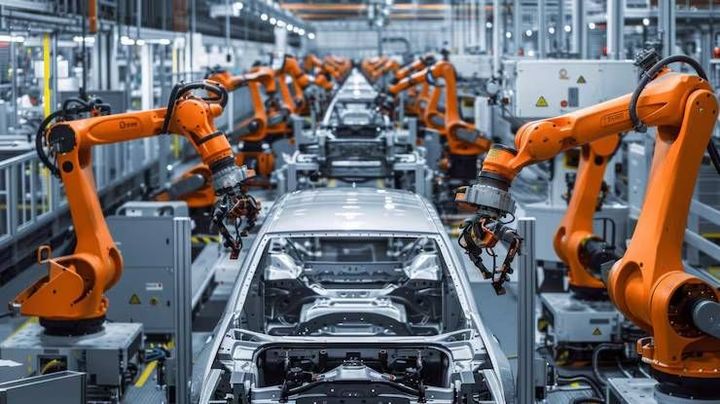
Robotic automation is increasingly used in automotive assembly lines. Industrial robots perform repetitive activities such as welding, painting, material handling, adhesive application, and component positioning.
Modern automation systems can communicate with production equipment and monitor manufacturing operations. Sensors and machine vision technologies help identify positioning errors, component defects, and process variations.
Artificial intelligence is also being explored for predictive maintenance, production planning, quality inspection, and equipment monitoring.
Smart Manufacturing and Digital Production
Smart manufacturing connects factory machinery, software platforms, sensors, and production databases. These systems allow manufacturers to monitor equipment performance and production activities through digital interfaces.
Digital twins are another developing technology. A digital twin is a virtual representation of a physical machine, production line, or manufacturing process. Engineers can use these models to examine production layouts, simulate operations, and identify potential process problems.
Sustainable Automotive Production
Automotive manufacturers are paying greater attention to energy management, material recycling, water consumption, and factory emissions.
Some facilities are introducing renewable electricity, improved ventilation systems, energy monitoring, and material recovery processes. Battery recycling and the reuse of manufacturing materials are also receiving attention as electric vehicle production expands.
Comparison of Automotive Manufacturing Technologies
Technology | Main application | Manufacturing purpose |
|---|---|---|
Industrial robotics | Welding and assembly | Automated operations |
CNC machinery | Component machining | Accurate manufacturing |
Machine vision | Quality inspection | Defect identification |
Digital twins | Production simulation | Process analysis |
AI monitoring | Equipment management | Predictive maintenance |
Battery assembly systems | EV manufacturing | Battery integration |
Automated guided vehicles | Material movement | Factory logistics |
These technologies are not equally suitable for every factory. Their application depends on production volume, vehicle design, equipment requirements, workforce capabilities, and factory infrastructure.
Laws or Policies
Automotive manufacturing in India is influenced by government policies, vehicle safety regulations, environmental requirements, and industrial standards. These rules help establish manufacturing expectations for vehicle producers and component suppliers.
Automotive Safety and Manufacturing Standards
The Ministry of Road Transport and Highways (MoRTH) oversees important vehicle regulations through the Central Motor Vehicles Rules (CMVR).
Vehicle manufacturers must follow applicable technical requirements relating to vehicle construction, safety equipment, lighting, braking, emissions, and other regulated features.
Automotive testing and certification involve designated testing agencies, including the Automotive Research Association of India (ARAI) and other authorized organizations.
Bharat New Car Assessment Programme (Bharat NCAP) provides a framework for assessing the safety performance of passenger vehicles through standardized crash testing.
Vehicle Emission Regulations
India follows Bharat Stage emission standards to regulate pollutants produced by motor vehicles.
Bharat Stage VI requirements apply to regulated vehicle categories, with implementation beginning in 2020. These standards influence engine design, fuel systems, exhaust treatment technologies, and vehicle testing procedures.
Manufacturers must ensure that applicable vehicles meet the relevant emission requirements before they enter the market.
Production Linked Incentive Scheme
The Production Linked Incentive (PLI) Scheme for the Automobile and Auto Component Industry supports domestic manufacturing of advanced automotive technology products.
The scheme has an approved budgetary allocation of ₹25,938 crore and covers advanced technologies, including electric vehicles and related components. It also emphasizes domestic value addition and the development of local manufacturing capabilities.
PM E-DRIVE Scheme
The PM Electric Drive Revolution in Innovative Vehicle Enhancement (PM E-DRIVE) Scheme supports electric mobility in India through various incentives and development measures.
The initiative covers eligible electric vehicle categories and related infrastructure. Its implementation has also involved updates to manufacturing requirements and support for electric vehicle adoption.
These policies influence automotive manufacturing investment, component development, vehicle technology, and production planning. Manufacturers must refer to current government notifications because eligibility conditions and technical requirements can change.
Tools and Resources
Automotive manufacturing uses a combination of industrial machinery, engineering software, testing equipment, and production management platforms. These resources support different stages, from initial vehicle design to final factory inspection.
Automotive Manufacturing Machinery
Several types of machinery are commonly used in vehicle production:
CNC machines: Computer numerical control machines manufacture components through controlled cutting, drilling, milling, and turning operations.
Industrial welding robots: These machines join metal body panels and structural components through programmed welding operations.
Hydraulic presses: Press machines shape metal sheets into doors, panels, roofs, and other vehicle body components.
Painting equipment: Automated spray systems apply protective coatings and vehicle finishes.
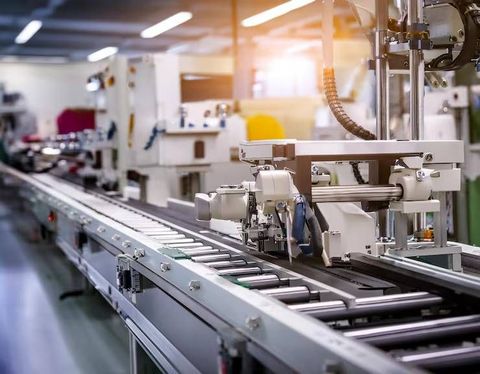
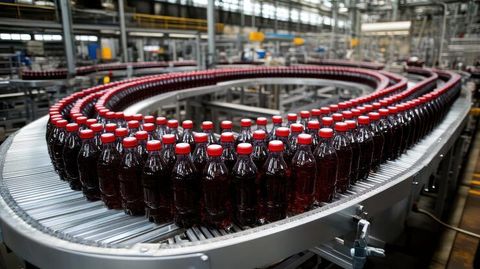
Conveyor systems: These systems move vehicle bodies, components, and assembled units between production stages.
Engine assembly equipment: Specialized machines support engine component installation, fastening, and inspection.
Battery assembly equipment: These systems handle battery module preparation, pack assembly, electrical connections, and testing.
Automotive Engineering Software
Engineering software helps manufacturers design vehicles, develop components, and simulate manufacturing processes.
Some commonly used platforms include:
Siemens NX: Used for mechanical design, product development, and manufacturing engineering.
CATIA: Supports three-dimensional vehicle design, engineering, and digital product development.
Autodesk Inventor: Used for mechanical modeling, component design, and engineering documentation.
AutoCAD: Supports technical drawings, factory layouts, and engineering plans.
PTC Creo: Used for product modeling, mechanical design, and engineering development.
Production and Quality Management Resources
Manufacturers also use digital systems to organize factory operations and maintain production records.
Enterprise Resource Planning (ERP) platforms help coordinate inventory, purchasing, production planning, and manufacturing information. Manufacturing Execution Systems (MES) monitor production activities, machine performance, and operational records.
Quality management software helps document inspection results, identify production defects, and monitor compliance with manufacturing requirements.
Useful information resources include:
Ministry of Heavy Industries: Government information about automotive manufacturing policies and industrial initiatives.
Ministry of Road Transport and Highways: Vehicle regulations, technical requirements, and transportation policies.
Automotive Research Association of India: Automotive testing, engineering standards, and technical information.
International Organization for Standardization (ISO): Information about quality management and environmental management standards, including ISO 9001 and ISO 14001.
FAQs
What Are the Main Stages of Automotive Manufacturing?
The main stages include vehicle design, material preparation, metal stamping, body welding, painting, component assembly, electrical integration, and final quality inspection. Each stage contributes to producing a complete vehicle.
How Do Automotive Assembly Lines Work?
Automotive assembly lines move vehicle bodies or components through a sequence of production stations. Workers, robots, and specialized machinery complete assigned operations at each station before the vehicle moves to the next stage.
What Machinery Is Used in Automotive Manufacturing?
Common automotive manufacturing machinery includes CNC machines, hydraulic presses, industrial welding robots, painting equipment, conveyor systems, engine assembly machines, and automated inspection equipment.
How Is Automation Used in Automotive Production?
Automation uses robots, sensors, programmable controllers, and computer systems to perform or monitor manufacturing activities. Applications include welding, painting, material transportation, component positioning, and quality inspection.
How Is Electric Vehicle Manufacturing Different From Traditional Car Manufacturing?
Electric vehicle manufacturing requires battery packs, electric motors, power electronics, and high-voltage electrical systems. Traditional petrol and diesel vehicle production places greater emphasis on engines, fuel systems, exhaust components, and related mechanical assemblies.
Conclusion
Automotive manufacturing combines engineering, machinery, assembly lines, material processing, and industrial automation to produce modern vehicles. Developments in electric mobility, robotics, artificial intelligence, and smart manufacturing are changing factory operations and production requirements. In India, vehicle manufacturing is also influenced by safety standards, emission regulations, and government initiatives supporting advanced automotive technologies. Understanding these processes provides a clearer picture of how modern vehicles are designed, assembled, tested, and manufactured.