How Do Food Packaging Machines Work? Types, Components & Applications
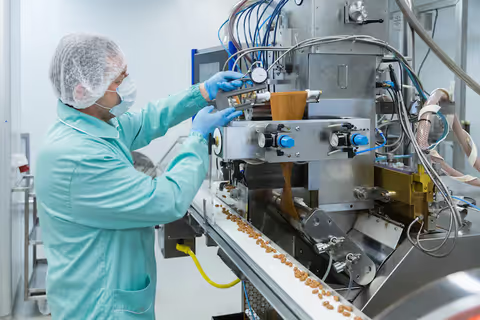
Food packaging machines are equipment systems designed to prepare, fill, seal, wrap, and label food products.
They are widely used in food processing plants, beverage factories, bakeries, dairy facilities, and commercial food production units.
These machines help businesses package products consistently while reducing repetitive manual work. Depending on the product and production requirements, packaging operations may involve individual machines or fully integrated production lines.
Common examples include liquid filling machines, pouch packing machines, vacuum packaging equipment, bottle filling systems, and automatic labeling machines.
Keypoints
Food packaging machines automate filling, sealing, wrapping, labeling, and product handling.
Different machine types support liquids, powders, solids, snacks, and prepared foods.
Sensors, conveyors, filling systems, and control panels coordinate packaging operations.
Product characteristics, production speed, hygiene, and package materials influence equipment selection.
How Do Food Packaging Machines Work?
Food packaging machines operate through a sequence of coordinated steps. The exact process depends on the product, packaging material, machine design, and required production output.
1. Product Feeding
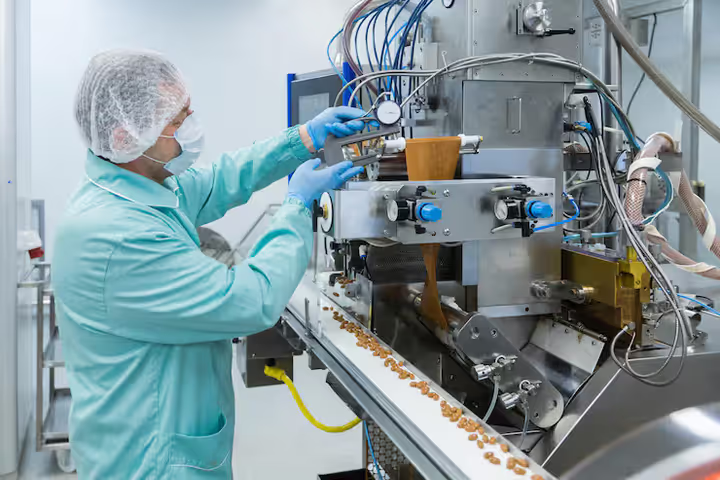
The process begins when food products enter the packaging system. Conveyors, hoppers, feeders, or transfer mechanisms move products towards the packaging area.
Solid products such as biscuits and snacks may use conveyor belts or counting systems. Liquids may be transferred through food-grade pipes and pumps, while powders can move through controlled feeding systems.
2. Measuring and Filling
The machine measures the required quantity of food before placing it into a container or package. Accurate filling helps maintain consistent product quantities.
Different filling technologies are used depending on product characteristics:
Volumetric fillers measure products by volume.
Weighing systems measure products according to weight.
Piston fillers handle many liquid and semi-liquid products.
Auger fillers are commonly used for powders and granular materials.
Flow meters measure liquid quantities during filling.
3. Packaging Formation
Some machines form packages from rolls of flexible packaging film. Others receive pre-made pouches, bottles, jars, trays, or cartons.
For example, a vertical form-fill-seal machine creates a pouch from a film roll, fills it with the product, and seals the package. Tray packaging systems may place food into prepared trays before sealing them with film.
4. Sealing and Closing
After filling, the package is closed to protect its contents. The sealing method depends on the packaging material and food product.
Common methods include heat sealing, induction sealing, vacuum sealing, and mechanical closing. The sealing process must be suitable for the packaging material and intended storage conditions.
5. Inspection and Labeling
Some packaging lines include inspection equipment to check package weight, seal quality, product presence, and other measurable characteristics.
Labels may then be applied with product names, ingredient information, batch details, manufacturing dates, expiry dates, and barcodes. Finished packages are transferred for secondary packaging, storage, or distribution.
Types of Food Packaging Machines
Different food products require different packaging technologies. Machine selection depends on product consistency, package format, production capacity, and storage requirements.
Filling Machines
Filling machines dispense measured quantities of food into bottles, jars, cans, pouches, and other containers.
They are used for products such as milk, juice, cooking oil, sauces, honey, and liquid condiments. Filling systems may operate manually, semi-automatically, or automatically.
Pouch Packing Machines
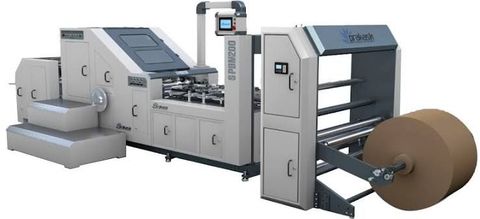
Pouch packing machines fill and seal flexible bags or pouches. Some systems form pouches from packaging film, while others use pre-made bags.
They are commonly used for snacks, spices, grains, powdered foods, sauces, and ready-to-eat products.
Vacuum Packaging Machines
Vacuum packaging machines remove air from a package before sealing it. This can help reduce exposure to oxygen and support the storage of selected food products.
They are used for meat, cheese, seafood, processed foods, and other products requiring controlled packaging conditions. Vacuum packaging does not replace appropriate refrigeration or food safety controls.
Tray Sealing Machines
Tray sealing machines place a sealing film over food containers and close them using heat or other suitable sealing methods.
They are frequently used for fresh produce, prepared meals, meat portions, bakery products, and ready-to-eat foods.
Wrapping Machines
Wrapping machines cover food products with flexible packaging materials. Depending on the design, they may use flow wrapping, shrink wrapping, or stretch film.
These machines are common in bakeries, confectionery production, snack manufacturing, and multipack packaging operations.
Cartoning Machines
Cartoning machines place products into cartons or folding boxes. They may also insert leaflets, arrange multiple products, and close cartons.
They are used for packaged foods, cereals, confectionery, frozen food products, and retail multipacks.
Food Packaging Machine Types at a Glance
| Machine type | Main function | Common applications |
|---|---|---|
| Filling machine | Dispenses measured quantities | Milk, oil, sauces |
| Pouch packing machine | Fills and seals flexible pouches | Snacks, spices, grains |
| Vacuum packaging machine | Removes air before sealing | Meat, cheese, seafood |
| Tray sealing machine | Seals film over trays | Prepared meals, fresh food |
| Wrapping machine | Wraps products in packaging film | Bakery items, confectionery |
| Cartoning machine | Places products into cartons | Cereals, frozen foods |
Main Components of Food Packaging Machines
Although machine designs vary, many packaging systems contain several common components that coordinate product movement and packaging operations.
Conveyor system: Transfers products and packages between different processing stages.
Feeding mechanism: Supplies food products to the filling or packaging section.
Filling unit: Measures and dispenses the required product quantity.
Sealing unit: Closes packages using heat, pressure, vacuum, or another suitable method.
Control panel: Allows operators to configure machine settings and monitor operations.
Sensors: Detect package position, product presence, temperature, and other operating conditions.
Motors and drives: Power conveyors, pumps, feeders, and moving machine parts.
Safety guards: Help protect operators from moving components and other machine hazards.
The design and number of components depend on the packaging format and level of automation.
Applications of Food Packaging Machines
Food packaging equipment is used across several areas of the food industry. Different production environments require specific machine configurations.
Dairy and Beverage Industry
Filling and sealing systems package milk, yogurt, juices, bottled water, and other beverages. Equipment may include liquid fillers, bottle capping machines, carton filling systems, and labeling units.
Bakery and Confectionery
Wrapping and flow packaging machines are used for bread, biscuits, cakes, chocolates, and sweets. These systems help package individual products and multipacks.
Meat and Seafood Processing
Vacuum packaging, tray sealing, and modified atmosphere packaging systems are used for selected meat and seafood products. Packaging methods depend on product characteristics, storage requirements, and food safety procedures.
Snacks and Dry Food Production
Pouch packing and weighing machines package chips, nuts, spices, cereals, pulses, and powdered ingredients. Automated weighing and filling systems help maintain consistent package quantities.
Ready-to-Eat Food Manufacturing
Tray sealing and container filling machines package prepared meals, salads, sauces, and other convenience foods. Some production lines also use automated labeling and inspection systems.
Benefits of Automated Food Packaging
Automated packaging equipment can support production operations in several ways.
Consistent packaging: Controlled filling and sealing processes help maintain uniform package quality.
Higher production capacity: Automated systems can process larger quantities than many manual operations.
Reduced repetitive work: Machines handle routine packaging tasks and product movement.
Improved process control: Sensors and monitoring systems help operators identify process variations.
Better product protection: Suitable packaging methods can protect food from contamination and environmental exposure.
Production traceability: Printing and labeling systems can support batch identification and product tracking.
Actual performance depends on machine configuration, maintenance, product characteristics, and operator practices.
How to Choose the Right Food Packaging Machine
Selecting suitable equipment requires evaluating the food product, packaging format, and production environment.
Identify the product: Consider whether the food is liquid, solid, powdered, granular, frozen, or semi-solid.
Choose packaging material: Check compatibility with pouches, bottles, trays, cartons, films, or other containers.
Determine production capacity: Estimate the required packages per minute or hour.
Check filling accuracy: Review the machine's weighing, measuring, and dispensing capabilities.
Evaluate hygiene requirements: Consider food-contact materials, cleaning access, and sanitation procedures.
Review automation needs: Compare manual, semi-automatic, and fully automatic systems.
Consider maintenance: Check spare-part availability, technical support, operating costs, and cleaning requirements.
Businesses should also evaluate installation space, electrical requirements, operator training, and future production expansion before purchasing equipment.
Frequently Asked Questions
What is the main purpose of food packaging machines?
They automate tasks such as filling, sealing, wrapping, labeling, and transferring food products into suitable packages.
Which machine is used for liquid food packaging?
Liquid filling machines are commonly used for milk, juices, sauces, oils, and other beverages or liquid food products.
What is a form-fill-seal machine?
A form-fill-seal machine forms packaging from film, fills it with a product, and seals it in a coordinated process.
Do food packaging machines require regular maintenance?
Yes. Cleaning, inspection, lubrication where specified, and replacement of worn components help maintain reliable operation and hygienic production.
Conclusion
Food packaging machines support modern food production through automated filling, sealing, wrapping, and labeling processes. Different equipment types serve liquids, solids, powders, snacks, and prepared meals. Understanding machine components, applications, production requirements, and hygiene considerations helps businesses select suitable packaging systems for their operations.