How to Choose an Engagement Ring? Diamond Shapes, Settings & Budget
Choosing an engagement ring starts with understanding priorities.
An engagement ring is traditionally given during a marriage proposal and often worn daily. It can feature a diamond or another gemstone, set in different metals and designs.
The right choice depends on personal style, lifestyle, budget, and preferences. Some people prefer a simple ring with one central diamond, while others choose detailed designs with several stones. Understanding the main options can make it easier to compare rings and select one that suits the wearer.
Popular Diamond Shapes for Engagement Rings
Diamond shape describes the outline of a stone when viewed from above. Different shapes create different appearances and may influence the type of setting that works best.
Round Brilliant
Round brilliant diamonds have a circular outline and a facet arrangement designed to produce strong brilliance and sparkle. They are a classic engagement ring choice and work with many setting styles.
Round diamonds are often more expensive than some other shapes of comparable carat weight. Their popularity, cutting requirements, and demand can influence their price.
Oval
Oval diamonds have an elongated, rounded shape. Their proportions can create the appearance of a larger stone compared with some other shapes of the same carat weight.
They suit solitaire, halo, and side-stone settings. Buyers should also examine the stone for an uneven appearance or a noticeable dark area sometimes called a bow-tie effect.
Princess
Princess-cut diamonds usually have a square outline with pointed corners. Their modern appearance and brilliant faceting make them suitable for contemporary ring designs.
The pointed corners need protection because they can be more vulnerable to chipping if struck.
Emerald
Emerald-cut diamonds have a rectangular shape with step-cut facets. Instead of intense sparkle, they create broad flashes of light and a mirror-like appearance.
Their large, open facets can make inclusions and body color easier to notice. Buyers should examine clarity and color carefully when comparing emerald-cut stones.
Cushion and Pear
Cushion-cut diamonds have a square or rectangular outline with rounded corners, creating a softer appearance. Pear-shaped diamonds combine a rounded end with a pointed tip, giving them a teardrop silhouette.
Both shapes are available in different proportions and facet patterns. Pear-shaped stones need suitable protection around the pointed end.
Common Engagement Ring Settings
A setting holds the center stone in place and contributes to the ring's overall design. It also affects how exposed the diamond is during everyday activities.
Solitaire Setting
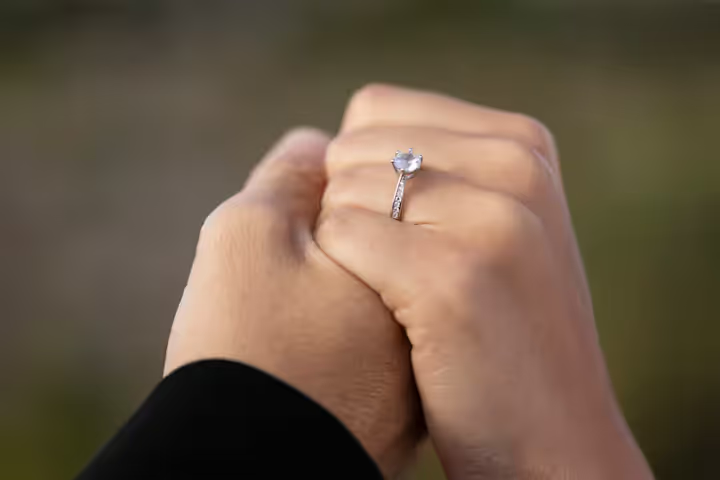
A solitaire setting features one central gemstone, usually held by prongs. Its simple design draws attention to the diamond and works with many shapes.
Prong settings allow more light to reach the stone, but the diamond may be more exposed to accidental knocks.
Halo Setting
A halo setting surrounds the center diamond with smaller gemstones. This creates additional sparkle and can make the center stone appear larger.
Halo rings often have more detailed designs, so cleaning and maintenance may require extra attention.
Bezel Setting
A bezel setting uses a metal rim around the diamond's edge. This design offers additional protection and creates a smooth profile that is less likely to catch on clothing.
It may expose less of the diamond than some prong settings, changing how light reaches the stone.
Three-Stone Setting
A three-stone ring features a central diamond with two smaller stones on either side. The side stones may match the center stone or use different shapes.
This design creates a balanced appearance and offers more visual detail than a traditional solitaire.
Engagement Ring Settings at a Glance
| Setting | Main feature | Consideration |
|---|---|---|
| Solitaire | One central stone | Simple and versatile |
| Halo | Small stones surround the center | More detailed cleaning |
| Bezel | Metal surrounds the stone's edge | Added edge protection |
| Three-stone | Three main gemstones | More stones and design detail |
Understanding Diamond Quality and the 4Cs
The Gemological Institute of America (GIA) uses four factors to describe diamond quality: cut, color, clarity, and carat weight. These factors help buyers compare diamonds, although personal appearance preferences also matter.
Cut: Refers to a diamond's proportions, symmetry, and finish, which influence how it reflects light. A well-cut diamond can appear brighter and more lively.
Color: Measures how much color is visible in a diamond. For many standard colorless diamonds, grading ranges from D, which is colorless, toward Z, which has a noticeable yellow or brown tint.
Clarity: Describes internal characteristics called inclusions and surface features called blemishes. These are graded according to their size, number, position, and visibility.
Carat: Measures a diamond's weight, not its physical dimensions. Two diamonds with the same carat weight can appear different in size because of their shape and proportions.
The importance of each factor depends on the stone and the buyer's priorities. Comparing diamonds in person and reviewing a reliable grading report can help clarify differences.
Engagement Ring Budget and Price Considerations
Engagement ring prices vary according to the center stone, its quality, metal type, craftsmanship, brand, and design. Natural diamonds and lab-grown diamonds can also have substantially different prices.
The following are broad illustrative budget categories in US dollars, not fixed market prices. Actual costs can fall outside these ranges depending on the ring's specifications and where it is purchased.
| Illustrative budget (USD) | Possible purchase category |
|---|---|
| Under $1,000 | Simple designs, smaller stones, or selected alternative gemstones |
| $1,000–$3,000 | Entry-level diamond rings and some lab-grown options |
| $3,000–$5,000 | Wider selection of diamond sizes, settings, and metals |
| $5,000–$10,000 | Higher-priced stones and more elaborate designs |
| Above $10,000 | Premium diamonds, larger stones, and custom designs |
The Knot's 2026 Real Weddings Study reported an average engagement ring expenditure of approximately $4,600 among surveyed couples. This is a US study figure, not a recommended spending target or a price that applies to every market.
A practical budget should also account for ring sizing, taxes, insurance, cleaning, and possible repairs. There is no universal requirement to spend a particular number of months' salary on an engagement ring.
How to Choose the Right Engagement Ring
A few practical checks can help narrow down the options before making a purchase.
Consider personal style: Look at the jewellery the intended wearer already uses to understand preferred shapes, metals, and designs.
Set a spending limit: Decide on a comfortable amount before comparing rings, and include additional ownership costs.
Compare diamond shapes: View several shapes to understand differences in proportions, sparkle, and appearance.
Choose a suitable setting: Consider daily activities and whether a lower-profile or more protective design would be practical.
Check the metal: Common options include yellow gold, white gold, rose gold, and platinum. Compare appearance, durability, and maintenance needs.
Review documentation: Ask for an independent diamond grading report and confirm that its details match the stone being purchased.
If the ring is intended as a surprise, discreetly checking ring size and design preferences can reduce the likelihood of needing major changes later.
Frequently Asked Questions
Which diamond shape is most popular for engagement rings?
Round brilliant remains a widely recognised choice. Oval is another popular option, while emerald, princess, pear, and cushion shapes offer different appearances.
Is a lab-grown diamond suitable for an engagement ring?
Lab-grown diamonds have essentially the same chemical composition and crystal structure as natural diamonds. They are a possible choice for buyers comparing appearance, origin, and budget.
Which engagement ring setting is practical for everyday wear?
Bezel settings offer additional protection around the stone, while lower-profile designs may be less likely to catch on objects. The best option depends on the wearer's activities and preferences.
Does a higher carat diamond always look larger?
No. Carat measures weight, not visible dimensions. Shape, proportions, and how the stone is cut also affect its face-up appearance.
Conclusion
Choosing an engagement ring involves balancing diamond shape, setting, quality, personal style, and budget. Comparing the 4Cs, examining different designs, and checking reliable grading documentation can support a more informed decision. A suitable ring should reflect the wearer's preferences while remaining comfortable and practical for regular use.