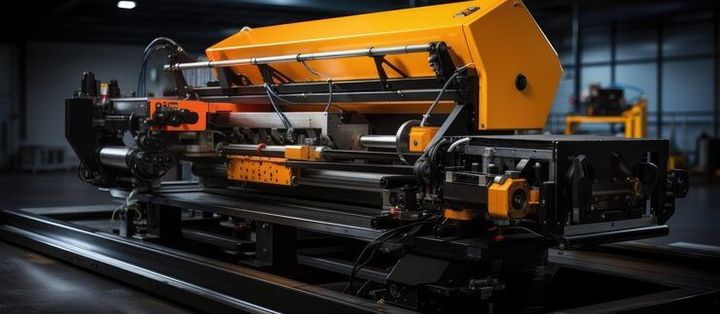
Hydraulic Press Machine Guide 2026: Working Principle and Manufacturing Applications
Hydraulic press machines are among the most important pieces of equipment used in modern manufacturing and industrial production. These machines use hydraulic pressure to generate large amounts of force, allowing manufacturers to shape, compress, mold, and assemble materials with precision.
The concept of hydraulic pressing is based on fluid power technology, which has been widely used across industries for decades. From automotive manufacturing to aerospace engineering, hydraulic press machines support numerous production processes that require consistent force and accuracy.
As manufacturing continues to evolve through automation and digital technologies, hydraulic press systems remain a critical part of industrial infrastructure. Understanding their working principles and applications helps engineers, manufacturers, students, and industry professionals gain insight into modern production methods.
What Is a Hydraulic Press Machine and Why Does It Exist?
A hydraulic press machine is a mechanical device that uses hydraulic fluid pressure to generate force. The machine operates according to Pascal's Law, which states that pressure applied to a confined fluid is transmitted equally throughout the fluid.
The primary purpose of hydraulic press technology is to amplify force efficiently. Instead of relying solely on mechanical leverage, hydraulic systems use fluid pressure to create powerful compression and forming capabilities.
Hydraulic presses exist because many industrial tasks require significant force that would be difficult or inefficient to achieve through manual or conventional mechanical methods.
Common objectives include:
- Metal forming and shaping
- Material compression
- Component assembly
- Plastic molding
- Forging operations
- Sheet metal processing
- Industrial testing procedures
The technology enables manufacturers to produce complex parts with greater precision while maintaining consistent quality standards.
How Hydraulic Press Machines Work
The operation of a hydraulic press is based on a simple but effective principle.
F_2 = F_1 \times \frac{A_2}{A_1}
In a hydraulic system, pressure is applied to a smaller piston. The hydraulic fluid transfers this pressure to a larger piston, generating a significantly greater force.
Main Components
| Component | Function |
|---|---|
| Hydraulic Cylinder | Generates linear force |
| Piston | Transfers pressure into motion |
| Hydraulic Fluid | Carries pressure through the system |
| Pump | Moves hydraulic fluid |
| Reservoir Tank | Stores hydraulic fluid |
| Control Valves | Regulate pressure and flow |
| Frame Structure | Supports machine operations |
Basic Working Process
- The hydraulic pump creates pressure within the fluid.
- The pressurized fluid moves through hydraulic lines.
- Pressure reaches the cylinder.
- The piston moves downward.
- Force is applied to the workpiece.
- The operation is completed.
- The piston returns to its original position.
This process enables hydraulic presses to produce substantial force while maintaining precise control over movement and pressure levels.
Why Hydraulic Press Machines Matter Today
Hydraulic presses continue to play a significant role in modern manufacturing because industries increasingly require precision, efficiency, and scalability.
Several sectors depend heavily on hydraulic press technology:
| Industry | Typical Applications |
| Automotive | Body panels, chassis parts |
| Aerospace | Structural components |
| Electronics | Component assembly |
| Construction | Metal fabrication |
| Medical Equipment | Precision forming |
| Renewable Energy | Turbine and equipment parts |
Benefits for Modern Manufacturing
Hydraulic press systems help solve several production challenges:
- Consistent manufacturing quality
- Reduced material waste
- Improved operational accuracy
- Enhanced production efficiency
- Support for large-scale manufacturing
- Compatibility with automation systems
As industrial automation expands globally, hydraulic presses are increasingly integrated with sensors, programmable controls, and monitoring systems.
Recent Updates and Manufacturing Trends in 2025–2026
The hydraulic press industry has experienced several notable developments during 2025 and early 2026.
Smart Manufacturing Integration
Manufacturers are adopting Industry 4.0 technologies to connect hydraulic press machines with production monitoring systems.
Key developments include:
- Real-time performance tracking
- Predictive maintenance systems
- IoT-enabled sensors
- Digital production analytics
- Remote equipment monitoring
Energy Efficiency Improvements
During 2025, many industrial equipment manufacturers focused on reducing energy consumption through:
- Variable-speed pump technology
- Servo-hydraulic systems
- Advanced pressure controls
- Energy recovery mechanisms
These innovations support sustainability initiatives while improving operational performance.
AI-Assisted Monitoring
Artificial intelligence tools are increasingly being used to analyze machine performance data.
Applications include:
- Predictive maintenance alerts
- Fault detection
- Production optimization
- Equipment health monitoring
Growth in Electric-Hydraulic Hybrid Systems
Several manufacturing facilities introduced hybrid solutions combining hydraulic power with electric control technologies throughout 2025 and 2026.
These systems aim to improve:
- Precision
- Energy management
- Production flexibility
- Operational reliability
Regulations, Standards, and Government Policies
Hydraulic press machines are subject to various industrial safety and operational regulations.
Occupational Safety Requirements
Many countries require manufacturers to comply with workplace safety standards governing:
- Machine guarding
- Emergency stop systems
- Operator protection
- Lockout and tagout procedures
- Equipment maintenance protocols
ISO Standards
Several international standards influence hydraulic press operations.
Common examples include:
| Standard | Purpose |
| ISO 12100 | Machinery safety principles |
| ISO 4413 | Hydraulic fluid power safety |
| ISO 13849 | Machine control system safety |
| ISO 45001 | Occupational health and safety |
Environmental Regulations
Environmental policies increasingly affect hydraulic systems through:
- Hydraulic fluid management
- Waste disposal requirements
- Energy efficiency guidelines
- Industrial emissions reduction programs
Government Manufacturing Initiatives
Many countries continue supporting advanced manufacturing through:
- Smart factory programs
- Industrial modernization initiatives
- Automation adoption incentives
- Sustainable manufacturing frameworks
These programs encourage the implementation of modern hydraulic equipment and digital manufacturing technologies.
Useful Tools and Resources
Professionals working with hydraulic press systems often use various tools and resources to improve design, maintenance, and performance analysis.
Engineering Software
- AutoCAD
- SolidWorks
- CATIA
- Fusion 360
- Siemens NX
Hydraulic Design Platforms
- Automation Studio
- FluidSIM
- Simcenter
- MATLAB Simulink
Monitoring and Analytics Tools
- SCADA Systems
- PLC Programming Software
- Industrial IoT Dashboards
- Predictive Maintenance Platforms
Learning Resources
- Engineering reference manuals
- Manufacturing research publications
- Technical training platforms
- Industrial standards documentation
Common Calculators
| Calculator Type | Purpose |
| Force Calculator | Determine press force |
| Pressure Calculator | Calculate hydraulic pressure |
| Cylinder Sizing Tool | Select appropriate cylinders |
| Flow Rate Calculator | Analyze hydraulic flow |
| Energy Consumption Calculator | Evaluate efficiency |
Manufacturing Applications of Hydraulic Press Machines
Hydraulic presses support a wide range of manufacturing operations.
Metal Forming
Hydraulic presses are widely used for:
- Deep drawing
- Stamping
- Punching
- Bending
- Coining
Forging Operations
High-force hydraulic systems help shape metal components under controlled conditions.
Applications include:
- Automotive parts
- Aerospace structures
- Heavy machinery components
Composite Material Processing
Hydraulic presses are frequently used in:
- Carbon fiber production
- Composite panel manufacturing
- Advanced material shaping
Plastic and Rubber Processing
Industries use hydraulic presses for:
- Compression molding
- Transfer molding
- Rubber component manufacturing
Assembly Operations
Many factories rely on hydraulic presses for:
- Bearing installation
- Component fitting
- Precision assembly tasks
Frequently Asked Questions
What is the main purpose of a hydraulic press machine?
A hydraulic press generates controlled force using hydraulic fluid pressure to perform industrial tasks such as forming, shaping, compressing, and assembling materials.
Which industries use hydraulic press machines the most?
Automotive, aerospace, electronics, construction, energy, and heavy manufacturing industries are among the largest users of hydraulic press technology.
Are hydraulic presses compatible with automation systems?
Yes. Modern hydraulic presses can integrate with PLC controllers, sensors, industrial IoT platforms, and automated production systems.
What maintenance is typically required?
Regular maintenance includes hydraulic fluid inspection, seal replacement, pressure monitoring, lubrication, filter checks, and system diagnostics.
What factors affect hydraulic press performance?
Performance depends on hydraulic pressure, cylinder size, fluid quality, system efficiency, machine design, and maintenance practices.
Conclusion
Hydraulic press machines remain essential to modern manufacturing because they provide reliable force generation, operational precision, and production flexibility. Their working principle, based on hydraulic pressure transfer, continues to support industries ranging from automotive production to advanced aerospace engineering.