A hydraulic pump is a mechanical device that converts mechanical energy into hydraulic energy. It moves hydraulic fluid through a system to create pressure and flow that power machines and equipment. Hydraulic pumps are fundamental components in fluid power technology, enabling controlled movement, lifting, and force generation.
Hydraulic systems are widely used in industrial machinery, construction equipment, agricultural machines, aircraft systems, and manufacturing automation. The pump acts as the starting point of the hydraulic circuit, pushing fluid from a reservoir into pipes and valves.
The concept of hydraulic power is based on Pascal’s principle, which states that pressure applied to a confined fluid is transmitted equally in all directions. This principle allows machines to multiply force efficiently using pressurized fluid.
Modern hydraulic systems generally include several key components:
-
Hydraulic pump
-
Hydraulic reservoir
-
Control valves
-
Hydraulic cylinders or motors
-
Filters and cooling systems
Hydraulic pumps are typically categorized into three major types:
-
Gear pumps
-
Vane pumps
-
Piston pumps
Each design supports different pressure levels, efficiency ranges, and industrial applications.
Hydraulic pumps are commonly used in equipment manufactured by companies such as Caterpillar, Bosch Rexroth, and Parker Hannifin.
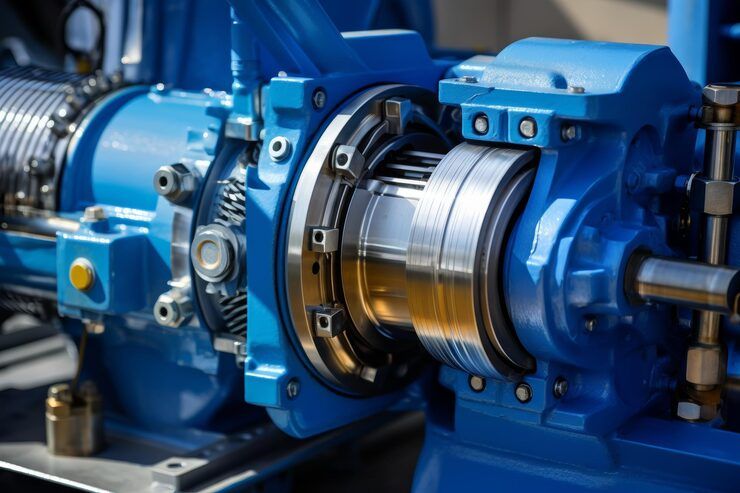
Importance
Hydraulic pumps play a critical role in modern engineering and industrial automation. Their ability to generate high power in compact systems makes them essential in many sectors.
Industrial Manufacturing
Hydraulic systems power presses, injection molding machines, and automated assembly equipment. High-pressure hydraulic pumps allow these machines to apply precise force.
Construction Equipment
Heavy machinery such as excavators, cranes, and loaders rely on hydraulic pumps to operate lifting arms, buckets, and steering systems.
Agricultural Machinery
Hydraulic pumps control implements in tractors and harvesting equipment. These systems enable efficient operation of plows, seeders, and hydraulic lifts.
Transportation and Aerospace
Hydraulic technology is used in aircraft landing gear systems, braking systems, and control surfaces. The reliability of hydraulic pressure pumps is essential in aviation safety.
Energy Efficiency
Modern hydraulic pump efficiency improvements reduce energy loss and support sustainable industrial operations.
Industries benefit from hydraulic systems because they:
-
Generate high force with compact equipment
-
Provide precise motion control
-
Enable automation in manufacturing
-
Improve productivity in heavy machinery
High CPC keywords such as “industrial hydraulic systems,” “hydraulic pump efficiency,” and “fluid power technology” highlight the importance of this technology in engineering and industrial sectors.
Types of Hydraulic Pumps
Gear Pumps
Gear pumps use interlocking gears to move hydraulic fluid. They are commonly used in simple hydraulic circuits due to their durability and straightforward design.
Characteristics include:
-
Consistent flow rate
-
Compact construction
-
Suitable for medium pressure systems
Vane Pumps
Vane pumps use rotating vanes inside a cavity to move fluid. These pumps are often used where smoother flow and reduced noise are required.
Common features:
-
Moderate pressure capability
-
Smooth fluid delivery
-
Efficient operation in industrial equipment
Piston Pumps
Piston pumps are designed for high-pressure hydraulic systems. They use reciprocating pistons inside cylinders to move hydraulic fluid.
Key characteristics include:
-
High pressure capability
-
Adjustable flow rates
-
High efficiency in industrial automation systems
Hydraulic Pump Comparison Table
| Pump Type | Pressure Range | Efficiency | Typical Application |
|---|---|---|---|
| Gear Pump | Low–Medium | Moderate | Agricultural machinery |
| Vane Pump | Medium | High | Industrial equipment |
| Piston Pump | High | Very High | Construction and aerospace systems |
Basic Hydraulic System Flow
The operation of a hydraulic pump within a system typically follows this sequence:
-
Mechanical energy from an electric motor or engine drives the pump.
-
The pump draws hydraulic fluid from a reservoir.
-
Pressurized fluid moves through hydraulic lines.
-
Valves regulate pressure and direction.
-
Cylinders or motors convert fluid energy into mechanical movement.
This cycle enables machines to perform lifting, pressing, or rotating actions.
Recent Updates
In the past year, hydraulic technology has experienced several developments related to efficiency, automation, and sustainability.
Energy-Efficient Hydraulic Pumps (2025)
Manufacturers introduced improved variable displacement pumps that adjust flow according to system demand, reducing energy consumption.
Digital Hydraulic Monitoring (Late 2025)
Sensors and IoT monitoring systems are increasingly integrated into hydraulic equipment to track pressure, temperature, and fluid conditions.
Electro-Hydraulic Integration (2026)
Hybrid systems combining electric actuators and hydraulic power have become more common in industrial automation.
Sustainability Initiatives
Hydraulic equipment manufacturers have explored biodegradable hydraulic fluids and energy-efficient designs to reduce environmental impact.
Companies such as Bosch Rexroth and Parker Hannifin continue developing digital hydraulic solutions for smart factories.
Laws or Policies
Hydraulic systems are influenced by safety regulations and environmental standards.
Industrial Safety Standards
Organizations such as Occupational Safety and Health Administration establish guidelines for safe machinery operation and hydraulic system maintenance.
These regulations address:
-
Pressure limits
-
Equipment inspection procedures
-
Worker safety training
Environmental Regulations
Hydraulic systems must comply with environmental protection rules related to fluid disposal and leak prevention.
In many regions, industrial facilities follow environmental policies guided by agencies like the Environmental Protection Agency.
Equipment Certification
International engineering standards such as ISO certifications define requirements for hydraulic component safety, durability, and performance.
Regulations help ensure:
-
Worker safety
-
Environmental protection
-
Equipment reliability
Tools and Resources
Several digital tools and educational resources help engineers and technicians understand hydraulic systems.
Engineering Calculation Tools
Hydraulic calculators assist in determining:
-
Flow rate
-
Pressure levels
-
Pump displacement
-
Power requirements
Simulation Software
Hydraulic simulation platforms allow engineers to test system designs before building physical equipment.
Training Platforms
Technical training materials explain fluid power principles and hydraulic troubleshooting techniques.
Technical Standards Databases
Professional organizations provide engineering documentation related to hydraulic equipment safety and design.
Maintenance Monitoring Systems
Modern hydraulic systems use digital sensors that track:
-
Fluid temperature
-
Pressure fluctuations
-
Pump efficiency
-
Maintenance intervals
These resources support efficient system design and operational reliability.
Key Hydraulic System Components
| Component | Function |
|---|---|
| Hydraulic Pump | Converts mechanical energy into hydraulic energy |
| Reservoir | Stores hydraulic fluid |
| Control Valve | Regulates pressure and direction |
| Hydraulic Cylinder | Converts fluid pressure into linear motion |
| Hydraulic Motor | Converts hydraulic energy into rotational motion |
Understanding how these components interact helps explain the overall functionality of hydraulic machinery.
FAQs
What does a hydraulic pump do?
A hydraulic pump converts mechanical energy into hydraulic energy by moving fluid through a system to generate pressure and flow.
Where are hydraulic pumps commonly used?
They are widely used in construction equipment, industrial manufacturing machines, agricultural machinery, and aircraft systems.
What is the difference between gear, vane, and piston pumps?
Gear pumps are simpler and used in moderate-pressure systems, vane pumps provide smoother flow, and piston pumps are designed for high-pressure industrial applications.
Why is hydraulic pump efficiency important?
Higher efficiency reduces energy loss, improves machine performance, and supports sustainable industrial operations.
What role does hydraulic fluid play in the system?
Hydraulic fluid transfers power, lubricates components, removes heat, and protects internal parts from wear.
Conclusion
Hydraulic pumps are essential components of modern fluid power systems. They enable machines to perform heavy lifting, precise motion control, and high-force operations across industries such as manufacturing, construction, agriculture, and aerospace.
Recent developments highlight improvements in energy efficiency, digital monitoring technologies, and electro-hydraulic integration. Safety regulations and environmental policies continue to guide hydraulic system design and operation.
Understanding hydraulic pump types, system components, and technological advancements helps provide a clearer perspective on how fluid power systems support industrial productivity. As engineering innovation progresses, hydraulic systems will remain a key technology in modern industrial infrastructure.