Industrial Artificial Intelligence Applications: Explore Basics, Uses, and Key Functions
Industrial Artificial Intelligence Applications refer to the use of artificial intelligence (AI), machine learning, computer vision, data analytics, and related technologies in manufacturing, energy, logistics, process industries, and other industrial environments.
These applications use data from machines, sensors, production systems, and business processes to identify patterns, support decisions, automate selected activities, and monitor equipment.
Industrial AI developed from the broader growth of industrial automation and computerized control systems. Earlier automation mainly followed predefined instructions. Modern AI systems can analyze large amounts of operational data and identify relationships that may be difficult to detect through fixed rules alone.
How Industrial AI Developed
Industrial environments have generated digital data for decades through programmable logic controllers, supervisory control systems, enterprise software, sensors, and measurement equipment. As computing capacity and data-processing methods developed, this information became increasingly useful for advanced analysis.
Machine learning introduced another approach by allowing computer systems to identify patterns from historical data. More recent developments in neural networks, computer vision, natural language processing, and generative AI have expanded the range of Industrial Artificial Intelligence Applications.
How Industrial AI Works
An industrial AI system normally follows several connected stages. Data is collected from equipment, sensors, cameras, production records, or other digital systems. The information is then prepared and analyzed by an AI model or analytical system.
The resulting output may identify an unusual machine condition, classify an image, estimate production variables, forecast demand, or help an operator understand a process. Human oversight remains important, particularly when AI outputs can affect safety, production continuity, or regulated activities.
A simplified industrial AI workflow can be described as:
Data collection → Data preparation → AI analysis → Result interpretation → Human or automated response → Monitoring
Importance
Industrial Artificial Intelligence Applications matter because industrial operations involve many variables that can change continuously. Temperature, pressure, vibration, electrical current, material quality, production speed, and environmental conditions can all influence equipment and processes.
AI can analyze these variables together and identify patterns within large datasets. Its role is generally to assist existing industrial systems rather than replace every conventional control or engineering method.
Common Industrial AI Applications
Industrial AI is used across different areas depending on the available data and operational requirements. Common applications include:
- Predictive maintenance based on equipment condition data
- Machine vision for inspection and defect classification
- Production forecasting and planning
- Process optimization
- Energy consumption analysis
- Anomaly detection
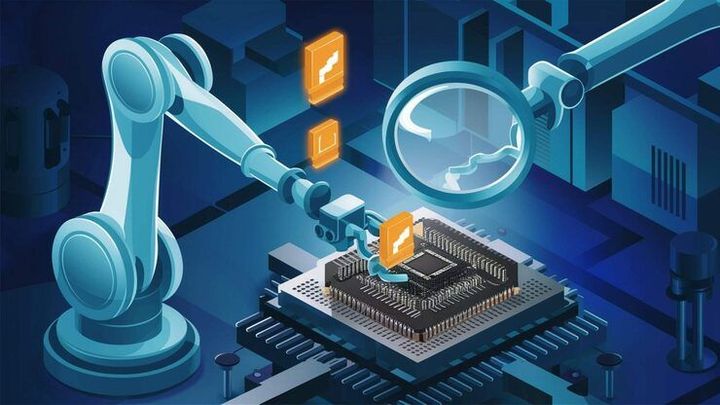
- Robotics and autonomous equipment
- Supply chain and inventory analysis
- Quality monitoring
- Workplace and equipment safety monitoring
- Digital twins and simulation
- Industrial knowledge management
Predictive Maintenance
Predictive maintenance uses equipment data to identify patterns associated with changing operating conditions. Vibration, temperature, pressure, acoustic signals, motor current, and other measurements can be analyzed to detect unusual behavior.
The purpose is to provide information about equipment condition so maintenance decisions can be based on measured operating information. AI analysis can complement traditional inspection methods, scheduled maintenance, and engineering judgment.
Computer Vision
Computer vision is another important area of Industrial Artificial Intelligence Applications. Cameras can capture images of products, components, surfaces, packages, or production areas, while AI models analyze those images.
Depending on the application, computer vision can identify dimensions, surface irregularities, missing components, incorrect positioning, labels, or other visible characteristics. Lighting, camera position, image quality, and model training all influence the results.
Process Optimization
Industrial processes often involve several variables that interact with each other. AI models can analyze historical process information and identify relationships between operating conditions and measured results.
For example, an analytical system may examine temperature, pressure, flow rate, and production output together. The resulting information can help engineers understand process behavior and evaluate operating conditions.
| Application area | Typical data | AI function | Possible output |
|---|---|---|---|
| Predictive maintenance | Vibration, temperature, current | Pattern detection | Equipment condition indicator |
| Machine vision | Camera images | Classification or detection | Inspection result |
| Energy analysis | Power and process data | Pattern analysis | Consumption patterns |
| Process monitoring | Pressure, flow, temperature | Anomaly detection | Operating condition alert |
| Production planning | Production and demand records | Forecasting | Planning estimate |
| Robotics | Position and sensor data | Perception and decision logic | Movement information |
Challenges and Limitations
Industrial AI also introduces practical challenges. Data may be incomplete, inconsistent, poorly labeled, or collected from equipment using different formats. An AI model trained on one operating environment may not behave in the same way when conditions change.
Other considerations include cybersecurity, model validation, data governance, system integration, explainability, and human oversight. Safety-related applications require particularly careful testing because an incorrect output can have physical consequences.
Recent Updates
Current Industrial Artificial Intelligence Applications increasingly combine AI with edge computing, industrial Internet of Things systems, digital twins, advanced robotics, and cloud-based analytics. The general direction is toward systems that can analyze operational information closer to where it is generated while also connecting selected information to larger analytical platforms.
Edge AI and Real-Time Analysis
Edge AI places some data processing near machines, cameras, sensors, or controllers rather than sending every piece of information to a distant computing platform. This approach can reduce the amount of data that needs to travel across a network and can support applications where rapid analysis is important.
Edge computing is particularly relevant to machine vision, equipment monitoring, robotics, and industrial safety systems. The appropriate architecture depends on processing requirements, network design, cybersecurity controls, and the consequences of delayed or incorrect results.
Generative AI in Industrial Environments
Generative AI is becoming part of discussions around industrial documentation, technical knowledge, maintenance records, engineering analysis, and operator assistance. It can process natural-language information and help organize large collections of technical documents.
However, generated information can contain errors or incomplete interpretations. Industrial applications therefore require controlled data access, validation, appropriate human review, and clear boundaries around what an AI system is permitted to do.
Digital Twins
Digital twins combine models, operational data, and simulation techniques to represent physical equipment or processes digitally. AI can be incorporated into these systems to analyze historical behavior, identify patterns, or estimate how changes in operating conditions may affect a process.
The quality of a digital twin depends on the quality of its underlying data and models. It should not automatically be treated as an exact representation of every physical condition.
Industrial Robotics
AI is also being integrated into robotic systems for perception, object recognition, path planning, and adaptive movement. Computer vision can help robots identify objects or changes in their working environment.
These systems require appropriate safety controls because industrial robots operate around machinery, materials, and people. AI capabilities do not replace physical safeguards, risk assessment, or established machine-safety practices.
Laws or Policies
Industrial Artificial Intelligence Applications in India are influenced by several areas of law and technical policy rather than by one single AI-specific industrial rule. Requirements can depend on the sector, type of data, equipment, workplace, and consequences of the AI system's use.
Data Protection and Digital Systems
India's Digital Personal Data Protection Act, 2023 establishes a framework for processing digital personal data. This can become relevant when industrial AI systems process information that relates to identifiable individuals, such as workforce records or certain workplace monitoring data.
The Information Technology Act, 2000 and related rules also form part of India's broader digital regulatory environment. Organizations using AI systems need to consider applicable requirements based on the data and technology involved.
Industrial and Workplace Requirements
Industrial facilities may also need to comply with applicable workplace safety, electrical safety, environmental, and machinery requirements. Relevant authorities can include the Ministry of Labour and Employment, Bureau of Indian Standards, Central Pollution Control Board, State Pollution Control Boards, and sector-specific regulators.
For AI used in safety-related or regulated processes, technical validation and human oversight are particularly important. Applicable requirements vary according to the industrial activity and equipment involved.
AI Governance
India has also developed national initiatives concerning responsible AI development and digital technology. The IndiaAI programme is part of the country's broader effort to develop AI capabilities and responsible AI practices.
International frameworks such as the NIST AI Risk Management Framework and ISO/IEC standards for AI management can also provide useful reference points for organizations developing governance processes.
Tools and Resources
Industrial AI projects generally require a combination of data infrastructure, analytical software, measurement equipment, and documentation. The appropriate tools depend on the application and the type of industrial data being analyzed.
Data and AI Tools
Common technical resources include:
- Industrial IoT platforms for collecting equipment information
- Machine learning environments for model development
- Computer vision libraries for image analysis
- Time-series databases for sensor information
- Data visualization platforms for operational monitoring
- Edge computing hardware for local processing
- Simulation platforms for process and equipment models
- Version-control systems for managing analytical code
- Model monitoring tools for tracking AI behavior
Reference Resources
Organizations studying Industrial Artificial Intelligence Applications can consult resources from:
- Bureau of Indian Standards
- Ministry of Electronics and Information Technology
- IndiaAI
- National Institute of Standards and Technology
- International Organization for Standardization
- International Electrotechnical Commission
- Central Pollution Control Board
- National Physical Laboratory, India
Technical documentation should also describe data sources, model versions, training methods, validation procedures, system interfaces, and known limitations.
Evaluating an Industrial AI System
A structured evaluation can examine several factors:
- Data quality and completeness
- Model accuracy and validation
- Response time
- Cybersecurity
- System integration
- Human oversight
- Explainability
- Environmental operating conditions
- Failure handling
- Record keeping and traceability
These factors help distinguish an experimental AI application from a system intended for sustained industrial operation.
FAQs
What are Industrial Artificial Intelligence Applications?
Industrial Artificial Intelligence Applications use AI and machine learning to analyze industrial data and support activities such as predictive maintenance, machine vision, process monitoring, production planning, energy analysis, and robotics.
How is AI used in industrial manufacturing?
AI can analyze sensor readings, production records, images, and machine data. Common uses include equipment condition monitoring, visual inspection, anomaly detection, production analysis, process optimization, and robotic perception.
What are the main benefits of Industrial Artificial Intelligence Applications?
Industrial Artificial Intelligence Applications can help organizations analyze large datasets, identify patterns, monitor equipment conditions, classify images, and support operational decisions. Their usefulness depends on data quality, system design, validation, and the specific industrial context.
What challenges affect Industrial Artificial Intelligence Applications?
Important challenges include poor data quality, cybersecurity risks, model errors, changing operating conditions, system integration, limited explainability, and the need for human oversight. Safety-related applications require additional controls and validation.
Is Industrial AI the same as industrial automation?
Industrial AI and industrial automation are related but different. Traditional automation generally follows predefined logic, while AI systems can analyze data and identify patterns that support adaptive analysis or decision-making. Many modern industrial systems combine conventional automation with AI-based analysis.
Conclusion
Industrial Artificial Intelligence Applications combine AI, machine learning, computer vision, industrial data, and automation technologies to analyze processes and support industrial decisions. Common applications include predictive maintenance, visual inspection, process analysis, energy monitoring, robotics, and production planning. Current developments are increasingly connecting AI with edge computing, digital twins, generative AI, and industrial data platforms. Effective use depends on data quality, validation, cybersecurity, system integration, human oversight, and applicable legal and technical requirements.