Grinding Technology: Accurate Material Removal & Metalworking Guide
Grinding technology plays a crucial role in the metalworking industry by ensuring precision, efficiency, and quality in material removal processes.
It involves the application of abrasives to shape or finish a workpiece through the removal of surface layers. Understanding the principles of grinding, its various techniques, and its applications enhances the effectiveness of metalworking operations.
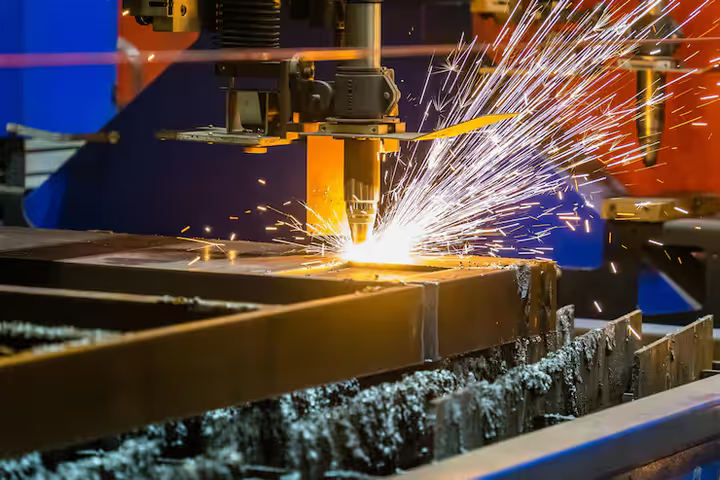
Grinding is a machining process that uses an abrasive tool, often a rotating wheel, to remove fine chips from a workpiece. The primary purpose of grinding is to achieve a high degree of accuracy and a fine finish on components that have already been roughed out in other machining processes. Due to its capability to remove only a small amount of material at a time, grinding is ideal for finishing operations where precision is paramount.
The basic principle of grinding involves the abrasive particles on the surface of the rotating wheel acting against the workpiece. As the wheel rotates, these particles cut into the material to create a smoother surface. The wheel composition, including the type and size of the abrasive grains and the bond that holds them, significantly influences the grinding process.
There are several types of grinding processes, including surface grinding, cylindrical grinding, centerless grinding, and internal grinding, each suited to different shapes and sizes of workpieces. Surface grinding is typically used to produce flat surfaces with a high degree of parallelism and perpendicularity. Cylindrical grinding, on the other hand, is used to produce precision cylindrical surfaces. Centerless grinding allows for the machining of small, delicate cylindrical parts in large quantities. Internal grinding achieves precise geometries within a workpiece and is often applied to create dimensions not achievable via simpler methods.
Selecting the appropriate grinding wheel is crucial for the success of a grinding operation. Key factors to consider include the type of material, the desired finish, and the grinding speed. Grinding wheels are composed of abrasive grains, which perform the cutting, and bonding materials that hold the grains together. The hardness of the abrasive should ideally match the hardness of the workpiece material to avoid rapid wear of the beads and maintain grinding efficiency.
Moreover, the force applied during the grinding process significantly impacts the quality of the finish and the rate of material removal. Proper force application ensures effective energy transmission between the grinding wheel and the workpiece. Excessive force can lead to thermal damage or surface deformation, while insufficient force may cause rubbing rather than cutting.
Grinding technology is also impacted by advancements in machine design and control systems. Modern grinding machines offer improved accuracy through CNC (computer numerical control) and adaptive control technology, which can automatically adjust various machine parameters during the operation to optimize performance. These machines allow for complex geometries and tight tolerances that would be challenging to achieve manually.
Another key aspect of grinding technology is the coolant used in the process. Coolants serve multiple purposes; they help reduce friction, dissipate heat generated during grinding, and flush away debris from the grinding area. Cutting fluids must be selected carefully as improper use can lead to workpiece damage, reduced tool life, and unsafe working conditions. It is paramount to strike a balance between cooling, lubrication, and cleaning for maintaining optimal grinding conditions.
Routine maintenance and wheel conditioning are also crucial components of grinding technology. Wheel conditioning, including dressing and truing, restores the sharpness of grinding wheels and maintains their profile. Regular maintenance of grinding equipment ensures longevity and reliability, and it contributes to consistent performance.
Common challenges faced in grinding operations include managing heat generation, preventing workpiece burn, achieving desired surface finishes, and addressing wheel wear. Mastering these challenges involves understanding the interplay between speed, feed rate, cooling method, wheel selection, and machine dynamics.
The use of automated systems in grinding has significantly increased efficiency by reducing setup times and minimizing human error. Automated grinding systems allow for continuous operation and seamless integration into production lines, further optimizing material removal processes.
The future of grinding technology in metalworking looks promising with ongoing research into new grinding materials, improved machine tool designs, and smarter, more efficient cooling systems. Innovations such as superabrasive materials and high-speed grinding hold the potential to transform traditional grinding operations, leading to better surface finishes, reduced operational costs, and shorter cycle times.
In conclusion, a comprehensive understanding of grinding technology greatly benefits metalworking operations, enhancing both precision and productivity. Selecting the right grinding method and grinding wheel while incorporating advanced technology ensures efficient material removal and high-quality results. As technological innovations continue to develop, grinding remains an indispensable part of modern metalworking, continually adapting and evolving to meet industry demands.