Industrial Control Systems Design Insights: Improving Automation, Reliability, and Operational Efficiency
Industrial Control Systems Design is the process of planning, developing, and organizing automated systems that monitor and control industrial equipment and production processes. These systems are widely used in manufacturing, energy generation, water treatment, transportation, mining, and many other industries.
By combining hardware, software, communication networks, and control logic, industrial control systems help equipment operate according to predefined instructions.
The development of Industrial Control Systems Design has followed the growth of industrial automation. Early factories relied mainly on manual operation, while modern facilities increasingly use programmable controllers, sensors, and digital communication. Understanding how these systems are designed helps explain how industries manage complex processes while maintaining consistent operation and safety.
Context
What Is Industrial Control Systems Design?
Industrial Control Systems Design refers to creating the overall structure of automated control systems used in industrial environments. The design process includes selecting equipment, defining communication methods, planning control logic, arranging system architecture, and establishing monitoring functions.
Rather than focusing on a single machine, Industrial Control Systems Design considers how multiple devices work together to achieve reliable operation throughout an industrial facility.
How Industrial Control Systems Evolved
Industrial automation has progressed through several stages. Mechanical controls were gradually supplemented by electrical systems, followed by programmable logic controllers (PLCs), distributed control systems (DCS), supervisory control and data acquisition (SCADA), and industrial networking technologies.
Modern Industrial Control Systems Design combines these technologies into integrated platforms that exchange information continuously across production areas.
Main Components
Several elements form the foundation of Industrial Control Systems Design:
- Sensors that measure temperature, pressure, flow, level, and position.
- Programmable Logic Controllers (PLCs) that execute control instructions.
- Human-Machine Interfaces (HMIs) that display operational information.
- Distributed Control Systems (DCS) used in large industrial plants.
- SCADA platforms that monitor equipment across wide geographic areas.
- Industrial communication networks connecting multiple devices.
- Actuators that control valves, motors, pumps, and mechanical equipment.
Types of Industrial Control Systems
Different industries select different control system architectures depending on operational requirements.
| System Type | Primary Purpose | Common Applications |
|---|---|---|
| PLC-based systems | Machine automation | Manufacturing plants |
| DCS | Continuous process control | Chemical and power industries |
| SCADA | Remote monitoring | Water, utilities, pipelines |
| Motion control systems | Precision movement | Robotics and packaging |
| Process control systems | Industrial process management | Oil, gas, food processing |
Importance
Why Industrial Control Systems Design Matters
Industrial Control Systems Design helps industries coordinate equipment safely and efficiently. Properly designed systems allow machines to respond automatically to changing operating conditions while maintaining consistent production processes.
Well-organized control system architecture also simplifies maintenance planning, system expansion, and equipment monitoring.
Industries That Depend on Control Systems
Industrial Control Systems Design supports many sectors, including:
- Manufacturing
- Food processing
- Water treatment
- Electric power generation
- Oil and gas
- Pharmaceutical production
- Mining
- Automotive manufacturing
- Chemical processing
- Renewable energy facilities
These industries depend on automated monitoring and control to manage complex production activities.
Challenges Addressed by Control System Design
Industrial environments often involve thousands of interconnected devices. Effective Industrial Control Systems Design helps address challenges such as:
- Coordinating multiple machines.
- Monitoring equipment continuously.
- Reducing manual intervention.
- Managing production data.
- Detecting abnormal operating conditions.
- Supporting equipment reliability.
- Improving communication between control devices.
These functions contribute to smoother industrial operations across different production stages.
Impact on Everyday Life
Many products used every day are produced in facilities that rely on Industrial Control Systems Design. Food products, packaged goods, electricity, clean water, transportation infrastructure, and household appliances all depend on industrial automation during production or distribution.
Although these systems operate behind the scenes, they contribute to the consistency of many essential processes.
Recent Updates
Greater Digital Integration
Recent developments have increased the integration of operational technology with digital information systems. Industrial Control Systems Design now often includes centralized data collection, equipment monitoring, and production analysis through connected software platforms.
Digital integration allows engineers to observe equipment performance across entire facilities.
Artificial Intelligence Applications
Artificial intelligence is increasingly being incorporated into industrial automation. AI tools assist with pattern recognition, predictive maintenance, equipment diagnostics, and production optimization using operational data collected from industrial systems.
Human operators continue to oversee decision-making while AI supports data interpretation.
Industrial Internet of Things
Industrial Internet of Things (IIoT) technology has become a significant part of Industrial Control Systems Design. Connected sensors transmit operational information from machinery, allowing continuous monitoring of production conditions.
These connected devices improve visibility across manufacturing operations without changing the basic control principles.
Cybersecurity Improvements
As industrial systems become more connected, cybersecurity has received greater attention. Modern Industrial Control Systems Design increasingly includes network segmentation, authentication methods, secure communication protocols, and continuous monitoring to reduce cyber risks.
These measures support the protection of industrial equipment and operational information.
Digital Twin Technology
Digital twin technology allows engineers to create virtual representations of industrial equipment and production systems. These models assist with testing control strategies, evaluating system performance, and planning future modifications before physical implementation.
Laws or Policies
International Standards
Industrial Control Systems Design commonly follows internationally recognized standards that establish guidance for automation, electrical safety, functional safety, and industrial communication.
Organizations such as the International Electrotechnical Commission (IEC) and the International Organization for Standardization (ISO) publish standards widely referenced across industrial sectors.
Electrical Safety Regulations
Industrial control equipment must comply with applicable electrical regulations within the country where it operates. These regulations address equipment installation, wiring practices, grounding, protective devices, and operational safety.
Compliance requirements vary depending on industry and facility type.
Cybersecurity Guidance
Many governments have introduced cybersecurity frameworks that apply to critical infrastructure sectors such as energy, transportation, manufacturing, and water management.
These frameworks encourage organizations to identify cyber risks, protect industrial networks, and prepare incident response procedures.
Environmental and Operational Regulations
Industries operating automated facilities must also comply with environmental regulations governing emissions, waste management, energy efficiency, and operational reporting. Control systems frequently assist with monitoring these regulatory requirements through automated measurement and documentation.
Tools and Resources
Industrial Control Systems Design relies on various software platforms and engineering tools.
Engineering Software
Control system engineers commonly use software for:
- PLC programming
- HMI development
- SCADA configuration
- Network planning
- Electrical drawing preparation
- Simulation and testing
These applications assist throughout system development.
Simulation Platforms
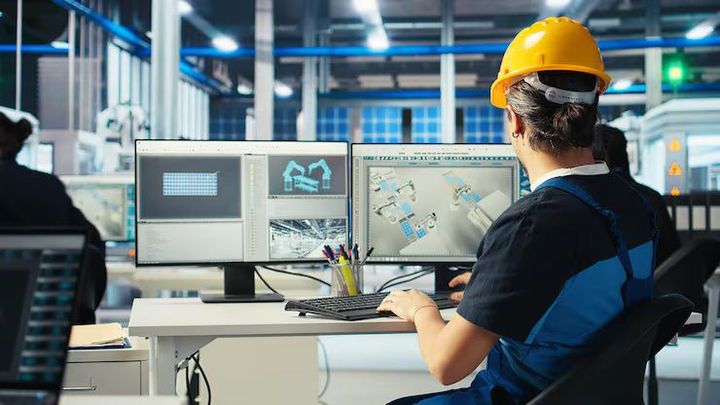
Simulation software allows engineers to evaluate control logic before connecting equipment. Virtual testing helps identify programming issues and verify expected system behavior.
Simulation also supports operator training in controlled environments.
Communication Analysis Tools
Network diagnostic tools examine industrial communication between controllers, sensors, and supervisory systems. These applications help verify proper data exchange across industrial networks.
Educational Resources
Universities, engineering organizations, automation institutes, standards bodies, and technical publications provide educational resources covering Industrial Control Systems Design, industrial networking, automation principles, and cybersecurity practices.
FAQs
What is Industrial Control Systems Design?
Industrial Control Systems Design is the planning and development of automated systems that monitor and control industrial equipment, production processes, and operational data using hardware, software, and communication networks.
Where is Industrial Control Systems Design used?
Industrial Control Systems Design is used in manufacturing, energy production, water treatment, transportation, mining, chemical processing, pharmaceutical production, and many other industrial sectors.
What is the difference between PLC and SCADA in Industrial Control Systems Design?
A PLC controls machinery by executing programmed instructions, while SCADA collects operational information, displays system status, and supervises multiple control devices across larger facilities.
Why is cybersecurity important in Industrial Control Systems Design?
Cybersecurity helps protect industrial networks, controllers, communication systems, and operational information from unauthorized access or disruption, particularly as industrial systems become increasingly connected.
What skills are involved in Industrial Control Systems Design?
Industrial Control Systems Design combines knowledge of automation, electrical engineering, programming, industrial communication, instrumentation, process control, safety standards, and system integration.
Conclusion
Industrial Control Systems Design forms the foundation of modern industrial automation by connecting equipment, communication networks, and digital monitoring into coordinated operating systems. Advances in connected technologies, artificial intelligence, cybersecurity, and simulation continue shaping how industrial facilities are designed and managed. These systems support consistent industrial processes across many sectors while adapting to changing technological requirements. Understanding their design principles provides valuable insight into the operation of today's automated industries.