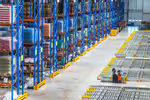
Industrial Crane Systems Insights: Improving Safety, Efficiency, and Load Handling
Industrial crane systems are machines used to lift, move, and position heavy loads in factories, warehouses, construction sites, ports, and other industrial settings. They are built to handle materials that would be difficult or unsafe to move by hand. Industrial crane manufacturers develop many different designs so the equipment can match specific work environments and load requirements.
A crane usually includes a structural frame, a lifting device, cables or chains, a control system, and a power source. Some machines move on tracks or wheels, while others remain fixed in one place. The core purpose is the same: to raise heavy loads and place them with control.
How Crane Technology Developed
Early lifting systems used ropes, pulleys, and manual labor. As industry expanded, machines became stronger and more specialized. Bridge crane manufacturers helped shape one of the most common forms used in indoor industrial spaces, where a beam spans over the work area and a hoist moves across it.
Over time, heavier materials, larger factories, and more complex projects created demand for heavy duty crane systems. Modern cranes now include electronic controls, sensors, and safety mechanisms that support more consistent operation.
Common Crane Types
Industrial crane systems can take several forms. Some of the most common include:
- Overhead bridge cranes for indoor lifting.
- Gantry cranes that move along floor-level rails or supports.
- Jib cranes for local lifting tasks.
- Tower cranes for tall construction projects.
- Mobile cranes for changing work sites.
- Crawler cranes for rough terrain.
Each type fits a different set of lifting conditions and workspace layouts.
Importance
Why Crane Systems Matter
Many industries rely on lifting equipment to move materials safely and efficiently. Large machines, steel sections, containers, and industrial parts often weigh far more than workers can move manually.
Industrial crane systems help reduce strain and support safer movement of heavy loads. They also improve handling precision, which matters when parts must be placed in exact positions.
Role in Manufacturing and Warehousing
Factories use cranes to move raw materials, machine parts, and finished products. Warehouses and distribution centers use them for handling pallets, molds, and oversized items.
Heavy duty crane systems are important in these settings because they support repeated lifting tasks without requiring constant manual effort. This helps maintain workflow organization in busy facilities.
Role in Construction and Infrastructure
Construction projects often involve steel beams, concrete components, prefabricated sections, and large equipment. Industrial crane manufacturers design machines that can handle these loads under changing site conditions.
Bridge crane manufacturers also contribute to indoor and outdoor lifting systems used in fabrication yards, workshops, and assembly plants. These cranes help position large structural components accurately.
Supporting Maintenance and Assembly
Crane systems are not used only for transport. They are also used in equipment assembly and maintenance. Large motors, turbines, and machine housings often need lifting for installation or repair.
In such situations, the right crane arrangement can help workers manage components that are too large or heavy for other equipment.
Everyday Effects
People may not notice crane systems directly, but they affect many products and structures used every day. Bridges, vehicles, packaged goods, industrial equipment, and energy systems often depend on materials moved by crane during production or installation.
Main Crane Categories and Functions
Bridge Cranes
Bridge cranes move a hoist along a beam that spans a work area. They are common in factories and workshops where loads must move across a fixed indoor space.
Bridge crane manufacturers often design systems for assembly lines, machine shops, and processing plants.
Gantry and Portal Cranes
Gantry cranes use floor-based supports or rail systems instead of overhead building structure. They are often used in yards, ports, and outdoor industrial areas.
These cranes can be useful where overhead support is not available.
Jib Cranes
Jib cranes have a rotating arm mounted on a wall, column, or floor base. They are often used for local lifting tasks in a limited work zone.
Mobile and Crawler Cranes
Mobile cranes can move from site to site, while crawler cranes use tracks for stability on uneven ground. Both are important in construction and large industrial assembly work.
Specialized Crane Systems
Some installations require custom arrangements for unusual loads, harsh environments, or restricted spaces. OEM industrial crane manufacturers may produce equipment matched to those conditions.
Comparison of Common Crane Types
| Crane Type | Main Use | Movement Style |
|---|---|---|
| Bridge crane | Indoor factory lifting | Moves on overhead beams |
| Gantry crane | Outdoor yards and ports | Moves on floor rails or supports |
| Jib crane | Local workstations | Rotates around a fixed point |
| Mobile crane | Changing work sites | Moves on wheels or a truck base |
| Crawler crane | Rough ground and large projects | Moves on tracked undercarriage |
Recent Updates
Digital Monitoring
Recent developments in industrial crane systems include greater use of sensors and digital control. These tools help track load conditions, operating cycles, and machine behavior in real time.
Smart crane monitoring systems can provide data that supports maintenance planning and operational review.
Safety-Oriented Design
Designers continue refining load indicators, control interfaces, and emergency systems. These features help operators manage lifting tasks with clearer feedback.
Improved visibility systems and sensor-based load checks are becoming more common.
Integration With Plant Systems
Turnkey crane system solutions are increasingly connected with broader facility planning. In some plants, cranes are linked with digital inventory systems, maintenance records, or production scheduling tools.
This integration supports coordinated movement of heavy materials within industrial operations.
More Attention to Maintenance Data
Crane operators and maintenance teams now use digital records more often. Information about operating hours, inspection history, and component wear can help with planning.
This is especially relevant in heavy duty crane systems that work frequently under demanding conditions.
Material and Structural Improvements
Manufacturers continue to refine crane frames, hoists, cables, and mechanical systems to improve durability. Stronger alloys and improved components help support repeated use in industrial settings.
Laws or Policies
Workplace Safety Rules
Industrial cranes are governed by safety rules in many countries. These rules often address operator training, load limits, inspection intervals, and emergency procedures.
Because cranes lift heavy materials, safe operation is a major concern. Regulations often require documented procedures and regular inspection.
Equipment Standards
Crane design and operation are often shaped by technical standards for structural strength, electrical systems, braking performance, and control reliability.
Industrial crane manufacturers typically follow these standards during design and testing.
Construction and Industrial Codes
Building sites and industrial facilities may need crane installations to meet local codes and engineering requirements. These rules can affect foundation support, load paths, and operating clearances.
Bridge crane manufacturers and OEM industrial crane manufacturers often work within these requirements when planning equipment for specific sites.
Environmental and Site Regulations
Some crane projects must also consider noise, emissions, land use, and transport rules. Mobile or crawler systems may have different local requirements depending on where they are used.
These policies help reduce risks and support responsible industrial activity.
Tools and Resources
Load Planning Software
Digital planning tools help engineers estimate lifting paths, load movement, and machine positioning. They are used before installation or heavy lifting work begins.
Inspection and Maintenance Platforms
Software platforms can track maintenance history, inspection records, and operating hours for industrial crane systems. This helps keep records organized across large equipment fleets.
Technical Standards Publications
Engineering standards organizations publish guidance on crane safety, load handling, and structural design. These references help maintain consistent industrial practice.
Simulation Tools
Computer-based simulation tools are sometimes used to study crane placement, load movement, and site layout. They can help teams understand lifting conditions before work starts.
Smart Monitoring Systems
Smart crane monitoring systems use sensors and data tools to observe machine behavior. These systems help record load cycles, operating conditions, and component status.
FAQs
What do industrial crane manufacturers produce?
Industrial crane manufacturers produce equipment used to lift and move heavy materials in factories, warehouses, construction sites, ports, and other industrial settings.
How are bridge crane manufacturers different from other crane makers?
Bridge crane manufacturers focus on overhead systems that move loads across a fixed work area, often inside factories or workshops.
What are heavy duty crane systems used for?
Heavy duty crane systems are used for large or repeated lifting tasks involving machinery, steel, containers, and other heavy industrial materials.
What are smart crane monitoring systems?
Smart crane monitoring systems use sensors and digital tools to track operating conditions, load information, and equipment behavior during crane use.
What are turnkey crane system solutions?
Turnkey crane system solutions combine crane equipment, planning, controls, and installation into one coordinated arrangement for a facility or site.
Conclusion
Industrial crane systems support many kinds of lifting and material movement tasks across manufacturing, construction, warehousing, and infrastructure. Industrial crane manufacturers, bridge crane manufacturers, and OEM industrial crane manufacturers each contribute to different equipment needs. Recent changes in digital monitoring and safety controls continue shaping how cranes are designed and used. These systems remain an important part of modern industrial operations.