Industrial Exhaust Systems: Complete Guide to Air Quality and Ventilation Solutions
Industrial exhaust systems play an essential role in maintaining clean, safe, and productive workplaces.
Many industrial facilities generate dust, smoke, fumes, heat, vapors, and airborne particles during daily operations. Without proper ventilation, these contaminants can reduce air quality and create uncomfortable or hazardous working conditions.
Modern industries rely on industrial exhaust systems to remove contaminated air and replace it with cleaner air. These systems are commonly found in manufacturing plants, welding facilities, chemical processing units, food production facilities, warehouses, pharmaceutical plants, laboratories, and metal fabrication workshops.
Industrial ventilation is not only about improving comfort. It also helps protect equipment, supports consistent production processes, reduces airborne contaminants, and contributes to workplace safety.
This guide explains industrial exhaust systems, their components, types, working principles, applications, advantages, and future developments in simple language.
Understanding the Concept
An industrial exhaust system is a ventilation system designed to remove unwanted air contaminants from an industrial environment. These contaminants may include dust, smoke, chemical vapors, welding fumes, excessive heat, moisture, oil mist, or unpleasant odors.
Instead of allowing contaminated air to remain inside a building, the system captures pollutants near their source and moves them through ductwork before releasing or filtering the air.
Industrial exhaust systems work alongside industrial ventilation systems to maintain healthier indoor air conditions and improve overall workplace efficiency.
Common industrial air contaminants include:
- Dust particles
- Welding fumes
- Smoke
- Chemical vapors
- Heat
- Moisture
- Oil mist
- Fine airborne particles
Each industrial environment requires a ventilation solution suited to its specific operations.
Key Types or Categories
Several types of industrial exhaust systems are used depending on the workplace environment.
Local Exhaust Ventilation Systems
Local exhaust ventilation captures contaminants directly at their source before they spread throughout the workplace.
Typical applications include:
- Welding stations
- Grinding operations
- Chemical mixing
- Laser cutting
- Soldering work
These systems improve contaminant control close to production areas.
General Exhaust Ventilation
General ventilation exchanges indoor air with outdoor air throughout an entire building.
It is commonly used in:
- Warehouses
- Assembly plants
- Manufacturing facilities
- Storage buildings
This approach helps maintain consistent indoor air circulation.
Dust Collection Systems
Dust collection systems remove airborne dust generated during industrial production.
Common industries include:
- Woodworking
- Cement production
- Metal fabrication
- Food processing
- Mining
Dust collectors help improve visibility and reduce airborne particles.
Fume Extraction Systems
Fume extraction systems remove hazardous fumes created during industrial processes.
Applications include:
- Welding
- Metal cutting
- Chemical processing
- Electronics manufacturing
Capturing fumes near their source improves air quality.
Heat Exhaust Systems
Facilities producing high temperatures often install heat exhaust systems to remove excess heat and improve worker comfort.
Examples include:
- Foundries
- Glass manufacturing
- Steel processing
- Industrial kitchens
Important Subsections
Industrial Exhaust Fans
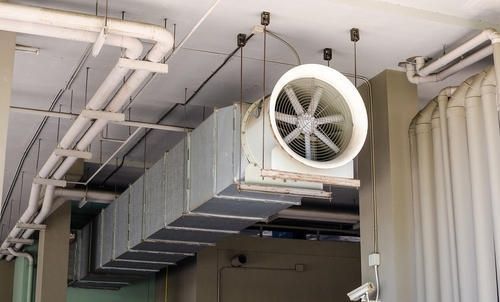
Industrial exhaust fans create airflow that removes contaminated air from work areas.
Common fan types include:
- Axial fans
- Centrifugal fans
- Roof exhaust fans
- Wall-mounted fans
- Inline duct fans
Each fan type is selected according to airflow requirements.
Air Filtration Equipment
Many exhaust systems include filtration equipment before air exits the building.
Common filtration technologies include:
- Cartridge filters
- Bag filters
- HEPA filtration
- Activated carbon filters
- Electrostatic collectors
Filtration helps capture airborne contaminants more effectively.
Ductwork Systems
Industrial ductwork transports contaminated air from production areas to filtration equipment or discharge points.
Proper duct design supports efficient airflow and minimizes pressure loss.
Air Quality Monitoring
Many industrial facilities use air quality monitoring equipment to measure:
- Dust concentration
- Gas levels
- Airflow
- Temperature
- Humidity
Continuous monitoring helps maintain consistent ventilation performance.
How It Works
Industrial exhaust systems follow a straightforward process.
Step 1: Identify the Contaminant Source
Engineers first identify where contaminants are generated.
Examples include:
- Welding stations
- Grinding machines
- Paint booths
- Chemical processing tanks
- Packaging equipment
Understanding the source improves ventilation design.
Step 2: Capture Contaminants
Hoods or collection points capture contaminated air close to where it is produced.
Capturing pollutants early prevents them from spreading throughout the facility.
Step 3: Move Air Through Ductwork
Industrial fans create airflow that moves contaminated air through ducts.
The airflow carries pollutants toward filtration equipment or designated exhaust outlets.
Step 4: Filter the Air
Depending on the application, filters remove dust, smoke, fumes, or other particles.
Common filtration stages include:
- Pre-filters
- Fine particle filters
- Activated carbon filtration
- High-efficiency filtration
Step 5: Discharge or Replace Air
After filtration, air may be safely discharged or replaced with fresh outdoor air to maintain proper ventilation balance.
Benefits and Advantages
Industrial exhaust systems provide several important advantages.
Improved Air Quality
Removing airborne contaminants creates cleaner indoor environments.
Better air quality supports healthier workplace conditions.
Better Worker Protection
Workers experience reduced exposure to dust, smoke, fumes, and excessive heat.
This contributes to a safer working environment.
Improved Equipment Performance
Dust accumulation can affect machinery performance.
Cleaner air helps reduce buildup on industrial equipment.
Better Production Conditions
Some manufacturing processes require controlled environmental conditions.
Proper ventilation supports consistent production quality.
Temperature Control
Heat exhaust systems reduce excessive indoor temperatures generated by machinery and industrial processes.
Improved temperature control enhances workplace comfort.
Cleaner Facilities
Industrial ventilation helps reduce airborne dust settling on floors, machinery, lighting, and production areas.
Real-World Examples or Applications
Industrial exhaust systems are widely used across many industries.
Manufacturing Plants
Production facilities use ventilation systems to remove:
- Dust
- Machine-generated heat
- Oil mist
- Production fumes
Welding Workshops
Welding operations generate metal fumes that require localized extraction systems.
Source capture improves air quality around workstations.
Pharmaceutical Manufacturing
Controlled ventilation supports clean production environments while managing airborne particles.
Food Processing Facilities
Ventilation systems remove:
- Steam
- Heat
- Moisture
- Food particles
- Cooking vapors
This helps maintain cleaner processing environments.
Chemical Processing Plants
Chemical facilities use specialized exhaust systems to manage vapors and airborne contaminants produced during manufacturing.
Automotive Production
Automotive facilities use exhaust systems around:
- Paint booths
- Welding stations
- Assembly lines
- Surface finishing areas
Proper ventilation supports cleaner production environments.
Important Factors to Understand
Several factors influence exhaust system performance.
Airflow Capacity
Airflow should match the amount of contaminants produced.
Insufficient airflow reduces system effectiveness.
Proper Hood Placement
Collection hoods perform best when positioned close to contaminant sources.
This improves capture efficiency.
Duct Design
Well-designed duct systems maintain smooth airflow while reducing energy losses.
Proper sizing is important for system performance.
Routine Inspection
Regular inspections help identify:
- Filter condition
- Fan performance
- Air leaks
- Dust buildup
- Blocked ducts
Consistent maintenance supports reliable operation.
Workplace Assessment
Every industrial facility has unique ventilation requirements.
A thorough workplace assessment helps determine appropriate exhaust solutions.
Future Trends and Industry Insights
Industrial ventilation technology continues advancing.
Smart Ventilation Systems
Modern systems automatically adjust airflow based on:
- Air quality
- Occupancy
- Temperature
- Production activity
This improves operational efficiency.
Industrial Air Quality Sensors
Advanced sensors continuously monitor:
- Dust levels
- Airflow
- Temperature
- Humidity
- Gas concentration
Real-time monitoring helps optimize ventilation performance.
Energy-Efficient Ventilation
New fan technologies and variable-speed motors reduce energy consumption while maintaining airflow.
Energy-efficient designs are becoming increasingly common in modern facilities.
Automated Control Systems
Automation enables ventilation systems to respond immediately when contaminant levels increase.
This improves workplace protection and system efficiency.
Sustainable Ventilation Technologies
Many industries are adopting environmentally responsible ventilation designs that improve indoor air quality while reducing overall energy usage.
Conclusion
Industrial exhaust systems are an essential part of modern industrial facilities. They remove dust, fumes, smoke, vapors, heat, and other airborne contaminants, helping create cleaner and safer workplaces.
A complete ventilation system combines exhaust fans, ductwork, filtration equipment, air quality monitoring, and properly designed airflow to maintain effective contaminant control. These systems support worker protection, equipment reliability, cleaner production environments, and improved operational efficiency.
As industries continue adopting advanced monitoring technologies, automation, and energy-efficient ventilation solutions, industrial exhaust systems will remain a key component of workplace safety and environmental management.