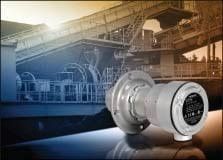
Industrial Motion Sensors Basics: How Detection Systems Work in Industrial Settings
Industrial motion sensors are detection devices used to identify movement, presence, position, or changes in activity within industrial environments.
They developed from earlier mechanical switches and basic electronic detectors into more advanced motion sensor systems that can communicate with machinery, control equipment, and digital monitoring platforms.
An industrial motion detector may use infrared energy, ultrasonic waves, microwave signals, radar, magnetic fields, or optical technology. When movement or a change in position is detected, the sensor creates a signal that can trigger another action. This may include activating lighting, stopping machinery, recording an event, or sending information to a control system.
Industrial movement sensor technology is commonly found in factories, warehouses, processing facilities, assembly areas, and automated production environments. Different sensor types are selected according to distance, environmental conditions, detection accuracy, and the type of movement being monitored.
| Sensor Type | Main Detection Method | Common Industrial Use |
|---|---|---|
| Infrared | Detects changes in heat | Occupancy and area monitoring |
| Ultrasonic | Uses sound waves | Presence and distance detection |
| Microwave | Uses electromagnetic waves | Movement across wider areas |
| Proximity | Detects nearby objects | Machine positioning and automation |
| Optical | Uses light or laser signals | Object counting and alignment |
Industrial proximity sensors are especially common around machinery because they can detect objects without physical contact. These sensors often form part of larger industrial automation sensor systems that coordinate equipment and production activities.
Importance
Motion detection matters because modern industrial environments often contain moving machinery, automated equipment, vehicles, materials, and workers in the same area. Industrial safety sensors can help control interactions between these elements by detecting movement or presence in defined zones.
Factory automation sensors also support repetitive processes. For example, a sensor may detect when a component reaches a particular position before another machine action begins. Machine motion monitoring sensors can track whether equipment is moving as expected and provide data to industrial machine monitoring systems.
Industrial occupancy sensors have another practical role. They can identify whether certain areas are being used and support automated lighting or environmental controls. In a large warehouse, a warehouse motion detection system may help coordinate lighting, access monitoring, and movement awareness across different zones.
Key applications include:
- Detecting people or objects near machinery
- Monitoring movement along production lines
- Identifying occupancy in industrial spaces
- Supporting automated equipment sequences
- Recording movement data for operational analysis
These functions affect workers, facility managers, engineers, equipment operators, and people responsible for workplace safety.
Recent Updates
Smarter and More Connected Detection
From 2024 through 2026, the general trend has been toward greater connectivity and data integration. Smart industrial sensors increasingly combine motion detection with digital communication, allowing sensor information to become part of wider monitoring and control networks.
Wireless industrial motion sensors are also becoming more relevant where extensive cabling may be difficult. Wireless communication can support flexible placement, although signal conditions, battery management, interference, and cybersecurity still require careful consideration.
Another trend is the integration of sensor data with enterprise industrial automation systems. Instead of operating as isolated components, sensors can contribute information to dashboards, analytics platforms, programmable controllers, and maintenance systems.
Industrial machine monitoring systems are also using multiple sensor types together. Motion, vibration, temperature, proximity, and position data can provide a broader picture of machine activity than a single measurement alone.
Laws or Policies
Safety and Technical Requirements in India
In India, industrial sensor use can be influenced by workplace safety rules, electrical standards, machinery requirements, and factory regulations. The Occupational Safety, Health and Working Conditions Code provides a broad framework related to workplace safety, while applicable factory and electrical rules may shape how detection equipment is installed and maintained.
Standards from the Bureau of Indian Standards may also apply to electrical equipment, machinery, and safety-related systems depending on the application. International standards from bodies such as the International Organization for Standardization and the International Electrotechnical Commission are also commonly referenced in industrial design and automation.
Industrial safety sensors should be considered as one part of a wider safety arrangement. The exact requirements depend on the machinery, industry, location, electrical environment, and level of risk involved.
Tools and Resources
Useful Technical References
Several resources can help readers understand motion sensor systems and industrial detection technology:
- Sensor specification sheets explain detection range, response time, operating temperature, and electrical characteristics.
- Wiring diagrams show how an industrial motion detector connects with controllers and other equipment.
- Computer-aided design tools can help plan sensor positioning and detection zones.
- Automation simulation platforms can model how factory automation sensors interact with machinery.
- Safety assessment templates can document hazards, detection areas, and control measures.
- Standards databases from BIS, ISO, and IEC provide technical references for relevant applications.
For industrial automation sensor systems, equipment manuals and system diagrams are also important because sensor behavior may depend on controller settings, communication protocols, and surrounding machinery.
FAQs
What are industrial motion sensors used for?
Industrial motion sensors detect movement, presence, position, or changes in activity. They are used in machinery, warehouses, automated production areas, occupancy control, and safety-related detection systems.
How does an industrial motion detector work?
An industrial motion detector sends or receives a physical signal such as infrared energy, sound waves, light, or electromagnetic waves. A detected change is converted into an electrical or digital signal for another system to process.
What is the difference between industrial proximity sensors and motion sensors?
Industrial proximity sensors mainly detect whether an object is near a defined point. Motion sensors generally detect movement or changes within a wider detection area, although some industrial applications combine both functions.
Are wireless industrial motion sensors suitable for factories?
Wireless industrial motion sensors can be used in suitable factory environments. Their performance depends on communication range, interference, power availability, environmental conditions, and network security.
How do machine motion monitoring sensors support automation?
Machine motion monitoring sensors provide information about movement, position, speed, or operating status. Industrial automation sensor systems can use this information to coordinate machine actions and monitor process conditions.
Conclusion
Industrial motion sensors are an important part of modern detection and automation systems. They use technologies such as infrared, ultrasonic, microwave, optical, and proximity detection to identify movement or presence. Current developments focus on connected sensors, wireless communication, and integration with industrial machine monitoring systems. Their application depends on environmental conditions, technical requirements, and relevant safety rules.