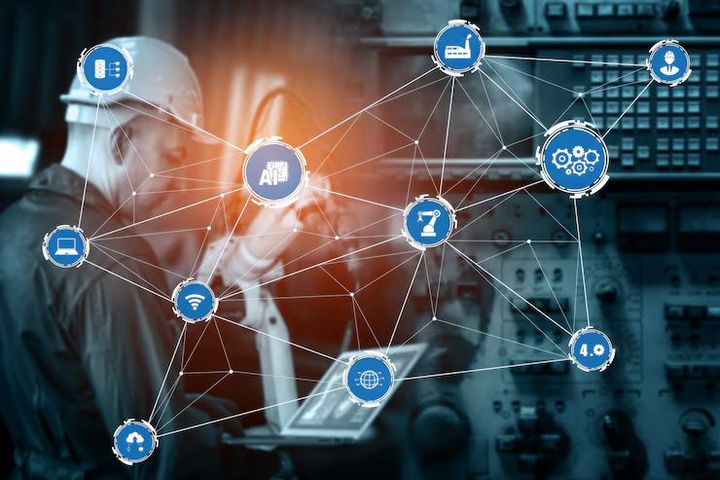
Industrial Network Projects Guide for Modern Automation Systems Overview
Industrial network projects focus on designing, implementing, and managing communication systems within industrial environments. These networks connect machines, sensors, controllers, and software systems to ensure smooth data exchange and automation processes.
In modern industries, communication is essential for coordinating operations. Industrial networks allow machines to “talk” to each other using protocols like Ethernet/IP, Modbus, and Profinet. These systems are widely used in manufacturing plants, power systems, oil and gas facilities, and logistics operations.
The purpose of industrial network projects is to improve efficiency, reduce manual intervention, and support real-time monitoring. As digital transformation accelerates, these networks are critical for smart factories and Industry 4.0 environments.
Importance – Why Industrial Networks Matter Today
Industrial network projects are highly relevant in today’s connected world. They form the backbone of data-driven operations, enabling industries to monitor, analyze, and optimize their processes efficiently.
Key Benefits
- Real-Time Monitoring: Continuous observation of machines and systems.
- Productivity Improvement: Automation reduces delays and enhances output.
- Downtime Reduction: Early detection of issues prevents costly interruptions.
- Remote Operation: Enables control from off-site locations.
- Enhanced Safety: Integration improves system-wide safety protocols.
Stakeholders Who Benefit
- Engineers and technicians managing industrial systems
- Organizations aiming to boost operational efficiency
- Governments focusing on industrial growth and infrastructure
- Technology providers developing communication protocols
Problems Solved by Industrial Networks
| Problem | Solution via Industrial Networks |
|---|---|
| Manual monitoring limitations | Automated real-time data collection |
| Communication delays | High-speed industrial Ethernet systems |
| System failures | Predictive maintenance using network data |
| Lack of integration | Unified communication platforms |
Recent Updates – Trends and Developments (2024–2025)
Industrial networking is evolving rapidly with emerging technologies enhancing connectivity, efficiency, and intelligence.
Key Trends
- Industrial IoT (IIoT) Adoption: Connects more devices for advanced analytics and automation.
- 5G Integration: Private 5G networks improve speed and reliability.
- Edge Computing Growth: Data processing closer to devices reduces latency.
- Cybersecurity Enhancements: Stronger measures to protect interconnected systems.
- Cloud-Based Monitoring: Remote management via cloud platforms.
Time-Sensitive Networking (TSN) is also increasingly used for precise timing and synchronization in industrial Ethernet systems.
Industrial Network Architecture Evolution
| Feature | Traditional Setup | Modern Setup (2025) |
|---|---|---|
| System Connectivity | Isolated systems | Integrated smart networks |
| Data Access | Limited | Cloud and edge-enabled systems |
| Communication Links | Wired only | Hybrid wired and wireless |
| Maintenance Approach | Reactive | Predictive and proactive |
These updates highlight the growing importance of flexibility, scalability, and security.
Laws and Policies – Regulatory Influence
Industrial network projects are shaped by regulations and standards to ensure safety, cybersecurity, and compliance.
Key Regulatory Aspects
- Data Protection Guidelines: Secure handling of industrial data.
- Cybersecurity Standards: Protection against unauthorized access.
- Industrial Safety Regulations: Maintain safe communication systems.
- Government Digital Initiatives: Support smart manufacturing and automation.
In India, initiatives like Digital India and Make in India encourage advanced network adoption.
Standards organizations also influence compliance:
- IEC (International Electrotechnical Commission) standards
- ISO guidelines for industrial systems
- National cybersecurity frameworks
Adherence to these regulations ensures reliable, secure, and globally compatible networks.
Tools and Resources – Platforms and Technologies
Successful industrial network projects rely on specialized tools for design, monitoring, and management.
Commonly Used Tools
- Network Simulation Software: Plans layouts and tests connectivity.
- SCADA Systems: Monitors industrial operations in real time.
- PLC Programming Tools: Programs automation logic.
- Network Analyzers: Troubleshoots communication issues.
- Cybersecurity Tools: Detects and mitigates threats.
Useful Resources
- Protocol documentation and technical manuals
- Knowledge bases and online forums
- Industrial networking training platforms
- Publications from standardization bodies
Tool Comparison Table
| Tool Type | Purpose |
|---|---|
| SCADA Systems | Monitor and control operations |
| PLC Software | Program automation logic |
| Network Simulators | Design and test network configs |
| Protocol Analyzers | Diagnose communication issues |
| Security Tools | Protect network infrastructure |
FAQs – Common Questions Answered
What are industrial network projects?
They involve creating communication systems connecting machines, sensors, and controllers for automation and data exchange.
Which protocols are commonly used?
Common protocols include Ethernet/IP, Modbus, Profinet, and OPC UA for reliable device communication.
Why is cybersecurity important?
Industrial networks often control critical infrastructure. Cybersecurity prevents unauthorized access and protects systems.
How does Industrial IoT relate to network projects?
IIoT connects more devices, enabling analytics, automation, and remote monitoring.
What skills are required?
Networking fundamentals, automation knowledge, protocol understanding, troubleshooting, and basic cybersecurity awareness.
Conclusion
Industrial network projects are foundational to modern industry. They enable seamless communication between systems, improve operational efficiency, and support advanced technologies like automation and IIoT.
With advancements such as 5G, edge computing, and enhanced cybersecurity, industrial networks are increasingly intelligent and adaptable. Government initiatives and global standards further reinforce their development.
Understanding these networks is essential for professionals, organizations, and learners, as they not only improve current operations but also pave the way for future innovations in smart manufacturing and connected industrial systems.