Industrial Storage Silos: A Guide to Bulk Material Handling and Storage
Industrial silos are large containers designed to store bulk materials before they are processed, transported, blended, or used in production. They are widely found in agriculture, food processing, cement manufacturing, chemicals, mining, plastics, and other industrial operations.
Unlike ordinary warehouses, silos are designed around the physical characteristics of loose materials. Grain, cement, flour, plastic pellets, powders, and mineral products can behave differently when stored in large quantities. A suitable silo therefore needs to account for factors such as material density, moisture, flow behavior, temperature, and pressure.
The concept of bulk storage has existed for centuries. Traditional grain storage structures gradually developed into engineered systems capable of handling larger quantities and more demanding industrial materials. Modern industrial silos combine structural components with equipment that helps control filling, storage, monitoring, and discharge.
How Industrial Silos Work
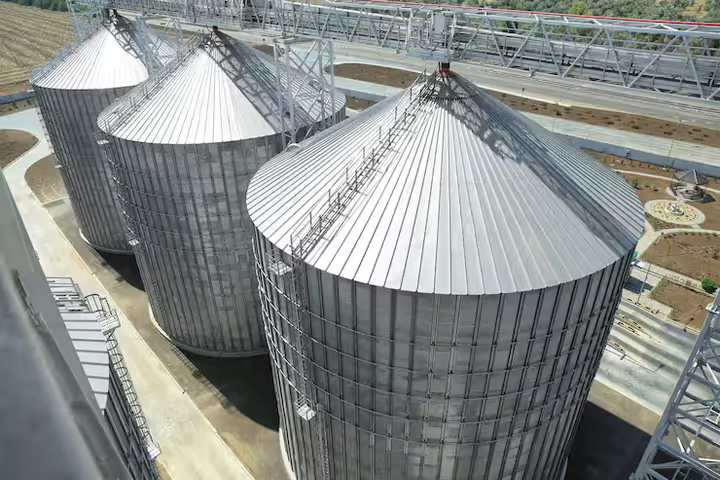
A typical silo consists of a storage body, roof, inlet, discharge outlet, support structure, and monitoring equipment. Depending on the application, additional components can include filters, level sensors, aeration systems, temperature sensors, valves, conveyors, and pneumatic transfer equipment.
Materials can enter through the top using conveyors, bucket elevators, pneumatic systems, or other transfer equipment. During discharge, gravity may move the material toward an outlet, while mechanical or pneumatic equipment can assist when the material does not flow easily.
The main components can be summarized as follows:
| Component | Main purpose |
|---|---|
| Storage vessel | Holds bulk material |
| Inlet system | Transfers material into the silo |
| Discharge outlet | Removes stored material |
| Level sensor | Monitors material quantity |
| Filter or vent | Controls displaced air and dust |
| Aeration equipment | Helps manage moisture or temperature |
| Support structure | Carries the silo load |
| Control system | Monitors operating conditions |
Common Silo Materials
Industrial silos may be manufactured from carbon steel, stainless steel, concrete, aluminum, or specialized materials. The selection depends on the stored material, environmental conditions, structural requirements, hygiene considerations, and chemical compatibility.
Steel silos are widely used for industrial applications because they can be fabricated in different shapes and capacities. Concrete silos are also used for certain large-scale storage applications, particularly where substantial structural strength is required.
Importance
Why Bulk Storage Matters
Industrial production often involves materials arriving in large quantities while processing occurs at a different rate. Silos create an intermediate storage point between receiving, processing, and distribution.
For example, a food processing facility may receive grain continuously while its production line operates according to a controlled schedule. A storage silo can help separate these two activities, allowing material to remain available between receiving and processing stages.
Industrial silos can also help reduce unnecessary handling. Instead of repeatedly moving loose material between small containers, a centralized storage system can connect directly with conveyors, pumps, mixers, feeders, or processing equipment.
Industries That Use Industrial Silos
Different industries use silos according to their material-handling requirements. Common examples include:
- Agriculture for grains, seeds, animal feed, and other dry bulk products.
- Cement and construction materials for cement, fly ash, lime, and similar powders.
- Food processing for flour, sugar, starch, grains, and powdered ingredients.
- Chemical production for powders, granules, and selected raw materials.
- Plastics manufacturing for resin pellets and polymer materials.
- Mining and minerals for ores, powders, and processed mineral products.
- Energy-related facilities for biomass, ash, and other bulk materials.
Material Behavior and Silo Design
The same silo design does not work equally well for every material. Powders can compact, absorb moisture, bridge across an outlet, or form channels during discharge. Granular materials may flow more readily but can still create pressure and structural loads.
Important characteristics include particle size, bulk density, moisture level, temperature, friction, cohesiveness, and flowability. Understanding these properties helps engineers determine the appropriate vessel geometry, outlet arrangement, wall strength, and material-handling equipment.
Safety and Operational Considerations
Large storage structures can create several physical and operational hazards. Structural failure, dust accumulation, confined-space entry, material bridging, unexpected discharge, and pressure changes require careful management.
Key considerations include:
- Structural inspection and load assessment.
- Appropriate level and pressure monitoring.
- Dust control and ventilation.
- Safe access arrangements.
- Procedures for confined spaces.
- Protection against ignition sources where combustible dust may be present.
- Regular inspection of discharge and conveying equipment.
Recent Updates
Automation and Monitoring
From 2024 through 2026, industrial bulk storage has continued moving toward greater use of sensors, automation, and connected monitoring systems. Digital level measurement can provide information about how much material is present without requiring manual inspection.
Temperature sensors can be particularly useful for agricultural storage, where changes in temperature may indicate moisture migration or biological activity. In other industries, pressure and level measurements can help operators understand changing storage conditions.
Integration With Digital Control Systems
Industrial silos are increasingly integrated with plant control platforms such as programmable logic controllers and supervisory control systems. This allows information from sensors to be combined with data from conveyors, feeders, valves, and processing equipment.
Automation can also support inventory tracking and material-flow coordination. However, automated equipment still requires appropriate configuration, inspection, and human oversight.
Dust and Energy Management
Environmental considerations have also influenced silo design. Dust collection systems can reduce the release of airborne particles during filling and discharge. Improved monitoring and equipment control can also help reduce unnecessary operation of fans, conveyors, and other equipment.
For food and pharmaceutical-related applications, hygienic design remains important. Smooth internal surfaces, appropriate materials, controlled access, and cleaning procedures can help reduce contamination risks.
Flexible Silo Configurations
Modern facilities may use multiple silos rather than one large storage vessel. This allows different materials or batches to remain separated and can provide greater flexibility in production planning.
The choice between one large silo and several smaller units depends on material characteristics, required capacity, production flow, site layout, and operational requirements.
Laws or Policies
Industrial Regulations in India
In India, industrial silos are affected by several categories of regulations covering workplace safety, structural integrity, environmental protection, electrical systems, and material handling. The exact requirements depend on the industry, location, silo design, and stored material.
The Occupational Safety, Health and Working Conditions framework is relevant to workplace safety in covered establishments. State-level authorities and sector-specific regulators may also impose requirements relating to factories, hazardous materials, fire protection, and workplace practices.
Standards and Technical Guidance
The Bureau of Indian Standards develops standards relevant to structural design, materials, equipment, and industrial practices. Depending on the silo application, engineers may also refer to recognized international standards covering storage structures, bulk solids, pressure conditions, dust hazards, and structural loading.
Environmental requirements may apply when silo operations generate dust or other emissions. Facilities should therefore consider applicable requirements from the Central Pollution Control Board, State Pollution Control Boards, local authorities, and relevant industry regulators.
Safety Responsibilities
Silo safety can involve multiple areas, including structural design, electrical protection, fire prevention, confined-space procedures, dust control, and equipment guarding. Requirements should be assessed according to the specific facility rather than assuming that one regulatory approach applies to every silo.
Tools and Resources
Silo Design and Material-Flow Tools
Engineers can use bulk-material flow calculations to examine factors such as silo capacity, wall pressure, outlet dimensions, and material discharge behavior. Spreadsheet-based calculations may be used for preliminary planning, while specialized engineering software can support structural and flow analysis.
Material property data is also important. Bulk density, moisture content, particle size, angle of repose, and flow characteristics can influence equipment selection and silo geometry.
Monitoring Equipment
Common tools used with industrial silos include:
- Radar or ultrasonic level sensors.
- Load cells for weighing and inventory measurement.
- Temperature sensors.
- Pressure sensors.
- Dust monitoring equipment.
- Vibration or condition-monitoring devices.
- Programmable controllers and plant monitoring platforms.
Reference Resources
Useful technical resources include the Bureau of Indian Standards, Central Pollution Control Board publications, Occupational Safety, Health and Working Conditions materials, engineering handbooks, and manufacturer-neutral technical documentation from recognized industry associations.
These resources can help readers understand structural requirements, workplace safety, environmental considerations, and bulk-material handling principles.
FAQs
What are industrial silos used for?
Industrial silos are used to store bulk materials such as grain, cement, powders, minerals, chemicals, animal feed, and plastic pellets. They provide controlled storage between receiving, processing, and distribution stages.
What are the main types of industrial silos?
Common types include steel silos, concrete silos, flat-bottom silos, hopper-bottom silos, and specialized powder-storage vessels. The appropriate design depends on the material, storage capacity, flow behavior, and facility requirements.
How do industrial silos prevent material-flow problems?
Silo designs can use suitable outlet geometry, aeration equipment, vibration systems, mechanical agitators, or other flow-assistance methods. The appropriate approach depends on whether the material is cohesive, moisture-sensitive, compacting, or difficult to discharge.
Are industrial silos used for food materials?
Yes. Grain, flour, sugar, starch, animal feed, and other dry food-related materials can be stored in industrial silos. Such applications require attention to hygiene, contamination control, moisture management, cleaning procedures, and material compatibility.
What safety risks are associated with industrial silos?
Potential hazards include structural failure, dust explosions where combustible dust is present, confined-space risks, unexpected material discharge, and mechanical equipment hazards. Appropriate engineering controls, monitoring, maintenance, and workplace procedures are important for managing these risks.
Conclusion
Industrial silos are engineered storage structures used to hold and manage bulk materials across agriculture, manufacturing, food processing, construction, chemicals, mining, and other industries. Their design depends heavily on material characteristics, storage requirements, structural loads, flow behavior, and operating conditions. Recent developments have increased the use of sensors, automation, digital monitoring, and improved dust-management systems. Safe silo operation also depends on appropriate engineering practices and compliance with applicable workplace, structural, environmental, and industry regulations.