Augmented Reality, commonly referred to as AR, is a digital technology that overlays computer-generated information onto the physical world. In the automotive industry, AR is used to enhance how information is displayed, understood, and interacted with during vehicle design, manufacturing, operation, and maintenance. AR exists in this sector because vehicles and automotive systems have become increasingly complex, requiring clearer ways to visualize data and processes.
Traditionally, automotive information was communicated through manuals, dashboards, and training diagrams. As vehicles became more advanced with integrated electronics and software, these methods became less efficient. Augmented Reality (AR) emerged as a solution by overlaying digital information directly onto real-world environments.
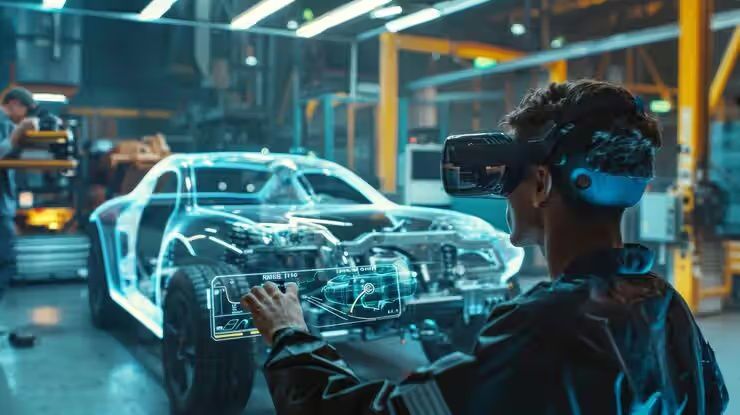
In automotive contexts, AR appears through head-up displays, tablets, smart glasses, and in-vehicle screens. It helps bridge the gap between digital data and physical components, making complex systems easier to understand.
Why AR Matters in the Automotive Industry
AR plays a significant role in improving clarity, safety, and efficiency across the automotive lifecycle. It supports better interaction with complex systems in design, manufacturing, driving, and maintenance.
Key Reasons This Topic Matters
- Enhanced visualization: Makes complex vehicle systems easier to understand
- Improved safety: Displays critical information within the driver’s view
- Manufacturing precision: Supports accurate assembly and inspection
- Skill development: Assists training and technical learning
AR benefits engineers, factory workers, drivers, trainers, and researchers by improving communication and reducing errors.
Recent Developments and Trends (2024–2025)
AR technology in the automotive sector has advanced with improvements in display systems and integration with vehicle technologies. These trends highlight increased adoption and refinement.
Key Trends Overview
| Trend | Description | Impact |
|---|---|---|
| Advanced head-up displays | Wider field of view and improved alignment | Enhances driver awareness |
| AR in manufacturing | Overlay-guided assembly and inspection | Reduces errors and improves consistency |
| Training simulations | AR-based learning environments | Improves technical understanding |
| Integration with ADAS | Visual representation of sensor data | Supports intuitive driving assistance |
| Interface standardization | Collaboration for consistent AR systems | Improves user experience |
These developments show how AR is becoming more integrated into automotive processes.
Laws and Policies Influencing Automotive AR
AR applications in the automotive industry are guided by safety, usability, and data protection regulations. These frameworks ensure that technology enhances safety without introducing risks.
Key Regulatory Areas
- Vehicle safety guidelines: Ensure minimal driver distraction
- Human–machine interface standards: Define usability and ergonomics
- ISO standards: Guide system safety and visual design
- Data protection laws: Regulate handling of user and sensor data
These policies help maintain safe and responsible implementation of AR technologies.
Tools and Resources for Understanding Automotive AR
Various tools and resources support learning and application of AR in automotive environments. These tools are used in design, training, and research.
Useful Tools and References
- AR visualization software: Used in vehicle design and prototyping
- Simulation platforms: Help visualize driver assistance systems
- Training modules: Support technical education using AR
- HMI design guidelines: Provide standards for interface development
- Research publications: Explore AR applications in mobility
Common Automotive AR Use Cases
| AR Application Area | Primary Purpose | Typical Context |
|---|---|---|
| Head-up displays | Driver information visualization | Navigation and alerts |
| Manufacturing AR | Assembly and inspection guidance | Factory environments |
| Maintenance AR | Component identification and repair | Technical servicing |
| Design visualization | Virtual prototyping | Vehicle development |
| Training simulation | Skill development | Education and onboarding |
These resources illustrate how AR supports various automotive functions.
Frequently Asked Questions
What Does AR Mean in Automotive?
AR refers to overlaying digital information onto real-world vehicle environments to improve understanding and interaction.
Is AR the Same as Virtual Reality?
No, AR enhances the real world with digital overlays, while virtual reality creates a fully digital environment.
Does AR Improve Driving Safety?
When designed properly, AR can improve awareness by presenting information within the driver’s line of sight.
Is AR Used Only in Vehicles?
No, AR is also used in manufacturing, training, and maintenance within the automotive industry.
Are There Regulations for AR Systems?
Yes, safety and usability guidelines influence how AR is implemented in automotive systems.
Conclusion
Augmented Reality has become an important supportive technology in the automotive industry. It enhances visualization, improves clarity, and supports learning across multiple applications.
As vehicles continue to evolve, AR helps bridge the gap between complex digital systems and real-world interaction. Understanding its applications, trends, and regulatory context highlights its growing role in shaping modern automotive experiences.