Luxury Interior Styles Explained: Types, Design Elements, Materials, Color Schemes, Features, Benefits and Selection Considerations
Luxury interior design refers to approaches that combine carefully selected materials, refined details, balanced layouts, and coordinated decorative elements to create sophisticated indoor spaces. The idea is not limited to a particular architectural period or decorative style. Instead, luxury interiors can include traditional, contemporary, minimalist, modern, transitional, and regional influences.
Historically, luxurious interiors were associated with large residences, elaborate furniture, decorative craftsmanship, and materials that required considerable manual work. Over time, interior design became more diverse, allowing similar design principles to be applied to apartments, houses, hotels, offices, restaurants, and other spaces.
Today, luxury interior styles can vary significantly. Some emphasize ornamentation and classical detailing, while others use simple forms, natural materials, carefully controlled lighting, and restrained decoration. The defining characteristics usually involve coordination, material quality, proportion, visual balance, and attention to detail rather than a single appearance.
What Defines a Luxury Interior
A luxury interior generally brings several design elements together in a consistent way. These can include architectural details, furniture, flooring, wall finishes, lighting, textiles, artwork, accessories, and technology.
Space planning is also important. Furniture placement, circulation paths, ceiling height, window positioning, and the relationship between different rooms can influence how a space looks and functions.
Common Luxury Interior Styles
Several styles are frequently associated with luxury interiors:
- Modern luxury uses clean forms, refined materials, controlled decoration, and integrated lighting.
- Contemporary luxury combines current design trends with sophisticated finishes and flexible layouts.
- Classic luxury uses symmetry, traditional furniture forms, decorative moldings, and detailed architectural features.
- Transitional luxury combines traditional proportions with contemporary materials and simpler forms.
- Minimalist luxury emphasizes limited decoration, open space, natural materials, and carefully selected furnishings.
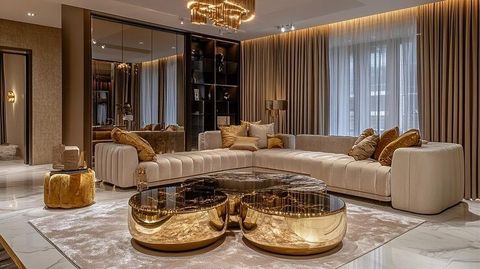
- Art Deco-inspired interiors use geometric forms, metallic details, rich colors, and decorative surfaces.
- Scandinavian-inspired luxury uses natural materials, functional furniture, soft colors, and restrained detailing.
- Mediterranean-inspired luxury often incorporates natural stone, textured surfaces, warm colors, wood, and architectural elements influenced by regional traditions.
Importance
Interior design affects how people use and experience indoor environments. A well-planned luxury interior can address practical considerations such as movement, lighting, storage, comfort, privacy, acoustics, and organization while also establishing a particular visual character.
Luxury interiors are relevant to residential properties, hospitality spaces, corporate environments, retail establishments, cultural buildings, and other settings where appearance and user experience are important.
Design and Function
A visually elaborate room is not necessarily functional. Furniture that blocks circulation, insufficient storage, uncomfortable seating, excessive decoration, or poorly positioned lighting can reduce usability regardless of the visual style.
Effective interior planning therefore considers both appearance and everyday activities. Rooms may need designated areas for conversation, dining, work, relaxation, entertainment, or storage.
Materials and Finishes
Materials have a major influence on the appearance and atmosphere of an interior. Common choices include:
- Natural stone such as marble, granite, limestone, and travertine
- Hardwood and engineered wood
- Glass and decorative mirrors
- Metal finishes such as brass, bronze, stainless steel, and aluminum
- Natural and synthetic textiles
- Leather and other upholstery materials
- Decorative wall panels
- Ceramic and porcelain surfaces
Material selection also involves practical factors such as durability, cleaning requirements, moisture exposure, maintenance, texture, and compatibility with the building.
Lighting
Lighting is an important part of luxury interior design because it can affect color perception, texture, depth, and atmosphere. A layered approach commonly combines ambient lighting with task and accent lighting.
Pendant fixtures, recessed lights, wall lighting, floor lamps, table lamps, and concealed illumination can be combined according to the function of each room. Natural light should also be considered during the planning stage because window orientation and daylight levels affect interior colors and material appearance.
Recent Updates
From 2024 through 2026, interior design has increasingly emphasized personalization, natural materials, flexible spaces, wellness-oriented environments, and technology integration. Rather than relying on a single decorative formula, designers are combining elements from multiple styles to create interiors suited to specific buildings and occupants.
Natural Materials and Textures
Natural stone, timber, textured fabrics, handcrafted surfaces, and organic shapes continue to appear in contemporary interiors. These materials can introduce visual variation through grain, texture, pattern, and natural color differences.
There is also increasing attention to material transparency and responsible sourcing. Environmental considerations can influence the selection of wood, finishes, textiles, and other interior products.
Integrated Technology
Smart lighting, automated curtains, climate controls, audio systems, security equipment, and home-management platforms can increasingly be integrated into interior spaces. Concealed wiring and discreet control systems can help maintain a consistent visual design.
Technology can also support different activities within the same room. Lighting scenes, temperature settings, and window controls can be adjusted according to time of day or room use.
Flexible and Multifunctional Spaces
Open-plan interiors remain common, but many contemporary designs also use furniture, partitions, lighting, and changes in materials to create distinct functional zones. This approach allows one large area to accommodate activities such as work, dining, relaxation, and entertainment.
Flexible furniture and adaptable layouts are particularly relevant in urban residences where available floor area may be limited.
Color Trends
Recent interiors frequently use warm neutrals, earthy shades, muted greens, deep blues, off-whites, and natural wood tones. Metallic accents may be used selectively rather than across every surface.
Color selection is increasingly based on the relationship between walls, flooring, furniture, natural light, and textiles. The same color can appear different depending on lighting conditions and surrounding materials.
Laws or Policies
Interior design projects in India can be influenced by building regulations, fire-safety requirements, accessibility provisions, electrical standards, environmental rules, and local development regulations. The specific requirements depend on the building type, location, occupancy, and scope of work.
For residential and commercial buildings, the National Building Code of India provides a major technical reference covering areas such as building planning, fire and life safety, structural considerations, services, and accessibility. Local authorities may apply additional requirements through building regulations and approval processes.
Electrical installations must also follow applicable safety requirements. Interior modifications involving wiring, lighting, electrical equipment, false ceilings, or other building services should account for relevant technical standards and building requirements.
Fire safety can be particularly important in hotels, offices, public buildings, and other larger occupied spaces. Materials, exits, fire detection systems, emergency lighting, and circulation arrangements may be subject to specific requirements.
Accessibility is another consideration. Interior layouts in applicable buildings may need to accommodate people with different mobility, vision, or hearing requirements through appropriate circulation, access, signage, and facilities.
Because requirements vary by project, applicable central, state, municipal, and building-specific rules should be checked before substantial interior modifications are undertaken.
Tools and Resources
Several tools can assist with planning and understanding luxury interior styles.
Floor Planning Tools
Digital floor-planning applications can help create room layouts, place furniture, test circulation paths, and compare alternative arrangements. Two-dimensional plans can be converted into three-dimensional representations in some applications.
3D Visualization Software
Three-dimensional design tools allow users to explore furniture placement, materials, lighting, wall treatments, and color combinations before physical work begins. They can also help communicate design concepts between different project participants.
Color Planning Tools
Digital color tools can help compare wall colors, furniture tones, flooring, textiles, and accent shades. Lighting should be considered because colors displayed on a screen may differ from their appearance under natural or artificial illumination.
Material Samples
Physical samples remain useful for evaluating texture, finish, reflectivity, grain, and color. A material can appear different in a showroom, under daylight, and under indoor lighting.
Selection Comparison Table
| Design factor | Questions to consider | Common options |
|---|---|---|
| Style | What visual character is required? | Modern, classic, contemporary, transitional |
| Color | How should the room feel visually? | Warm neutrals, earthy shades, contrasting tones |
| Flooring | What surface suits the room? | Stone, wood, porcelain, carpet |
| Walls | What level of texture or pattern is appropriate? | Paint, panels, wallpaper, stone |
| Lighting | What functions require illumination? | Ambient, task, accent |
| Furniture | How should the room be used? | Modular, upholstered, statement, built-in |
| Materials | What appearance and maintenance level are suitable? | Stone, wood, glass, metal, textiles |
| Technology | Which systems need integration? | Lighting, climate, audio, security |
FAQs
What are the main luxury interior styles?
Common luxury interior styles include modern, contemporary, classic, transitional, minimalist, Art Deco-inspired, Scandinavian-inspired, and Mediterranean-inspired designs. Each uses different combinations of forms, materials, colors, furniture, and decorative details.
What materials are commonly used in luxury interior design?
Luxury interiors may use natural stone, wood, glass, metal, leather, textiles, ceramics, porcelain, and decorative wall finishes. The appropriate material depends on the room, design style, maintenance requirements, and building conditions.
Which color schemes are common in luxury interiors?
Warm neutrals, cream, beige, taupe, gray, earthy shades, deep blue, muted green, and natural wood tones are frequently used. Metallic accents and stronger colors can provide contrast when incorporated selectively.
What features can make an interior look luxurious?
Proportion, balanced furniture placement, layered lighting, coordinated materials, detailed finishes, quality craftsmanship, appropriate storage, and consistent color schemes can contribute to a refined interior. Luxury does not necessarily require excessive decoration.
How should a luxury interior style be selected?
Selection can be based on the building's architecture, room function, available space, natural lighting, maintenance requirements, personal preferences, and compatibility between materials and colors. A consistent design direction can help different elements work together visually.
Conclusion
Luxury interior design encompasses a wide range of styles, from highly decorative classical approaches to restrained contemporary and minimalist interiors. Materials, color schemes, lighting, furniture, spatial planning, and technology all contribute to the overall character and functionality of a space. Recent design trends emphasize personalization, natural textures, adaptable layouts, integrated technology, and considered material selection. Building regulations, fire safety, accessibility, and electrical requirements should also be considered when planning interior modifications.