Mechanical machinery refers to engineered systems that use physical components—such as gears, shafts, bearings, belts, and linkages—to transmit motion and force. These machines convert energy into controlled movement to perform defined tasks. From early hand-operated tools to today’s automated production lines, mechanical machinery has evolved to increase efficiency, precision, and repeatability in industrial environments.
The purpose of mechanical machinery is rooted in problem-solving. Human labor alone cannot consistently achieve the scale, speed, or accuracy required by modern manufacturing and infrastructure. Machines extend human capability by performing repetitive, heavy, or highly precise actions. Industrial mechanisms within these machines ensure that motion is transmitted smoothly, loads are balanced, and operations remain stable over long periods.
Mechanical machinery is commonly found in sectors such as manufacturing, energy, construction, transportation, agriculture, and processing industries. While digital systems now guide many operations, the mechanical core remains essential because physical movement, torque, and load-bearing cannot be replaced by software alone.
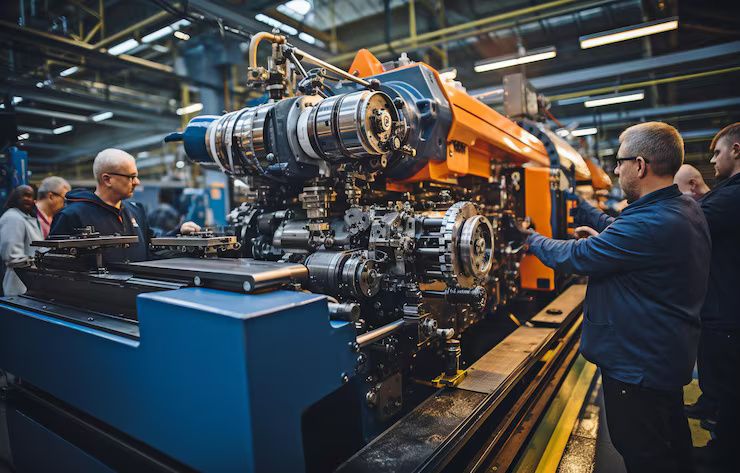
Importance: Why Mechanical Machinery Matters Today
Mechanical machinery continues to matter because it underpins industrial productivity and reliability. Even in highly automated facilities, mechanical systems carry out the actual work of shaping, assembling, moving, or processing materials.
Key reasons for its continued importance include:
-
Industrial automation support
Mechanical mechanisms work alongside sensors and controllers to deliver consistent motion in automated environments. -
Precision and repeatability
CNC machinery and precision assemblies rely on mechanical accuracy to maintain tight tolerances. -
Scalability in manufacturing
Machines enable high-volume production without proportional increases in human effort. -
Safety and ergonomics
Properly designed machinery reduces manual strain and exposure to hazardous conditions. -
Economic impact
Reliable machinery supports supply chains, infrastructure projects, and industrial growth across regions.
Industries such as automotive manufacturing, renewable energy equipment, packaging, and heavy engineering depend on mechanical systems to maintain output quality. As global demand for durable goods and infrastructure grows, the role of well-designed industrial mechanisms becomes even more significant.
Recent Updates: Trends and Changes in the Past Year
Over the past year, mechanical machinery has seen notable developments influenced by digital integration, sustainability goals, and reliability requirements.
Key updates and trends (2025):
-
Predictive maintenance adoption (2025)
More facilities are combining mechanical systems with condition-monitoring tools to detect wear patterns before failures occur. -
Integration with Industrial Internet of Things (IIoT)
Mechanical components are increasingly paired with sensors that track vibration, temperature, and load behavior in real time. -
Energy-efficient mechanical designs
Updated gear profiles, low-friction bearings, and optimized transmission layouts are being adopted to reduce energy losses. -
Modular machinery architecture
Manufacturers are favoring modular mechanical assemblies that simplify upgrades and reduce downtime. -
Advanced materials usage
High-strength alloys and engineered polymers are being used to improve durability and corrosion resistance.
These updates show a clear shift toward smarter, longer-lasting machinery where mechanical reliability and data-driven insights work together.
Laws or Policies Affecting Mechanical Machinery in India
In India, mechanical machinery is influenced by safety standards, manufacturing policies, and industrial quality frameworks. These rules aim to ensure safe operation, consistent quality, and global competitiveness.
Relevant policy and regulatory influences include:
-
Manufacturing and quality standards
Guidelines aligned with the International Organization for Standardization (ISO) help define benchmarks for mechanical design, testing, and documentation. -
Workplace safety regulations
Industrial safety requirements draw from principles similar to those promoted by the Occupational Safety and Health Administration, adapted to local conditions through Indian rules. -
Make in India initiative
Programs under the Ministry of Heavy Industries encourage domestic production of industrial equipment and machinery components. -
Environmental and energy guidelines
Policies emphasize efficient resource usage, pushing industries toward energy-optimized mechanical systems.
Compliance with these frameworks influences how machinery is designed, installed, operated, and maintained across industrial sites in the country.
Tools and Resources for Understanding Mechanical Machinery
A range of educational and technical tools help learners and professionals understand industrial mechanisms and machinery behavior.
Commonly used resources include:
-
Computer-aided design (CAD) platforms
Used to visualize gears, shafts, and assemblies before physical production. -
Simulation and analysis software
Helps evaluate stress, load distribution, and motion paths in mechanical systems. -
Condition monitoring dashboards
Display vibration, temperature, and operational trends for machinery health tracking. -
Industry reference handbooks
Provide standardized data on bearings, fasteners, tolerances, and materials. -
Online learning portals and open technical libraries
Support foundational learning on mechanical principles and industrial applications.
These resources improve understanding, reduce errors, and support informed decision-making around machinery use and optimization.
Core Industrial Mechanisms at a Glance
| Mechanism Type | Primary Function | Common Applications |
|---|---|---|
| Gear Systems | Transmit torque and adjust speed | Gearboxes, conveyors |
| Belt and Pulley | Transfer motion over distance | Fans, compressors |
| Chain Drives | Handle high loads | Material handling |
| Cam and Follower | Convert rotary to linear motion | Packaging machines |
| Bearings | Reduce friction and support loads | Motors, turbines |
Machinery Lifecycle Overview
| Stage | Key Focus | Typical Considerations |
|---|---|---|
| Design | Function and safety | Load, speed, material |
| Installation | Alignment and setup | Foundation, calibration |
| Operation | Performance stability | Lubrication, monitoring |
| Maintenance | Reliability | Wear patterns, fatigue |
| Upgrades | Efficiency | Modular replacements |
FAQs: Mechanical Machinery and Industrial Mechanisms
What is the difference between a machine and a mechanism?
A mechanism is a set of components that manage motion, while a machine combines one or more mechanisms with power input to perform work.
Why are mechanical systems still important in automated factories?
Automation controls logic and timing, but mechanical systems execute physical movement, force transfer, and load handling.
How does predictive maintenance relate to mechanical machinery?
It uses operational data to anticipate wear or misalignment in mechanical parts, supporting timely interventions.
Are mechanical machines relevant in sustainable manufacturing?
Yes. Efficient mechanical design reduces energy losses and material waste, supporting sustainability goals.
What skills help in understanding mechanical machinery basics?
Foundational knowledge of physics, materials, and motion, combined with practical observation, supports clear understanding.
Conclusion
Mechanical machinery remains a foundational element of industrial activity. While digital technologies continue to evolve, physical mechanisms are essential for translating energy into productive motion. From gears and bearings to advanced CNC machinery, these systems shape how industries operate, scale, and innovate.
Recent trends show a balanced integration of mechanical reliability with data-driven insights, improving efficiency and longevity. In India, supportive policies and quality frameworks further reinforce the importance of robust industrial mechanisms. Understanding mechanical machinery is therefore not only about appreciating engineering principles but also about recognizing its role in modern industrial progress and long-term economic stability.