Industrial chillers are systems designed to remove heat from liquids used in manufacturing and processing environments. Their primary role is process cooling, where temperature control is essential for maintaining product quality, equipment stability, and operational continuity.
In many industrial settings, machines generate excess heat during operation. If this heat is not managed, it can lead to inefficiencies, material defects, or equipment stress. Industrial chiller systems circulate a cooling fluid—commonly water or a water-based mixture—through heat-generating equipment and then remove the absorbed heat using refrigeration or heat exchange methods.
Process cooling systems exist to provide predictable and controlled thermal conditions. Unlike comfort cooling used in buildings, industrial cooling focuses on precision, reliability, and continuous operation across long production cycles.
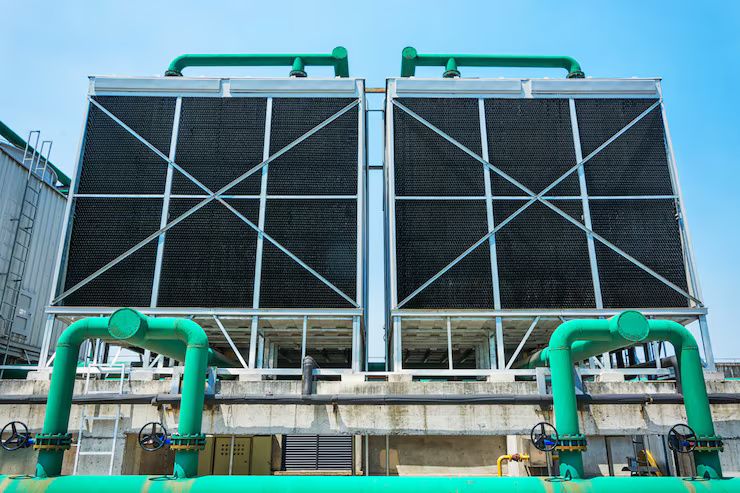
Importance: Why Industrial Chillers Matter Today
Industrial chillers play a critical role in modern manufacturing and processing environments. As industries adopt advanced automation, high-speed machinery, and sensitive materials, thermal management has become more important than ever.
Key reasons industrial chillers matter include:
-
Temperature stability: Many industrial processes require narrow temperature ranges to function correctly.
-
Equipment protection: Controlled cooling reduces thermal stress on machinery components.
-
Process consistency: Stable cooling supports uniform output and predictable production results.
-
Energy efficiency goals: Optimized process cooling can reduce unnecessary energy loss.
Industries commonly associated with industrial chiller applications include:
-
Plastics and polymer processing
-
Food and beverage production
-
Pharmaceutical and chemical manufacturing
-
Data centers and electronics fabrication
-
Metal processing and machining
Without effective process cooling systems, these industries may face interruptions, quality variations, or reduced operational lifespan of equipment.
Recent Updates: Trends and Developments in Process Cooling
Over the past year, several developments have influenced industrial chiller design and usage, particularly in response to efficiency standards and digital integration.
Notable updates and trends include:
-
2024–2025 efficiency focus: Manufacturers have increased emphasis on high-efficiency compressors and optimized heat exchangers to align with global energy performance benchmarks.
-
Low global warming potential refrigerants: There is a gradual shift toward refrigerants with reduced environmental impact, driven by international climate agreements.
-
Smart monitoring systems: Many modern chillers now integrate sensors and digital controllers that track temperature, pressure, and flow in real time.
-
Modular system architecture: Modular chiller configurations are gaining attention for their scalability and adaptability to changing production needs.
These updates reflect a broader movement toward sustainable industrial cooling and data-driven process control.
Laws and Policies: Regulatory Influence on Industrial Chillers
Industrial chiller systems are influenced by environmental and energy-related regulations, which vary by country but follow similar principles globally.
Common regulatory areas include:
-
Energy efficiency standards: Many regions enforce minimum performance benchmarks for industrial cooling equipment.
-
Refrigerant regulations: Policies limit or phase down refrigerants with high environmental impact, encouraging alternatives with lower emissions potential.
-
Workplace safety rules: Regulations often address pressure systems, electrical safety, and proper handling of cooling fluids.
-
Environmental compliance programs: Government initiatives may encourage efficient cooling practices through reporting frameworks or compliance guidelines.
In countries with developing industrial infrastructure, updated cooling-related standards have been introduced between 2023 and 2025 to align with international norms. These policies influence system design, documentation, and operational monitoring practices.
Tools and Resources for Understanding Process Cooling
A range of tools and resources can help engineers, operators, and learners better understand industrial chiller systems and process cooling concepts.
Helpful resources include:
-
Cooling load calculators: Tools that estimate heat removal requirements based on process parameters.
-
Energy efficiency assessment tools: Platforms that analyze system performance indicators such as coefficient of performance (COP).
-
Technical documentation libraries: Manufacturer and industry association guides explaining chiller components and operation principles.
-
Process simulation software: Applications used to model thermal behavior in industrial workflows.
-
Maintenance planning templates: Structured checklists that support routine inspection and performance tracking.
These resources support informed decision-making and clearer understanding of how industrial cooling systems function within complex operations.
Key Components of an Industrial Chiller System
Understanding the main components helps clarify how process cooling systems operate.
| Component | Function |
|---|---|
| Compressor | Circulates refrigerant and increases pressure |
| Condenser | Releases heat absorbed from the process |
| Expansion device | Controls refrigerant flow and pressure |
| Evaporator | Absorbs heat from the cooling fluid |
| Control system | Monitors and regulates operating parameters |
Each component works together to maintain a continuous heat removal cycle tailored to industrial process requirements.
Common Types of Industrial Chillers
Different chiller types are used depending on application scale, environment, and cooling precision.
| Chiller Type | Typical Application |
|---|---|
| Air-cooled chiller | Facilities with limited water availability |
| Water-cooled chiller | Large-scale industrial plants |
| Absorption chiller | Sites using waste heat sources |
| Process chiller | Dedicated industrial production lines |
Selecting the appropriate type depends on process characteristics rather than general building cooling needs.
FAQs: Common Questions About Industrial Chillers
What is the main purpose of an industrial chiller?
The primary purpose is to remove excess heat from industrial processes and maintain stable operating temperatures for equipment and materials.
How is process cooling different from comfort cooling?
Process cooling focuses on precise temperature control for industrial operations, while comfort cooling is designed for human comfort in indoor spaces.
What fluids are commonly used in industrial chillers?
Most systems use water or water-based mixtures, sometimes combined with additives to support thermal stability and corrosion resistance.
Are industrial chillers used continuously?
Many industrial chiller systems operate continuously or for extended cycles, depending on production demands and process design.
How do regulations affect industrial chiller systems?
Regulations influence energy efficiency requirements, refrigerant selection, and safety practices, shaping how systems are designed and monitored.
Visual Overview: Simplified Cooling Cycle
| Step | Description |
|---|---|
| Heat absorption | Cooling fluid absorbs heat from the process |
| Refrigeration cycle | Heat is transferred to refrigerant |
| Heat rejection | Condenser releases heat to surroundings |
| Fluid recirculation | Cooled fluid returns to the process |
This cycle repeats continuously to support stable process temperatures.
Conclusion
Industrial chiller systems are a foundational element of modern process cooling. They exist to manage heat generated by industrial operations and ensure consistent, controlled thermal conditions. As industries evolve toward higher efficiency, automation, and sustainability, the role of industrial chillers continues to expand.
Recent developments highlight improved energy performance, environmentally responsible refrigerants, and smarter monitoring capabilities. At the same time, laws and policies guide how these systems are designed and operated, encouraging responsible energy use and environmental compliance.
By understanding the context, importance, system components, and available tools, readers can develop a clearer view of how industrial chillers support reliable and efficient industrial processes across diverse sectors.