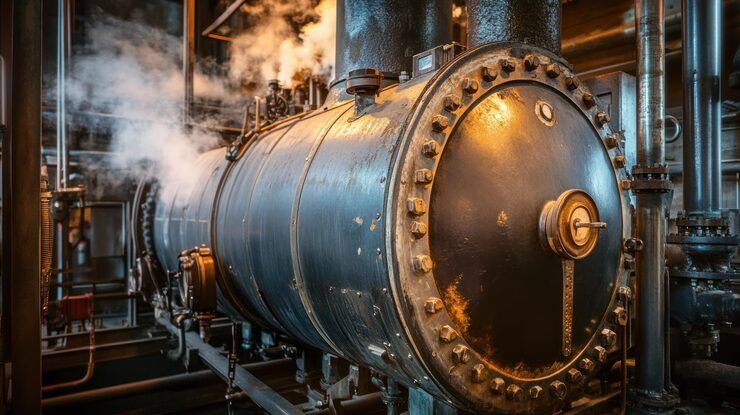
A steam boiler is a closed vessel designed to heat water and produce steam under controlled pressure. The steam generated is used as a source of thermal energy for heating, power generation, and industrial processes. Steam boilers exist because many applications require a reliable way to transfer heat efficiently over distances or into systems where direct flame heating is not practical.
Historically, steam boilers played a central role in the Industrial Revolution, powering early engines and manufacturing plants. Today, they remain essential in power stations, process industries, commercial buildings, and institutional facilities. While modern designs are more efficient and safer, the core principle remains the same: converting water into steam through controlled heat input.
Steam boiler knowledge is often considered a foundational topic in mechanical engineering, energy systems, and industrial operations. For new learners, understanding how a boiler works provides insight into broader concepts such as heat transfer, pressure systems, and energy efficiency.
Importance
Steam boilers matter because they support a wide range of essential activities across industries and public infrastructure. Their importance extends beyond factories into everyday environments such as hospitals, food processing units, and district heating systems.
Key reasons this topic matters today include:
-
Energy utilization: Steam is an efficient medium for transferring thermal energy.
-
Industrial reliability: Many production processes depend on consistent steam pressure and temperature.
-
Safety awareness: Boilers operate under pressure, making correct design and operation critical.
-
Environmental impact: Boiler efficiency directly affects fuel use and emissions.
Industries and groups affected by steam boiler systems include:
-
Power generation facilities
-
Manufacturing and processing plants
-
Building operations and maintenance teams
-
Engineering students and technical trainees
Steam boilers help solve problems related to controlled heating, large-scale energy distribution, and process stability. Without them, many industrial and commercial systems would require less efficient or more complex alternatives.
Recent Updates
Over the past year, steam boiler technology has continued to evolve, with a focus on efficiency, monitoring, and environmental performance.
Notable developments during 2024–2025 include:
-
Improved efficiency standards: Many countries updated thermal efficiency benchmarks for industrial boilers in 2024, encouraging better fuel utilization.
-
Digital monitoring trends: The use of smart sensors and automated control systems increased, allowing real-time tracking of pressure, temperature, and water quality.
-
Fuel flexibility research: Studies published in mid-2024 highlighted improved performance of boilers designed for multiple fuel types, including biomass blends.
-
Emission reduction focus: Environmental agencies emphasized low-NOx burner designs and better heat recovery methods during 2024 policy reviews.
These updates show a clear trend toward safer, cleaner, and more data-driven boiler operation, aligning steam boiler systems with modern energy management goals.
Laws or Policies
Steam boilers are regulated because they operate under high pressure and temperature, which can pose safety risks if not properly managed. Most countries enforce strict standards covering design, installation, inspection, and operation.
Common regulatory aspects include:
-
Mandatory pressure vessel certification
-
Periodic inspection and testing
-
Operator competency requirements
-
Emission and efficiency compliance
In many regions, boiler standards align with internationally recognized frameworks such as the ASME Boiler and Pressure Vessel Code, which defines design and safety requirements. Countries often adapt these standards into national rules enforced by labor or industrial safety authorities.
Government programs may also encourage:
-
Adoption of energy-efficient boiler systems
-
Compliance with emission reduction targets
-
Regular safety audits and reporting
Understanding the regulatory environment helps learners appreciate why boiler operation follows strict procedures and documentation practices.
Tools and Resources
Learning and working with steam boilers is supported by a range of technical tools and reference resources. These aids help improve understanding, monitoring, and compliance.
Common tools and resources include:
-
Boiler efficiency calculators for estimating thermal performance
-
Steam tables and thermodynamic charts
-
Pressure and temperature monitoring instruments
-
Water quality testing kits
-
Technical manuals and engineering handbooks
-
Educational websites and digital simulations explaining boiler operation
Example reference table: Steam Boiler Operating Parameters
| Parameter | Typical Range | Purpose |
|---|---|---|
| Operating Pressure | 10–180 bar | Controls steam delivery |
| Steam Temperature | 180–540°C | Determines energy content |
| Feedwater Temperature | 80–120°C | Improves efficiency |
| Blowdown Rate | 2–10% of flow | Maintains water quality |
These tools and references help learners connect theory with real-world boiler operation.
FAQs
What is the basic working principle of a steam boiler?
A steam boiler works by applying heat to water inside a closed vessel. As water absorbs heat, it changes phase into steam, which builds pressure and can be directed for heating or mechanical use.
What are the main types of steam boilers?
Common types include fire-tube boilers, water-tube boilers, and once-through boilers. Each type differs in design, pressure range, and typical applications.
Why is boiler water quality important?
Water quality affects efficiency and safety. Impurities can cause scaling, corrosion, and reduced heat transfer, which may damage components over time.
How is boiler efficiency evaluated?
Efficiency is evaluated by comparing the useful heat output in steam to the energy input from fuel. Factors such as heat losses, blowdown, and insulation influence efficiency.
What makes steam boilers potentially hazardous?
High pressure and temperature create stored energy. Improper operation, poor maintenance, or faulty safety devices can lead to serious incidents, which is why strict regulations exist.
Conclusion
Steam boiler basics form an essential foundation for understanding modern energy and industrial systems. From their historical origins to today’s digitally monitored designs, steam boilers continue to play a vital role in heat generation and process control.
By learning about their purpose, importance, recent developments, regulatory framework, and supporting tools, new learners gain a clear and structured view of how steam boilers function in real-world settings. This knowledge supports safer operation, informed decision-making, and a deeper appreciation of thermal energy systems in everyday and industrial life.