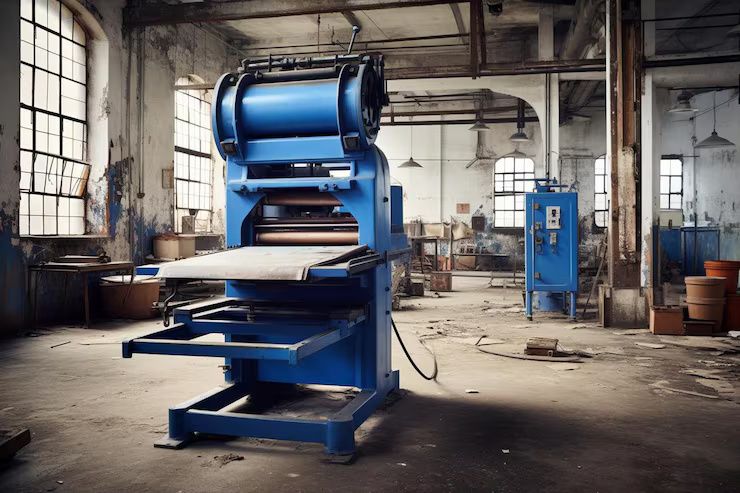
A power press machine is an industrial machine used to shape, cut, or form metal and other materials by applying controlled force through a press mechanism. These machines exist to handle repetitive, high-force operations that are difficult or unsafe to perform manually. Over time, power press machines have become central to manufacturing environments where accuracy, repeatability, and productivity are required.
At a basic level, a power press converts mechanical or electrical energy into linear motion. This motion drives a ram or slide that presses a tool, known as a die, against a workpiece. The result can be punching, blanking, bending, embossing, or forming. Understanding how these mechanisms work helps readers grasp why power press machines remain essential in modern production systems.
Common categories include mechanical presses, hydraulic presses, and servo-driven presses. Each type exists to address different operational needs, such as speed, force control, or precision.
Importance
Power press machines matter today because they support large-scale production across multiple sectors, including automotive components, electrical parts, appliances, and general metal fabrication. Their role affects manufacturers, engineers, machine operators, safety inspectors, and maintenance teams.
Key reasons this topic is important include:
-
Consistency in output
Press mechanisms provide uniform force and repeatable motion, supporting standardized production. -
Efficiency in material forming
High-speed press cycles reduce processing time for shaped components. -
Workplace safety improvement
Modern press designs include guarding systems and monitoring controls that reduce manual risk. -
Material optimization
Accurate press control reduces waste during punching or forming operations.
Without power press machines, many everyday metal components would require slower, less precise manual processes. Understanding press mechanisms helps organizations select appropriate equipment and maintain safer, more reliable operations.
Recent Updates
In the past year, several trends have influenced power press machine design and usage.
Increased adoption of servo press technology (2024–2025)
Servo presses have gained attention due to their programmable motion control. Manufacturers have highlighted improved stroke accuracy and energy efficiency compared to traditional mechanical presses.
Focus on safety automation (late 2024)
Updated machine safety practices emphasize integrated sensors, light curtains, and real-time fault detection. These updates aim to align with global industrial safety standards.
Digital monitoring and data logging (2025)
Press machines are increasingly connected to monitoring systems that track stroke count, load variation, and maintenance intervals. This supports predictive maintenance approaches.
Energy efficiency improvements
Newer hydraulic systems use variable-speed pumps and optimized pressure control, reducing unnecessary energy use during idle cycles.
These updates reflect a broader shift toward smarter, safer, and more controlled press operations.
Laws or Policies
Power press machines are affected by workplace safety regulations and industrial machinery standards in many countries, including India.
In India, press machine usage is influenced by:
-
Factory safety regulations
These rules emphasize proper guarding, emergency stop mechanisms, and operator training. -
Bureau of Indian Standards guidelines
Machinery-related standards outline design and safety expectations for industrial equipment. -
Occupational safety frameworks
Policies require risk assessment, routine inspection, and documented safety procedures.
Internationally, similar frameworks exist that guide press design and operation. These policies focus on preventing accidents related to crushing, shearing, and unexpected machine motion. Compliance supports safer workplaces and consistent machine performance.
Tools and Resources
Several tools and resources support understanding, operating, and maintaining power press machines.
Technical tools and references
-
Press tonnage calculation charts for estimating required force
-
Stroke length and speed reference tables
-
Die design handbooks for press applications
Digital resources
-
Machine monitoring dashboards for load and cycle tracking
-
Maintenance scheduling templates
-
Safety inspection checklists for press equipment
Learning resources
-
Engineering textbooks on metal forming processes
-
Industry training manuals explaining press mechanisms
-
Technical standards documentation related to machine safety
These resources help readers deepen their understanding of press behavior and support informed decision-making in industrial environments.
Understanding Common Press Mechanisms
| Press Type | Energy Source | Key Mechanism | Typical Use |
|---|---|---|---|
| Mechanical Press | Electric motor | Crank or eccentric | High-speed stamping |
| Hydraulic Press | Hydraulic fluid | Cylinder and piston | Deep drawing |
| Servo Press | Servo motor | Programmable drive | Precision forming |
This table highlights how different mechanisms influence press behavior and application suitability.
Operational Force Comparison
| Mechanism | Force Control | Speed Control | Precision Level |
|---|---|---|---|
| Mechanical | Fixed curve | High | Moderate |
| Hydraulic | Variable | Moderate | High |
| Servo | Fully programmable | Variable | Very high |
These comparisons help explain why different press mechanisms are selected for specific manufacturing tasks.
FAQs
What is the main function of a power press machine?
A power press machine applies controlled force to shape or cut materials using dies. It supports forming, punching, and bending operations.
How does a mechanical press differ from a hydraulic press?
A mechanical press uses rotating components like cranks to generate motion, while a hydraulic press uses fluid pressure for controlled force application.
Why is press tonnage important?
Tonnage indicates the maximum force a press can apply. Selecting correct tonnage helps prevent tool damage and ensures proper material forming.
What safety features are commonly used in press machines?
Typical features include fixed guards, light curtains, two-hand control systems, and emergency stop buttons.
How often should a power press be inspected?
Inspection frequency depends on usage intensity and regulatory guidance, but routine checks are typically recommended at regular operational intervals.
Conclusion
Power press machines remain a foundational part of industrial manufacturing due to their ability to deliver consistent force, repeatable motion, and efficient material processing. By understanding press mechanisms, readers gain insight into how different designs address speed, precision, and safety needs.
Recent developments show a clear movement toward smarter control systems, improved safety integration, and better energy efficiency. Awareness of laws, tools, and operational principles supports informed use and safer environments.
A clear understanding of power press machines helps learners, engineers, and decision-makers appreciate their role in modern production systems and the importance of proper mechanism selection and maintenance.