Metal Sheet Machines: A Complete Guide to Sheet Metal Processing and Fabrication
Metal sheet machines are industrial systems used to cut, bend, shape, punch, form, and process metal sheets into finished components and products.
These machines play a major role in manufacturing industries because sheet metal is widely used in construction, transportation, electronics, energy systems, appliances, machinery, and infrastructure projects.
The development of sheet metal processing technology has evolved alongside industrialization. Early fabrication relied heavily on manual tools and mechanical equipment, while modern facilities use computer-controlled systems capable of producing highly accurate components at large production volumes.
Today, metal sheet machine manufacturers develop a wide range of equipment designed for different fabrication requirements. These include CNC sheet metal cutting machines, laser sheet metal cutting machines, bending equipment, punching systems, and automated material handling technologies. Together, these systems form the foundation of modern sheet metal manufacturing operations.
Many production facilities utilize sheet metal processing equipment as part of integrated manufacturing environments that combine design software, automation systems, inspection technologies, and industrial sheet metal machinery into coordinated workflows.
Importance
Metal sheet fabrication is essential to modern industry because sheet metal components are used in countless products and structures.
Supporting Manufacturing Industries
Sheet metal components are found in many sectors, including:
- Automotive manufacturing
- Aerospace production
- Construction projects
- Consumer electronics
- Energy infrastructure
- Industrial equipment
Without sheet metal fabrication, many products and systems used in everyday life would be difficult to manufacture efficiently.
Enabling Precision Production
Modern CNC sheet metal fabrication equipment allows manufacturers to produce components with consistent dimensions and detailed geometries.
Precision manufacturing is important when components must fit together accurately within larger assemblies.
Supporting Large-Scale Production
Industrial sheet metal machinery enables facilities to process large quantities of material within controlled manufacturing environments.
Automation technologies help support continuous production and operational consistency.
Contributing to Infrastructure Development
Buildings, transportation systems, electrical enclosures, machinery frames, and industrial equipment frequently incorporate fabricated metal sheet components.
As a result, sheet metal manufacturing contributes to economic development and infrastructure growth.
Recent Updates
The sheet metal fabrication sector has experienced several technological developments between 2024 and 2026.
Expansion of Smart Manufacturing
Manufacturing facilities increasingly use connected equipment and digital monitoring systems.
Modern sheet metal processing equipment may include:
- Real-time production tracking
- Remote diagnostics
- Machine performance monitoring
- Predictive maintenance capabilities
- Digital workflow management
These technologies support improved operational visibility.
Growth of Automation
Automation continues to influence fabrication operations.
CNC sheet metal fabrication equipment is often integrated with robotic loading systems, automated storage solutions, and computerized production controls.
Automation helps manufacturers manage complex production schedules and material handling activities.
Advancements in Laser Technology
Laser sheet metal cutting machines continue to evolve through improvements in cutting precision, energy efficiency, and process control.
These technologies support a wide range of fabrication applications across multiple industries.
Increased Data Analytics
Manufacturers are using production data to monitor machine performance, optimize workflows, and improve equipment utilization.
Data-driven decision-making is becoming increasingly important in fabrication facilities.
Sustainability Initiatives
Many organizations are exploring methods to reduce material waste, improve energy efficiency, and enhance resource management within fabrication operations.
Laws or Policies
Sheet metal manufacturing is influenced by regulations related to workplace safety, environmental management, and industrial operations.
Workplace Safety Regulations
Metal fabrication facilities contain cutting systems, forming equipment, and automated machinery.
Safety requirements often address:
- Machine guarding
- Emergency stop functions
- Personal protective equipment
- Operator training
- Workplace hazard management
These measures help reduce operational risks.
Machinery Standards
Industrial equipment is commonly designed according to engineering and safety standards.
Standards may cover:
- Electrical safety
- Mechanical reliability
- Equipment testing
- Control systems
- Operational documentation
Compliance supports safe equipment operation.
Environmental Requirements
Manufacturing facilities may be subject to environmental regulations related to emissions, waste handling, energy consumption, and material management.
Environmental requirements vary by region and industry.
Occupational Health Requirements
Fabrication environments may involve noise, dust, heat, and other workplace conditions.
Occupational health regulations help organizations manage these factors appropriately.
| Regulatory Area | Purpose |
|---|---|
| Workplace Safety | Protects equipment operators |
| Machinery Standards | Supports equipment reliability |
| Environmental Compliance | Addresses industrial impacts |
| Occupational Health | Manages workplace conditions |
| Documentation Requirements | Supports operational records |
Tools and Resources
A variety of digital tools support sheet metal fabrication operations.
CAD Software
Computer-aided design software is widely used to create component drawings and digital models.
Design files often serve as the foundation for manufacturing instructions.
CAM Systems
Computer-aided manufacturing platforms convert design data into machine instructions for fabrication equipment.
These systems support automated production workflows.
Production Monitoring Platforms
Modern facilities frequently use software platforms that track equipment performance, production schedules, and manufacturing output.
These tools help improve operational visibility.
Quality Inspection Systems
Inspection technologies verify dimensional accuracy and product quality throughout manufacturing processes.
Examples include:
- Laser measurement systems
- Coordinate measuring machines
- Optical inspection equipment
- Digital quality monitoring tools
Maintenance Management Platforms
Many facilities use maintenance software to coordinate inspections, equipment upkeep, and sheet metal machine maintenance contracts.
How Metal Sheet Machines Work
Material Preparation
Production begins with metal sheets prepared according to material specifications and manufacturing requirements.
Common materials include steel, aluminum, stainless steel, and copper alloys.
Cutting Operations
CNC sheet metal cutting machines remove material to create desired shapes and component profiles.
Cutting methods may include:
- Laser cutting
- Plasma cutting
- Mechanical cutting
- Waterjet cutting
Each method is selected according to application requirements.
Forming and Bending
After cutting, components may undergo bending or forming processes that create three-dimensional shapes.
Specialized machinery applies controlled force to achieve required geometries.
Assembly and Finishing
Fabricated components may proceed to welding, coating, assembly, or finishing operations depending on the final application.
Quality inspections often occur throughout the process.
Types of Sheet Metal Machines
Laser Sheet Metal Cutting Machines
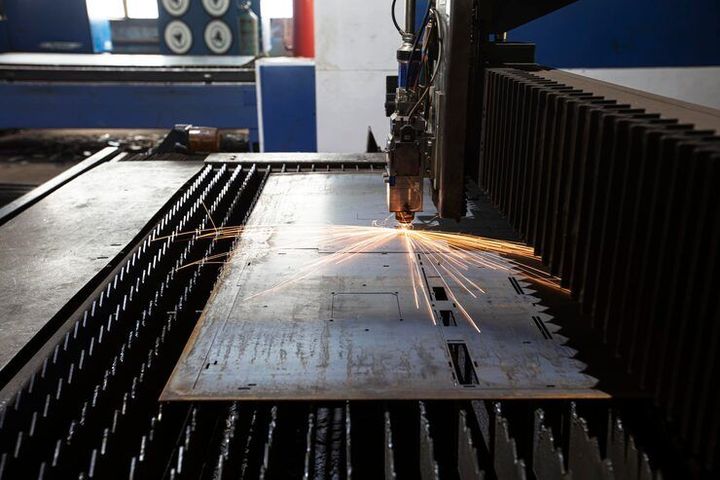
Laser sheet metal cutting machines use focused laser energy to cut metal materials with high precision.
These systems are commonly used in industries requiring detailed component designs.
CNC Sheet Metal Cutting Machines
CNC-controlled cutting systems use programmed instructions to automate material processing operations.
These machines support consistent and repeatable production.
Punching Machines
Punching equipment creates holes, slots, and other features within sheet metal components.
These systems are frequently integrated into larger production environments.
Press Brakes
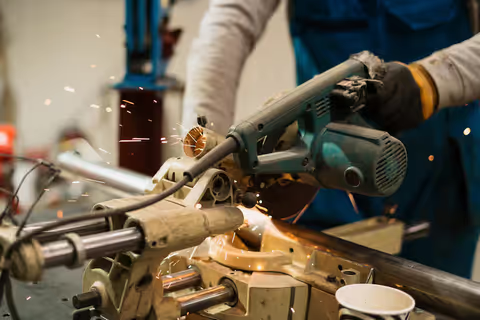
Press brakes are used to bend and form sheet metal into specific shapes and angles.
They play a central role in fabrication processes.
Integrated Production Systems
Many facilities operate industrial sheet metal machinery as part of automated manufacturing lines that combine cutting, forming, inspection, and material handling technologies.
Industry Participants
Metal Sheet Machine Manufacturers
Metal sheet machine manufacturers design and produce fabrication equipment used throughout manufacturing industries.
Their activities include engineering, equipment development, testing, and technology innovation.
Equipment Suppliers
Organizations supplying sheet metal processing equipment help support manufacturing operations across different sectors and geographic regions.
Automation Specialists
Automation providers develop robotic systems, digital controls, and integrated manufacturing technologies used in fabrication environments.
Integrated Project Organizations
Companies involved in turnkey sheet metal manufacturing solutions coordinate equipment integration, production planning, and facility development activities.
Maintenance Specialists
Organizations managing sheet metal machine maintenance contracts support equipment inspections, repairs, and reliability programs.
FAQs
What are metal sheet machines used for?
Metal sheet machines are used to cut, bend, shape, punch, and process sheet metal into components used across manufacturing and industrial applications.
What do metal sheet machine manufacturers produce?
Metal sheet machine manufacturers produce cutting systems, bending equipment, punching machines, fabrication technologies, and automated production equipment.
What are CNC sheet metal cutting machines?
CNC sheet metal cutting machines use computerized controls to automate cutting operations and produce precise component shapes.
How do laser sheet metal cutting machines work?
Laser sheet metal cutting machines use concentrated laser beams to remove material and create detailed cuts within metal sheets.
What is CNC sheet metal fabrication equipment?
CNC sheet metal fabrication equipment consists of automated machinery that performs cutting, forming, punching, and fabrication operations using programmed instructions.
Conclusion
Metal sheet machines are fundamental to modern manufacturing and industrial production. They support the fabrication of components used in construction, transportation, energy systems, electronics, and industrial equipment. Advances in automation, digital monitoring, CNC controls, and advanced metal fabrication technologies continue to shape the industry. Metal sheet machine manufacturers, automation specialists, and equipment providers contribute to the ongoing development of efficient and precise fabrication systems.