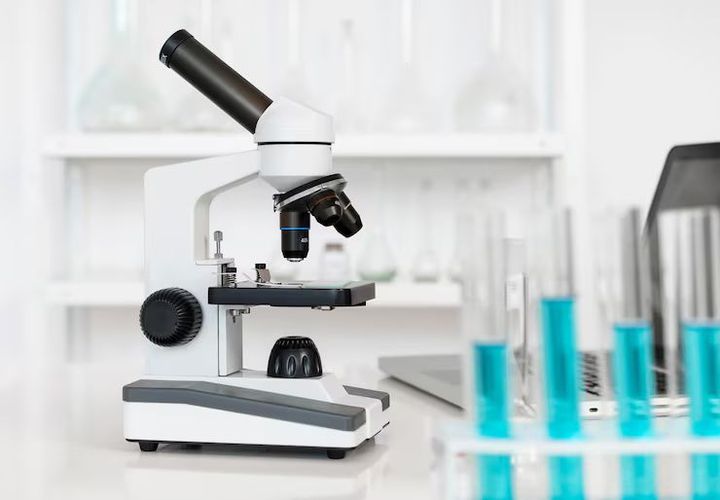
Microscope Basics: Smart Tips for Better Observation
Microscopes have changed the way people understand the world. Tiny structures that cannot be seen with the naked eye become clear and detailed through magnification. From school laboratories to advanced research centers, microscopes play an important role in scientific analysis, biological research, material testing, and industrial quality control.
Understanding microscope basics helps beginners and experienced users achieve better observation results. A few simple techniques can improve image clarity, reduce errors, and make the learning process more enjoyable.
Understanding How a Microscope Works
A microscope is an optical instrument designed to enlarge small objects. It uses a combination of lenses and light to produce a magnified image.
Most standard laboratory microscopes include several key parts:
Eyepiece Lens
The eyepiece is the lens you look through. It commonly provides 10x magnification.
Objective Lenses
These lenses create different levels of magnification, such as 4x, 10x, 40x, and 100x. Combining the eyepiece and objective lens determines the total magnification.
Stage
The stage holds the specimen slide securely during examination.
Light Source
A built-in illuminator or mirror directs light through the sample to improve visibility.
Focus Knobs
The coarse focus knob moves the stage quickly, while the fine focus knob allows precise adjustments for a sharp image.
Learning these basic components makes microscope operation easier and more effective.
Why Proper Observation Matters
Good observation is not simply about making objects appear larger. It is about identifying structures accurately and recording details correctly.
Microscopy is widely used in:
- Biological research
- Medical laboratory analysis
- Environmental studies
- Material science
- Industrial inspection
- Quality assurance testing
- Educational laboratories
Many industries depend on precision imaging and scientific documentation to maintain high standards and improve research outcomes.
Smart Tips for Better Microscope Observation
Start with the Lowest Magnification
Begin with the lowest objective lens. This provides a wider field of view and makes it easier to locate the specimen.
Once the sample is centered, gradually switch to higher magnification for more detailed examination.
Keep the Lenses Clean
Dust, fingerprints, and debris can reduce image quality. Use lens paper and approved cleaning solutions to maintain optical performance.
Clean lenses also help protect expensive laboratory equipment over time.
Adjust the Lighting Carefully
Too much light can wash out important details, while too little light makes observation difficult.
Experiment with brightness settings and diaphragm adjustments until the image appears balanced.
Use Fine Focus for Sharp Images
After locating the specimen with the coarse focus knob, use the fine adjustment to create a crisp image.
Small focus changes often reveal hidden structures that are easy to miss.
Prepare the Sample Correctly
A properly prepared slide improves observation quality. Air bubbles, excess liquid, or uneven placement may interfere with accurate analysis.
Careful sample preparation is a basic skill in scientific research and laboratory practice.
Common Mistakes to Avoid
Many beginners experience the same challenges when using a microscope.
Moving Directly to High Magnification
Higher power does not always produce better results. Finding the specimen first at low magnification saves time and reduces frustration.
Touching Optical Surfaces
Fingers leave oils on the lenses that affect image clarity.
Ignoring Proper Storage
Microscopes should be covered and stored in a clean, dry environment to protect sensitive components.
Forcing the Focus Knobs
Applying too much pressure can damage the focusing mechanism or break the specimen slide.
The Growing Role of Digital Microscopy
Modern technology has expanded the capabilities of traditional optical microscopes.
Digital microscopy systems allow users to:
- Capture high-resolution images
- Share data electronically
- Record scientific observations
- Perform advanced image analysis
- Improve laboratory documentation
Many educational institutions and research organizations now combine digital imaging with conventional microscopy techniques to increase accuracy and collaboration.
Industry reports show that digital imaging technology continues to grow as laboratories adopt smarter analytical tools for research and inspection.
Choosing the Right Magnification
More magnification is not always better. The ideal setting depends on the object being studied.
- 40x to 100x works well for larger specimens.
- 100x to 400x is common for biological samples.
- 1000x may be used for observing bacteria and other microscopic structures.
Understanding the relationship between magnification and resolution helps users obtain meaningful results rather than simply enlarging an image.
How Microscopes Support Modern Science
Microscopes contribute to discoveries in many scientific fields. Researchers use advanced imaging systems to study cells, microorganisms, minerals, and engineered materials.
In industrial environments, microscopic inspection supports product quality and manufacturing precision. In environmental science, researchers examine water samples and soil particles to monitor ecosystems.
These applications demonstrate why microscopy remains one of the most valuable tools in scientific observation and technical analysis.
Future Trends in Microscopy
Artificial intelligence, machine learning, and automated image recognition are changing how microscopic data is analyzed.
Smart laboratory systems can assist with pattern detection and improve research efficiency. High-resolution imaging and digital documentation are expected to become even more important as scientific technology advances.
For students and professionals alike, understanding microscope basics provides a strong foundation for future learning and practical laboratory skills.
Final Thoughts
A microscope is more than a simple magnification device. It is a gateway to discovering details that are invisible to the human eye.
Starting with the correct magnification, maintaining clean lenses, adjusting light properly, and using careful focusing techniques can greatly improve observation quality.