Paper Bowl Machine Basics Explained for Beginners and Manufacturing Professionals
The growing demand for disposable food packaging has encouraged manufacturers to adopt efficient production technologies capable of producing high-quality paper containers at consistent speeds.
Among these technologies, the paper bowl machine plays an essential role by automating the manufacturing process for paper bowls used in restaurants, food delivery, catering, and various takeaway applications. Understanding how these machines operate helps beginners and manufacturing professionals appreciate the engineering behind modern paper packaging production.
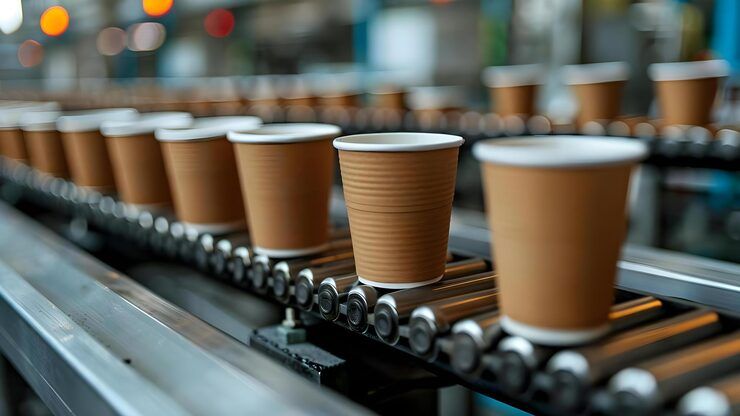
As packaging industries continue moving toward more environmentally conscious solutions, paper bowl manufacturing technology has evolved with improved automation, precision forming systems, and higher production efficiency. Modern machines are designed to support consistent product quality while reducing material waste and improving operational reliability. This paper bowl machine guide explains the core concepts, machine components, production process, practical applications, and important considerations involved in paper bowl manufacturing.
This article explores paper bowl machine fundamentals, operating principles, key components, manufacturing stages, industry applications, decision-making considerations, and emerging trends in paper packaging production.
What Is a Paper Bowl Machine?
A paper bowl machine is an industrial manufacturing system designed to produce disposable paper bowls from specially prepared paperboard. The machine performs multiple production stages automatically, including paper feeding, forming, sealing, shaping, curling, trimming, and finished product collection.
Paper bowls manufactured using these machines are commonly used for soups, noodles, salads, desserts, snacks, frozen foods, and takeaway meals.
Depending on production requirements, machines may produce bowls in various sizes and shapes while maintaining consistent quality throughout continuous manufacturing operations.
How a Paper Bowl Machine Works
The production process begins by feeding coated paperboard into the machine.
The paper material is accurately positioned before being formed into a cylindrical sidewall and securely joined using heat sealing or ultrasonic sealing technology, depending on the machine design.
A pre-cut paper base is then attached to create the bottom of the bowl, followed by forming operations that shape the container into its final structure.
The upper edge is curled to improve strength, user comfort, and overall appearance.
Finished bowls are inspected and collected for packaging after passing through the complete manufacturing sequence.
This automated workflow allows consistent production with minimal manual handling.
Main Components of a Paper Bowl Machine
Several integrated systems work together throughout the production cycle.
Paper Feeding System
The feeding system supplies paperboard accurately into the machine while maintaining consistent alignment during continuous production.
Reliable feeding contributes to smooth operation and reduced material waste.
Forming Unit
The forming unit shapes the paper into the desired bowl structure using precision mechanical and thermal processes.
Accurate forming helps maintain dimensional consistency across production batches.
Sealing System
The sealing unit joins paper edges securely using heat or ultrasonic technology, creating durable sidewall connections.
Strong sealing supports product integrity during food use.
Bottom Forming Section
This section attaches and seals the paper base to complete the bowl structure while maintaining leak resistance.
Curling and Finishing Unit
The curling mechanism shapes the bowl rim, improving structural rigidity, handling comfort, and product appearance before finished bowls are discharged.
Why Automation Matters
Automation improves both productivity and manufacturing consistency.
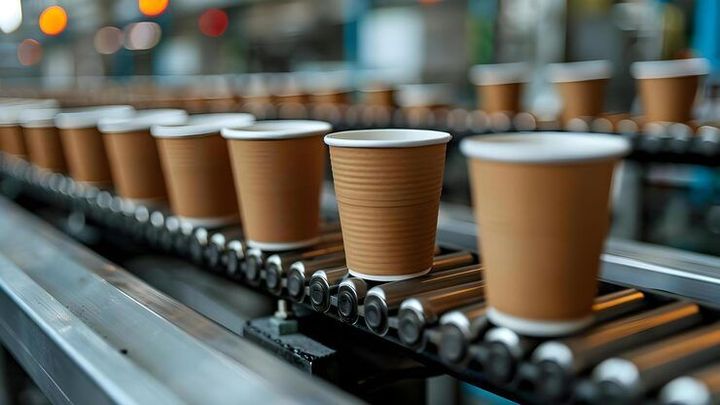
Automated production reduces manual intervention while maintaining repeatable forming accuracy across large production volumes.
Consistent machine settings help minimize dimensional variation between individual bowls.
Automation also improves production efficiency by coordinating multiple manufacturing stages within a continuous operating sequence.
Modern control systems allow operators to monitor production performance while supporting smoother operation and quality management.
These advantages contribute to reliable manufacturing processes.
Applications of Paper Bowl Machines
Paper bowl machines support numerous food packaging industries.
Food processing companies use paper bowls for ready-to-eat meals, soups, and frozen food products.
Restaurants and takeaway businesses rely on disposable bowls for convenient food service.
Catering organizations use paper bowls during large events where lightweight food containers improve operational efficiency.
Airlines, educational institutions, healthcare facilities, and corporate cafeterias also utilize paper bowls for meal distribution.
Packaging manufacturers supply paper containers to retail food brands, supermarkets, and food delivery providers.
These applications demonstrate the broad importance of paper bowl manufacturing technology.
Production Quality Considerations
Several factors influence production quality.
Paperboard strength affects the finished bowl's structural performance and durability.
Accurate temperature control supports reliable sealing while preventing material damage.
Consistent forming pressure helps maintain uniform bowl dimensions.
Proper machine calibration reduces production variation and improves manufacturing stability.
Routine maintenance of forming dies, sealing units, sensors, and mechanical components further contributes to dependable long-term operation.
Quality inspection throughout production helps identify defects before packaging.
These practices support consistent manufacturing performance.
Decision Guide: Choosing the Right Paper Bowl Machine
Selecting the best paper bowl machine depends on production capacity, bowl size range, automation level, sealing technology, material compatibility, maintenance accessibility, and future production requirements.
Smaller manufacturing operations may prioritize compact machines with flexible size adjustment, while larger production facilities often benefit from highly automated systems capable of continuous high-volume output. Facilities producing multiple container sizes frequently value machines that allow relatively efficient tooling changes.
A paper bowl machine comparison generally evaluates production speed, forming precision, sealing reliability, automation features, energy efficiency, operating stability, maintenance requirements, and compatibility with different paper materials.
In many cases, automated production systems tend to work well because they improve manufacturing consistency while supporting efficient long-term operation.
The real difference appears when machine capabilities closely match production objectives, product specifications, and operational workflow.
Emerging Trends in Paper Bowl Manufacturing
Paper packaging technology continues advancing rapidly.
Modern machines increasingly incorporate intelligent control systems that monitor production performance in real time.
Servo-driven mechanisms improve forming accuracy while supporting greater production efficiency.
Manufacturers are exploring energy-efficient heating systems and optimized mechanical designs that reduce operational energy consumption.
Greater compatibility with recyclable and responsibly sourced paper materials is supporting evolving sustainability objectives within the packaging industry.
Digital monitoring, predictive maintenance, and automated quality inspection are also becoming more common across advanced manufacturing facilities.
These innovations continue improving productivity, precision, and manufacturing flexibility.
Frequently Asked Questions
1. What is a paper bowl machine?
A paper bowl machine is industrial equipment that automatically manufactures disposable paper bowls through forming, sealing, shaping, and finishing processes.
2. What products can a paper bowl machine manufacture?
These machines commonly produce paper bowls used for soups, noodles, salads, desserts, snacks, frozen foods, and takeaway meals.
3. What are the main components of a paper bowl machine?
Key components include the paper feeding system, forming unit, sealing system, bottom forming section, curling unit, and control system.
4. Why is automation important in paper bowl manufacturing?
Automation improves production consistency, operational efficiency, manufacturing accuracy, and overall productivity while reducing manual handling.
5. What factors should be considered when selecting a paper bowl machine?
Production capacity, automation level, bowl size compatibility, sealing technology, maintenance requirements, energy efficiency, and operational flexibility should all be evaluated.
Conclusion
The paper bowl machine is an essential part of modern paper packaging manufacturing, enabling efficient production of high-quality disposable food containers through automated forming and sealing processes. Understanding machine components, production stages, and operational considerations helps both beginners and manufacturing professionals better appreciate the technology behind paper container production. This comprehensive paper bowl machine guide highlights the importance of precision engineering, automation, and quality control in supporting reliable manufacturing performance. As sustainable packaging solutions continue expanding, paper bowl machines will remain an important technology within the evolving food packaging industry.