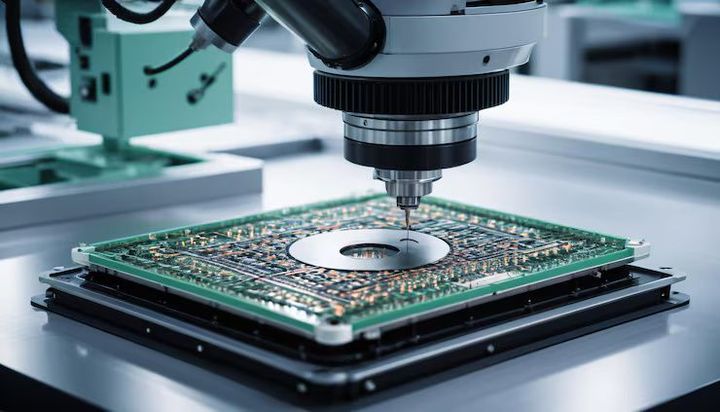
Semiconductor Manufacturing Equipment: Complete Guide to Modern Chip Production Systems
Semiconductor manufacturing equipment is the foundation of modern electronics production.
These highly specialized machines are used to produce semiconductor chips that power smartphones, computers, electric vehicles, medical devices, industrial automation systems, telecommunications infrastructure, and artificial intelligence applications.
Every semiconductor chip goes through hundreds of precise manufacturing steps before becoming part of an electronic device. These steps require advanced manufacturing equipment capable of working at microscopic and even nanometer scales.
As global demand for faster processors, memory chips, and connected devices continues to grow, semiconductor manufacturing equipment has become one of the most important technologies supporting modern industries. This guide explains how semiconductor manufacturing equipment works, the major equipment categories, practical applications, and future industry developments in simple language.
Understanding the Concept
Semiconductor manufacturing equipment refers to the highly specialized machines used to manufacture integrated circuits (ICs), microprocessors, memory chips, sensors, and other semiconductor components.
Unlike traditional manufacturing, semiconductor production requires extremely clean environments called cleanrooms. Even tiny dust particles invisible to the human eye can affect chip quality.
A complete semiconductor fabrication facility includes many different equipment systems that work together throughout the manufacturing process.
These systems perform tasks such as:
- Wafer preparation
- Thin film deposition
- Photolithography
- Etching
- Ion implantation
- Chemical cleaning
- Metrology and inspection
- Packaging and testing
Each production stage contributes to building microscopic electronic circuits on silicon wafers.
Key Types or Categories
Semiconductor manufacturing equipment includes several major categories.
Wafer Processing Equipment
Silicon wafers are the starting material for semiconductor manufacturing.
Wafer processing equipment prepares the wafer surface before circuit fabrication begins.
Examples include:
- Wafer cleaning systems
- Wafer polishing equipment
- Surface preparation machines
- Wafer handling systems
These machines help maintain smooth, contamination-controlled wafer surfaces.
Photolithography Equipment
Photolithography creates microscopic circuit patterns on semiconductor wafers.
This equipment projects circuit designs onto light-sensitive materials using advanced optical systems.
Modern photolithography enables billions of tiny transistors to fit on a single chip.
Deposition Equipment
Deposition equipment adds extremely thin material layers onto semiconductor wafers.
Common deposition methods include:
- Chemical Vapor Deposition (CVD)
- Physical Vapor Deposition (PVD)
- Atomic Layer Deposition (ALD)
These layers form important electrical structures inside semiconductor devices.
Etching Equipment
Etching removes selected materials from the wafer to create detailed circuit structures.
Two common methods are:
- Wet etching
- Dry plasma etching
Etching follows photolithography to produce precise semiconductor patterns.
Ion Implantation Equipment
Ion implantation modifies semiconductor materials by introducing controlled amounts of specific ions.
This process changes the electrical characteristics of semiconductor devices.
Inspection and Metrology Equipment
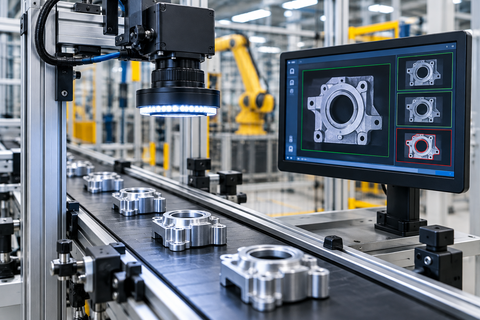
Inspection equipment measures and analyzes wafer quality throughout production.
Typical systems include:
- Optical inspection
- Electron beam inspection
- Thickness measurement
- Defect detection
- Critical dimension measurement
Continuous inspection improves manufacturing accuracy.
Semiconductor Packaging Equipment
After chip fabrication, packaging equipment prepares semiconductor devices for practical use.
Common equipment includes:
- Die bonding machines
- Wire bonding systems
- Flip-chip assembly equipment
- Encapsulation machines
- Final testing equipment
Packaging protects semiconductor chips and enables reliable electrical connections.
Important Subsections
Cleanroom Equipment
Semiconductor manufacturing requires highly controlled cleanroom environments.
Cleanroom systems maintain:
- Air filtration
- Temperature control
- Humidity control
- Particle removal
- Pressure management
These conditions help prevent contamination.
Automated Material Handling Systems
Automated handling systems safely transport wafers between production equipment.
Automation reduces manual handling and improves manufacturing consistency.
Process Control Systems
Process control continuously monitors production conditions.
Parameters commonly monitored include:
- Temperature
- Pressure
- Gas flow
- Chemical concentration
- Process timing
Maintaining stable conditions improves production quality.
Quality Inspection
Quality inspection occurs throughout manufacturing rather than only at the end.
Frequent inspection allows manufacturers to identify production variations early.
How It Works
Semiconductor manufacturing follows a carefully controlled production sequence.
Step 1: Wafer Preparation
Silicon wafers are cleaned, polished, and inspected before production begins.
The surface must remain extremely clean.
Step 2: Layer Deposition
Thin material layers are deposited onto the wafer.
Different materials create electrical pathways, insulation, and semiconductor structures.
Step 3: Circuit Pattern Creation
Photolithography transfers microscopic circuit designs onto the wafer.
Light-sensitive materials temporarily protect selected regions.
Step 4: Material Removal
Etching removes unwanted materials while preserving circuit patterns.
This process gradually forms transistor structures.
Step 5: Electrical Modification
Ion implantation adjusts the electrical properties of semiconductor materials.
This enables transistor operation.
Step 6: Inspection
Inspection equipment verifies manufacturing accuracy after multiple production stages.
Defects are identified before production continues.
Step 7: Packaging and Testing
Completed semiconductor chips are separated, packaged, electrically tested, and prepared for integration into electronic products.
Benefits and Advantages
Semiconductor manufacturing equipment provides numerous advantages.
High Precision
Modern equipment operates with nanometer-level accuracy.
This enables extremely complex semiconductor designs.
Improved Manufacturing Quality
Automated inspection and process control improve production consistency.
Higher quality reduces manufacturing defects.
Greater Production Efficiency
Advanced manufacturing equipment supports continuous production while maintaining precision.
Automation reduces production variability.
Support for Advanced Electronics
Modern semiconductor equipment enables production of:
- Artificial intelligence processors
- Mobile processors
- Graphics processors
- Memory devices
- Automotive electronics
- Industrial control chips
Continuous Innovation
Improved manufacturing equipment allows semiconductor technology to become faster, smaller, and more energy efficient.
Real-World Examples or Applications
Semiconductor manufacturing equipment supports many industries.
Consumer Electronics
Smartphones, tablets, laptops, and wearable devices all depend on semiconductor chips produced using advanced manufacturing equipment.
Automotive Industry
Modern vehicles use semiconductor devices for:
- Driver assistance systems
- Electric power management
- Battery management
- Navigation
- Engine control
- Infotainment
Medical Technology
Medical equipment includes semiconductor components for:
- Diagnostic imaging
- Patient monitoring
- Laboratory instruments
- Wearable medical devices
Industrial Automation
Factories depend on semiconductor devices inside:
- Industrial robots
- PLC controllers
- Motion control systems
- Industrial sensors
Telecommunications
Semiconductors power:
- 5G infrastructure
- Data centers
- Network equipment
- Satellite communication
- Fiber optic networks
Important Factors to Understand
Several important factors influence semiconductor manufacturing.
Cleanroom Standards
Clean manufacturing environments remain essential throughout production.
Even microscopic contamination can affect chip quality.
Precision Equipment Calibration
Equipment requires regular calibration to maintain manufacturing accuracy.
Consistent calibration supports reliable production.
Material Quality
High-purity materials improve semiconductor performance.
Manufacturers carefully control raw material quality.
Process Integration
Each manufacturing stage depends on the previous step.
Small production variations can affect later processes.
Equipment Maintenance
Routine maintenance helps maintain production stability and equipment reliability.
Preventive maintenance reduces unexpected downtime.
Future Trends and Industry Insights
Semiconductor manufacturing equipment continues evolving rapidly.
Artificial Intelligence Process Optimization
Artificial intelligence helps optimize manufacturing by identifying production trends, improving quality control, and reducing process variation.
Extreme Ultraviolet Lithography
Extreme ultraviolet (EUV) lithography supports production of increasingly smaller semiconductor features.
This technology enables higher transistor density.
Smart Factory Automation
Modern semiconductor facilities increasingly use intelligent automation for:
- Equipment monitoring
- Predictive maintenance
- Production scheduling
- Quality analysis
Connected manufacturing improves operational efficiency.
Advanced Packaging Technologies
Packaging continues evolving with technologies such as:
- 3D chip stacking
- Chiplet integration
- System-in-package designs
These methods improve performance while reducing space.
Sustainable Manufacturing
Manufacturers continue improving:
- Energy efficiency
- Water recycling
- Chemical management
- Resource utilization
These initiatives support environmentally responsible manufacturing.
Conclusion
Semiconductor manufacturing equipment enables the production of the advanced chips that power today's digital world. From wafer preparation and photolithography to deposition, etching, inspection, packaging, and testing, every stage relies on highly specialized equipment operating with exceptional precision.
These manufacturing systems support industries including consumer electronics, automotive technology, healthcare, industrial automation, telecommunications, artificial intelligence, and cloud computing. As demand for faster, smaller, and more efficient semiconductor devices continues to increase, manufacturing equipment will remain at the center of technological progress.
Advances in intelligent automation, AI-driven process control, advanced lithography, smart factories, and next-generation packaging will continue shaping the future of semiconductor manufacturing while improving production quality, efficiency, and innovation.