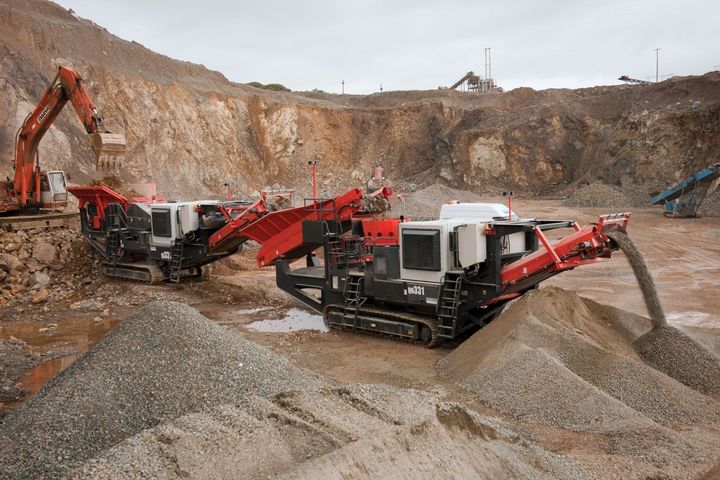
Cone Crushers for Stone Crushing: Complete Guide to Efficient Rock Processing
Cone crushers are widely used in the mining, quarrying, and construction industries to reduce large rocks into smaller, uniform-sized materials.
They are designed to handle medium to hard materials with high efficiency, making them an essential part of many stone processing operations. Their ability to produce consistent output makes them suitable for projects that require aggregates for roads, bridges, buildings, and other infrastructure.
This guide explains how cone crushers work, their main components, common applications, benefits, maintenance practices, and the factors to consider when selecting the right equipment for stone crushing operations.
What Are Cone Crushers?
Cone crushers are compression-based crushing machines that reduce the size of rocks by squeezing them between a moving cone and a stationary outer surface. As the material moves downward through the crushing chamber, it becomes progressively smaller until it reaches the desired size and exits the machine.
Unlike primary crushers, cone crushers are typically used during the secondary, tertiary, or quaternary stages of stone processing, where more precise material sizing is required.
How Cone Crushers Work
The crushing process begins when stones are fed into the top of the machine through a hopper. Inside the crusher, an eccentrically rotating cone moves continuously within a fixed outer shell.
As the moving cone approaches the stationary surface, the material is compressed and fractured. When the cone moves away, the crushed material drops lower into the chamber, where the process repeats until the particles are small enough to leave through the discharge opening.
This continuous crushing cycle allows cone crushers to produce materials with a more consistent particle size compared to many other crushing methods.
Main Components of a Cone Crusher
Several components work together to ensure efficient crushing performance.
The crushing chamber is where the actual size reduction takes place. Its design influences both production capacity and the final particle shape.
The mantle is the moving surface attached to the main shaft. It rotates inside the concave to compress the material.
The concave forms the stationary outer surface of the crushing chamber and works together with the mantle during the crushing process.
The eccentric mechanism creates the rotating motion required for continuous crushing.
Other important components include the drive system, hydraulic system, lubrication system, feed hopper, and discharge opening, all of which contribute to reliable machine operation.
Common Applications of Cone Crushers
Cone crushers are used across many industries that require processed stone and aggregates.
In quarrying operations, they help produce crushed stone for construction materials and road development.
Mining operations use cone crushers to process hard ores before further separation or refining stages.
Construction projects rely on crushed aggregates for concrete production, foundations, drainage systems, and highway construction.
Recycling facilities also use cone crushers to process concrete, asphalt, and other construction materials into reusable aggregates, supporting more sustainable material management.
Benefits of Cone Crushers
One of the main advantages of cone crushers is their ability to produce uniform material sizes. This consistency helps improve the quality of aggregates used in construction and infrastructure projects.
Cone crushers are also capable of handling hard and abrasive materials, making them suitable for demanding operating conditions. Their continuous crushing action supports steady production while reducing interruptions during processing.
Many modern cone crushers include hydraulic adjustment systems that simplify setting changes and help operators adapt the crusher to different material sizes.
Advanced automation features available on many machines also improve operational monitoring by tracking performance, adjusting settings, and identifying maintenance needs before major issues develop.
Factors to Consider When Choosing a Cone Crusher
Selecting the right cone crusher depends on the specific requirements of the crushing operation.
Material hardness is one of the most important considerations, as different rock types require different crushing configurations.
The required production capacity should also match the expected processing volume to maintain efficient operation.
Feed size and desired final product size influence the selection of the crushing chamber and machine configuration.
Other important considerations include energy efficiency, maintenance accessibility, available installation space, and compatibility with existing crushing equipment.
Evaluating these factors helps ensure the crusher meets both current production needs and future operational requirements.
Maintenance and Operating Practices
Regular maintenance helps keep cone crushers operating efficiently while extending equipment life.
Routine inspections should focus on wear parts, lubrication systems, hydraulic components, and drive mechanisms. Replacing worn liners before excessive wear develops helps maintain consistent crushing performance.
Operators should also monitor feed consistency, avoid overloading the crusher, and remove unsuitable materials before they enter the crushing chamber. These practices help reduce unnecessary wear and improve overall equipment reliability.
Keeping the machine clean and following the manufacturer's maintenance schedule also supports long-term performance and reduces unexpected downtime.
Future Trends in Cone Crushing Technology
Stone crushing technology continues to evolve with advances in automation and digital monitoring.
Modern cone crushers increasingly use intelligent control systems that monitor operating conditions in real time. These systems can help optimize production, improve energy efficiency, and identify maintenance requirements before equipment performance declines.
Remote monitoring, predictive maintenance, and advanced sensor technology are also becoming more common, allowing operators to make informed decisions using live operating data.
As quarrying and mining operations continue to modernize, cone crushers are expected to become even more efficient, reliable, and environmentally responsible.
Conclusion
Cone crushers play an essential role in modern stone crushing by producing consistent, high-quality aggregates for mining, quarrying, construction, and recycling applications. Their compression-based design, reliable performance, and ability to process hard materials make them a valuable part of many crushing operations.
Understanding how cone crushers work, their components, practical applications, and maintenance requirements helps operators and project managers choose equipment that supports efficient material processing and long-term operational success.