Yarn Spinning Machine: Industrial Equipment & Uses Guide
Yarn spinning machines are among the most important pieces of equipment in the textile manufacturing industry.
These machines convert raw fibers into yarn, which is later used to produce fabrics, garments, home textiles, technical textiles, and industrial materials.
Modern spinning technology has transformed textile production by improving efficiency, consistency, and yarn quality. Automated systems, digital controls, and advanced monitoring technologies help manufacturers produce yarn with greater precision than ever before.
Whether processing cotton, wool, polyester, viscose, or blended fibers, yarn spinning machines play a central role in the textile production chain. Understanding how these machines work can help students, industry professionals, and business decision-makers better appreciate modern textile manufacturing. Spinning converts fibers into continuous yarn by drawing and twisting them into a strong strand suitable for weaving and knitting.
Quick Facts About Yarn Spinning Machines
| Feature | Description |
|---|---|
| Primary Function | Converts fibers into yarn |
| Main Industries | Textile and apparel manufacturing |
| Common Raw Materials | Cotton, wool, polyester, viscose |
| Core Operations | Drafting, twisting, winding |
| Output Product | Yarn packages or cones |
| Automation Level | Manual to fully automated |
| Production Environment | Textile mills and manufacturing facilities |
| Key Benefit | Consistent yarn production |
What Is a Yarn Spinning Machine?
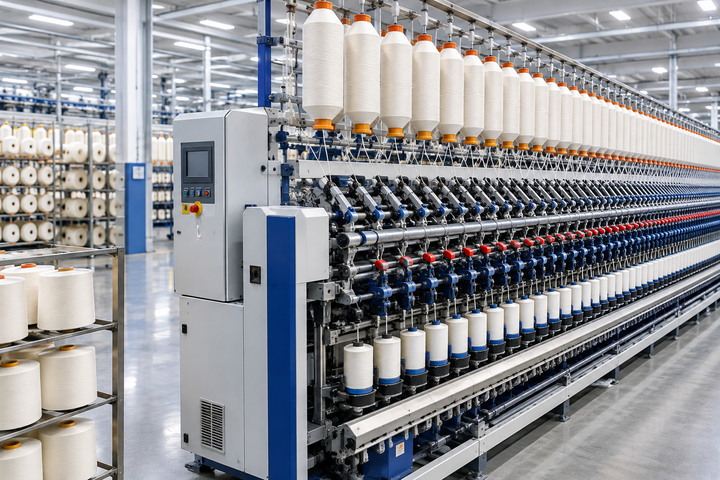
A yarn spinning machine is industrial equipment designed to transform loose textile fibers into continuous yarn. The machine drafts fibers to the required thickness, inserts twist to create strength, and winds the finished yarn onto a package or bobbin.
The yarn produced by spinning machines becomes the foundation for woven fabrics, knitted materials, industrial textiles, and numerous consumer products.
For example, cotton fibers harvested from farms must pass through multiple preparation stages before entering a spinning machine, where they are transformed into yarn suitable for fabric production.
Understanding the Yarn Spinning Process
Yarn production involves several coordinated manufacturing steps.
Fiber Preparation
Raw fibers are cleaned and prepared before spinning.
Drafting
Fibers are stretched into a thinner and more uniform strand.
Twist Insertion
Twisting binds fibers together and provides strength.
Winding
Finished yarn is wound onto bobbins, cones, or packages for later processing. Drafting, twisting, and winding are the three core functions performed by spinning equipment.
Yarn Manufacturing Flow
| Production Stage | Main Equipment | Output |
|---|---|---|
| Opening & Cleaning | Blow Room Equipment | Cleaned Fibers |
| Carding | Carding Machine | Sliver |
| Drawing | Draw Frame | Drawn Sliver |
| Roving | Speed Frame | Roving |
| Spinning | Ring Frame or Other Spinning System | Yarn |
| Winding | Winding Machine | Yarn Cone or Package |
The textile spinning chain typically progresses through cleaning, carding, drawing, roving, spinning, and winding operations before producing finished yarn packages.
Types of Yarn Spinning Machines
Ring Spinning Machines
Ring spinning remains one of the most widely used yarn production methods due to its ability to produce strong, high-quality yarn across a wide range of applications.
Characteristics
- High yarn quality
- Wide fiber compatibility
- Suitable for fine yarn production
- Strong and durable yarn output
Rotor Spinning Machines
Rotor spinning is also known as open-end spinning.
Characteristics
- Higher production speed
- Reduced processing steps
- Suitable for medium and coarse yarns
- Commonly used for denim and towels
Air-Jet Spinning Machines
Air-jet systems use high-speed air streams to create yarn.
Characteristics
- High production rates
- Low yarn hairiness
- Suitable for modern textile manufacturing
Compact Spinning Machines
Compact spinning improves fiber control during yarn formation.
Characteristics
- Improved yarn strength
- Reduced fiber protrusion
- Enhanced yarn uniformity
Spinning Technology Comparison
| Technology | Production Speed | Yarn Quality | Typical Applications |
|---|---|---|---|
| Ring Spinning | Moderate | High | Apparel, premium textiles |
| Rotor Spinning | High | Moderate | Denim, towels |
| Air-Jet Spinning | Very High | Good | Industrial textile production |
| Compact Spinning | Moderate | Very High | Premium yarn applications |
Major Components of a Yarn Spinning Machine
| Component | Function |
|---|---|
| Drafting System | Reduces fiber thickness |
| Spindle | Rotates to form yarn |
| Bobbin | Collects finished yarn |
| Ring and Traveller | Assists twisting process |
| Drive System | Powers machine operation |
| Sensors | Monitor production |
| Control Unit | Manages machine settings |
The spindle, drafting system, bobbin, and ring traveller are among the key elements responsible for yarn formation and winding.
Yarn Spinning Machine Architecture
Fiber Feeding System
Fibers enter the machine in a controlled manner.
Drafting Zone
Rollers draw fibers to the required thickness.
Twisting Zone
The machine inserts twist to bind fibers together.
Winding System
Finished yarn is wound onto packages.
Monitoring System
Sensors and controls continuously monitor production quality.
Automation Layer
Modern equipment increasingly uses automated systems to optimize productivity and consistency. Advanced spinning systems may include sensors, automation, and centralized production monitoring.
How a Yarn Spinning Machine Works
Step 1: Feed Fibers
Prepared fibers enter the machine.
Step 2: Draft Fibers
Rollers reduce the fiber strand thickness.
Step 3: Insert Twist
The machine twists fibers into a continuous yarn.
Step 4: Wind Yarn
The yarn is wound onto a package.
Step 5: Quality Monitoring
Sensors verify consistency and detect irregularities.
Benefits and Advantages
High Production Efficiency
Modern spinning machines can produce large quantities of yarn efficiently.
Consistent Quality
Automation helps maintain uniform yarn properties.
Reduced Material Waste
Advanced controls improve resource utilization.
Scalability
Systems can support various production volumes.
Fiber Flexibility
Multiple fiber types can be processed.
Improved Process Control
Digital monitoring enhances manufacturing precision.
Production Capacity Comparison
| Machine Type | Typical Production Capability |
|---|---|
| Ring Spinning | Fine to medium yarn production |
| Rotor Spinning | High-volume yarn production |
| Air-Jet Spinning | Very high production rates |
| Compact Spinning | Premium yarn manufacturing |
Applications of Yarn Spinning Machines
Apparel Manufacturing
Used for yarn production in clothing textiles.
Home Textiles
Supports towels, bedding, curtains, and upholstery fabrics.
Technical Textiles
Produces yarn for specialized industrial applications.
Industrial Fabrics
Used in filtration, reinforcement, and protective materials.
Medical Textiles
Supports production of specialized textile materials.
Automotive Textiles
Used in interior fabric manufacturing. Spun yarn is used across apparel, technical textiles, industrial fabrics, medical textiles, and other specialized applications.
Environmental Considerations
Energy Efficiency
Modern spinning systems increasingly focus on energy optimization.
Waste Reduction
Improved process control can reduce fiber waste.
Resource Management
Automation supports more efficient production planning.
Sustainable Manufacturing
New technologies aim to improve operational efficiency and material utilization.
Industry Standards and Safety
Mechanical Safety
Protective systems help reduce operational risks.
Electrical Safety
Industrial controls support safe equipment operation.
Production Monitoring
Sensors monitor machine performance and yarn quality.
Worker Protection
Modern mills incorporate safety procedures and protective measures around machinery.
Quality Assurance
Automated inspection systems help maintain production standards.
Noise and Operating Environment
Spinning machines operate in controlled industrial environments where temperature, humidity, and cleanliness are carefully managed.
Temperature Control
Stable temperatures support consistent yarn quality.
Humidity Management
Humidity helps maintain fiber performance during spinning.
Clean Manufacturing Areas
Clean environments reduce contamination.
Noise Management
Industrial facilities often implement measures to manage equipment noise levels.
Common Challenges and Practical Solutions
| Challenge | Practical Solution |
|---|---|
| Yarn Breakage | Optimize machine settings |
| Fiber Irregularity | Improve fiber preparation |
| Production Downtime | Routine maintenance |
| Quality Variation | Automated monitoring |
| Dust Accumulation | Scheduled cleaning |
| Component Wear | Preventive inspections |
Yarn Spinning Machine Maintenance Schedule
| Maintenance Task | Frequency | Purpose |
|---|---|---|
| Machine Cleaning | Daily | Remove fiber accumulation |
| Roller Inspection | Weekly | Maintain drafting quality |
| Spindle Inspection | Weekly | Ensure smooth operation |
| Sensor Verification | Monthly | Support monitoring accuracy |
| Lubrication | Scheduled Intervals | Reduce wear |
| Comprehensive Inspection | Quarterly | Evaluate machine condition |
Best Practices
- Maintain clean operating conditions.
- Follow preventive maintenance schedules.
- Monitor yarn quality regularly.
- Train operators on machine procedures.
- Inspect components routinely.
- Optimize production settings according to fiber type.
Key Industry Facts
| Fact Area | Information |
|---|---|
| Global Importance | Spinning is a core textile manufacturing process |
| Major Fiber Types | Cotton, wool, synthetic fibers, blends |
| Leading Technology | Ring spinning remains widely used |
| Automation Trend | Increasing adoption of digital monitoring |
| Production Goal | Consistent yarn quality and efficiency |
Ring spinning remains the dominant yarn production technology due to its versatility and yarn quality, while rotor and air-jet technologies focus on higher production speeds.
Expert Insights
Textile engineering specialists generally consider spinning technology one of the most critical stages in textile manufacturing because yarn quality directly influences fabric quality, appearance, strength, and downstream processing performance. Early-stage process control can significantly affect final textile quality.
Future Trends and Industry Insights
Smart Manufacturing
Digital systems continue to improve machine monitoring.
Advanced Sensors
Real-time quality control is becoming increasingly sophisticated.
Increased Automation
Automated material handling is expanding across spinning facilities.
Data-Driven Production
Manufacturers are integrating analytics into production management.
Sustainable Operations
Energy-efficient equipment remains a major industry focus.
Frequently Asked Questions
What is a yarn spinning machine?
A machine that converts textile fibers into continuous yarn.
What is the main purpose of spinning?
To create strong and uniform yarn from fibers.
Which fibers can be processed?
Cotton, wool, polyester, viscose, and many blended fibers.
What is ring spinning?
A traditional spinning method known for producing high-quality yarn.
What is rotor spinning?
A high-speed spinning process also called open-end spinning.
What is air-jet spinning?
A spinning method that uses high-speed air currents to form yarn.
Why is yarn quality important?
Yarn quality influences fabric strength and appearance.
What is drafting?
The process of reducing fiber strand thickness.
What does a spindle do?
It helps create twist and wind yarn.
What is a bobbin?
A component that collects finished yarn.
Why are sensors used?
To monitor quality and machine performance.
What industries use spun yarn?
Textile, apparel, industrial, medical, and technical textile industries.
What affects yarn consistency?
Fiber quality, machine settings, and process control.
Why is maintenance important?
It helps maintain efficiency and product quality.
What future developments are expected?
Greater automation, smart monitoring, and improved sustainability.
Conclusion
Yarn spinning machines are fundamental to textile manufacturing, transforming raw fibers into the yarns that form the basis of countless textile products. Through drafting, twisting, and winding operations, these machines create strong and consistent yarn suitable for weaving, knitting, and technical applications.
As textile manufacturing continues to evolve, spinning technology is becoming increasingly automated, data-driven, and efficient. Advances in monitoring systems, smart controls, and sustainable manufacturing practices are expected to further enhance productivity, quality, and operational performance across the global textile industry.