Understanding Types and Uses of Industrial Equipment in Manufacturing
Industrial equipment plays a vital role in modern manufacturing by helping factories produce goods efficiently, accurately, and consistently.
From processing raw materials to packaging finished products, different types of equipment support nearly every stage of production. As manufacturing continues to evolve, advanced machinery has become essential for improving productivity, maintaining quality, and supporting safe workplace practices.
Understanding the different types of industrial equipment and their applications helps businesses, students, and professionals gain a clearer picture of how manufacturing processes operate. This guide explores the main categories of industrial equipment, their functions, common applications, benefits, challenges, and emerging trends shaping the future of manufacturing.
What Is Industrial Equipment?
Industrial equipment refers to the machinery, tools, and mechanical systems used to manufacture, process, assemble, transport, inspect, and package products. These machines are designed to perform specific tasks that improve efficiency and reduce manual effort in production environments.
Manufacturing facilities often use multiple types of equipment working together to complete different stages of production. Each machine has a unique purpose, contributing to a smooth and organized manufacturing process.
Industrial equipment is widely used in industries such as automotive, food processing, electronics, pharmaceuticals, construction materials, textiles, chemicals, and metal fabrication.
Types of Industrial Equipment
Manufacturing relies on a wide range of equipment, each designed for specific production tasks.
Material Handling Equipment
Material handling equipment moves raw materials, components, and finished products throughout a manufacturing facility.
Common examples include:
- Conveyor systems
- Forklifts
- Pallet trucks
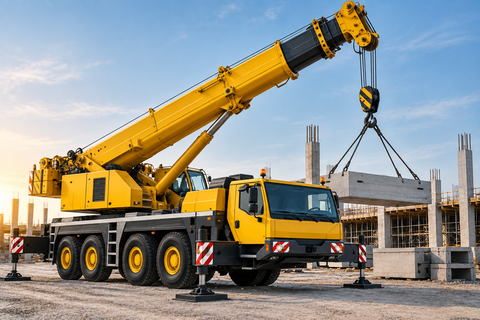
- Overhead cranes
- Automated guided vehicles (AGVs)
These systems improve workflow by reducing unnecessary manual movement.
Processing Equipment
Processing equipment transforms raw materials into usable products.
Examples include:
- Mixing machines
- Grinding equipment
- Cutting machines
- Heating systems
- Cooling systems
The exact equipment depends on the manufacturing process and the materials being handled.
Forming and Fabrication Equipment
These machines shape materials into finished or semi-finished products.
Examples include:
- Press machines
- Rolling machines
- Bending machines
- Stamping equipment
- Welding machines
They are commonly used in metalworking and industrial manufacturing.
Packaging Equipment
Packaging equipment prepares finished products for storage and transportation.
Typical machines include:
- Filling machines
- Sealing machines
- Labeling machines
- Wrapping equipment
- Cartoning systems
Efficient packaging helps maintain product quality during transportation.
Inspection and Quality Control Equipment
Quality inspection equipment helps manufacturers maintain consistent production standards.
Common inspection tools include:
- Vision inspection systems
- Measuring instruments
- Testing equipment
- Sensors
- Scanning devices
These systems help identify defects before products leave the production line.
How Industrial Equipment Supports Manufacturing
Different equipment works together throughout the manufacturing process.
Production usually begins with receiving raw materials, which are transported using material handling systems. Processing equipment then transforms these materials into components or finished products. Fabrication machines shape and assemble parts before inspection equipment checks quality. Finally, packaging systems prepare products for storage and distribution.
By coordinating these stages efficiently, manufacturers can maintain consistent production while reducing unnecessary delays.
Common Applications of Industrial Equipment
Industrial equipment supports manufacturing across many sectors.
Automotive Manufacturing
Automotive factories use industrial equipment for:
- Metal fabrication
- Welding
- Robotic assembly
- Painting
- Component inspection
Food and Beverage Production
Food manufacturing facilities rely on equipment for:
- Mixing ingredients
- Cooking
- Filling containers
- Packaging
- Quality inspection
Pharmaceutical Manufacturing
Pharmaceutical production uses specialized equipment for blending, tablet production, packaging, labeling, and quality verification.
Electronics Manufacturing
Electronic component production often includes:
- Precision assembly
- Circuit board production
- Component placement
- Testing equipment
- Inspection systems
Construction Materials
Manufacturers producing cement, bricks, glass, steel, and building materials use heavy industrial equipment throughout production.
Benefits of Industrial Equipment
Modern industrial equipment provides many practical advantages for manufacturing operations.
One of the greatest benefits is improved productivity. Machines can perform repetitive tasks efficiently while maintaining consistent production quality.
Industrial equipment also improves accuracy by reducing variations that may occur during manual production. Automated systems help manufacturers produce components with greater precision and repeatability.
Safety is another important advantage. Many machines handle heavy lifting, high-temperature operations, and repetitive tasks that would otherwise place workers at greater physical risk.
Modern equipment also supports better resource utilization by improving material flow, reducing waste, and optimizing production schedules.
As manufacturing technology continues to advance, connected equipment provides valuable production data that helps managers monitor performance and identify opportunities for improvement.
Factors to Consider When Selecting Industrial Equipment
Choosing suitable industrial equipment depends on several important considerations.
Before selecting machinery, manufacturers often evaluate:
- Production capacity
- Material compatibility
- Available workspace
- Energy efficiency
- Maintenance requirements
- Automation capabilities
- Safety features
- Future production needs
Careful planning helps ensure equipment supports both current operations and future growth.
Common Challenges in Manufacturing Equipment
Although industrial equipment improves efficiency, manufacturers may encounter several operational challenges.
Equipment wear can affect production over time if routine maintenance is not performed.
Production interruptions may occur when machines require repairs or replacement components.
Training employees to operate advanced equipment safely is also important as manufacturing technology becomes increasingly sophisticated.
Integrating new equipment with existing production systems may require careful planning to maintain efficient workflows.
Regular maintenance, operator training, and performance monitoring help reduce many of these challenges.
Future Trends in Industrial Equipment
Manufacturing technology continues to evolve rapidly.
Artificial intelligence is helping improve production planning and predictive maintenance by identifying potential equipment issues before they affect operations.
Industrial Internet of Things (IIoT) technology connects machines through sensors that provide real-time production information.
Robotics continues to automate repetitive manufacturing tasks, while digital monitoring systems improve production visibility and equipment performance.
Energy-efficient machinery and sustainable manufacturing practices are also becoming increasingly important as manufacturers work toward reducing environmental impact.
These innovations are helping manufacturing facilities become smarter, more connected, and better prepared for future production demands.
Conclusion
Industrial equipment forms the foundation of modern manufacturing by supporting material handling, processing, fabrication, inspection, and packaging activities. Each type of equipment contributes to efficient production, improved quality, and safer workplace operations.
Understanding the different categories of industrial equipment and their applications helps explain how manufacturing facilities produce goods with consistency and precision. As technology continues to advance, modern equipment will play an even greater role in improving productivity, automation, and sustainable manufacturing practices.