Sensor Fusion Techniques: An Informative Guide to Multi-Sensor Data Integration
Sensor fusion techniques refer to methods used to combine data from multiple sensors to produce more accurate, reliable, and meaningful information than any single sensor could provide alone. These techniques are widely used in advanced technologies such as artificial intelligence systems, autonomous vehicles, robotics, smart infrastructure, and industrial automation.
Sensor fusion is the process of combining data from multiple sensors to create a more accurate and complete understanding of an environment. A single sensor often provides limited information—for example, cameras struggle in low light, while radar detects objects but lacks detail.
By integrating inputs from different sensors, systems can overcome these limitations. This approach improves accuracy, reliability, and decision-making in complex environments.
How Sensor Fusion Works
Sensor fusion systems collect data from various sources and process it using algorithms. These algorithms may use statistical models, probabilistic methods, or artificial intelligence to merge the data into a unified output.
The process typically involves analyzing multiple data streams simultaneously and resolving inconsistencies between them.
Common Sensor Types Used
Sensor fusion systems rely on multiple sensor types to gather diverse data.
- Cameras and imaging sensors
- Radar sensors
- LiDAR sensors
- GPS modules
- Ultrasonic sensors
- Accelerometers and gyroscopes
- Environmental sensors (temperature, humidity, pressure)
Combining these sensors improves environmental awareness and system performance.
Why Sensor Fusion Matters in Modern Technology
Sensor fusion plays a critical role in modern digital systems. It allows machines to interpret their surroundings more effectively, which is essential for automation and intelligent decision-making.
As industries adopt AI and smart technologies, the demand for accurate and reliable data interpretation continues to grow.
Key Industry Applications
Sensor fusion is widely used across multiple sectors.
- Autonomous transportation: Enhances navigation and obstacle detection
- Robotics and automation: Supports object recognition and movement planning
- Healthcare devices: Enables accurate monitoring of vital signs
- Smart cities: Improves traffic control and environmental monitoring
These applications demonstrate how sensor fusion supports innovation and efficiency.
Benefits of Sensor Fusion
Sensor fusion offers several advantages that improve system performance.
- Improved data accuracy and reliability
- Enhanced environmental perception
- Reduced uncertainty in decision-making
- Increased resilience if one sensor fails
- Better performance in complex environments
These benefits make sensor fusion essential for modern intelligent systems.
Recent Developments and Industry Trends
Recent advancements have significantly improved sensor fusion technologies. AI-driven algorithms introduced in 2025 enable faster and more accurate real-time data processing.
These innovations are expanding the capabilities of sensor-based systems across industries.
Emerging Trends
Several key trends are shaping the future of sensor fusion.
- Edge computing: Processes data locally to reduce latency
- Multimodal AI models: Combine visual, spatial, and environmental data
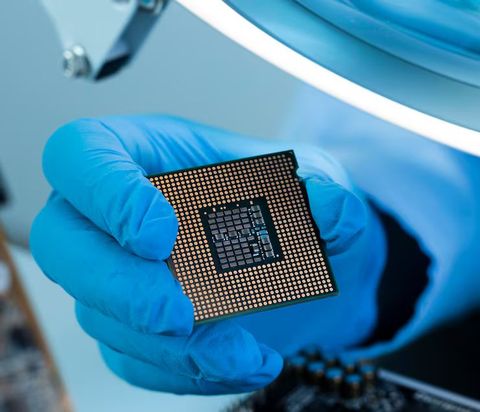
- Advanced semiconductor chips: Improve processing efficiency
- Real-time analytics: Enhances responsiveness in dynamic environments
These trends highlight the growing integration of AI and hardware advancements.
Expanding Industry Adoption
Sensor fusion is gaining traction in various sectors.
- Autonomous driving research
- Drone navigation systems
- Smart agriculture technologies
- Industrial robotics
- Augmented and mixed reality devices
This widespread adoption reflects its increasing importance in modern technology.
Regulations and Policy Considerations
Sensor fusion systems operate within regulatory frameworks focused on safety and data governance. These systems often collect environmental and visual data, making compliance essential.
Governments and organizations enforce rules to ensure safe and responsible use.
Key Regulatory Areas
Several regulatory aspects impact sensor fusion systems.
- Transportation safety regulations: Ensure reliable autonomous systems
- Data privacy laws: Protect collected data from misuse
- Environmental monitoring policies: Support smart infrastructure
- International standards: Maintain consistency across industries
Compliance helps ensure system reliability and public trust.
Tools and Resources for Sensor Fusion Development
Developing sensor fusion systems requires specialized tools and platforms. These tools help engineers simulate environments, process data, and design algorithms.
They are essential for building efficient and scalable systems.
Common Development Tools
Engineers use various tools for sensor fusion development.
- MATLAB and Simulink for modeling and simulation
- Robot Operating System (ROS) for robotics integration
- Python libraries for data analysis and machine learning
- OpenCV for computer vision
- TensorFlow and PyTorch for AI models
- GIS platforms for spatial data integration
These tools support both research and practical implementation.
Common Algorithms Used
Sensor fusion relies on mathematical and AI-based algorithms.
- Kalman Filter
- Extended Kalman Filter
- Particle Filter
- Bayesian Data Fusion
- Deep Learning Fusion Networks
These algorithms help combine and interpret sensor data effectively.
Sensor Types and Applications Table
| Sensor Type | Data Provided | Example Applications |
|---|---|---|
| Camera | Visual imagery | Object detection, navigation |
| Radar | Distance and velocity | Automotive safety systems |
| LiDAR | 3D spatial mapping | Autonomous navigation |
| GPS | Location coordinates | Mapping and tracking |
| IMU | Motion and orientation | Robotics and drones |
Sensor Fusion Workflow Table
| Stage | Description |
|---|---|
| Data Acquisition | Sensors collect raw environmental data |
| Data Synchronization | Data streams are aligned in time |
| Feature Extraction | Relevant patterns are identified |
| Fusion Algorithm | Data is combined using mathematical models |
| Decision Output | System generates insights or actions |
Frequently Asked Questions
What is sensor fusion in simple terms?
Sensor fusion is the process of combining data from multiple sensors to produce a more accurate and reliable understanding of an environment.
Where is sensor fusion commonly used?
It is used in autonomous vehicles, robotics, wearable devices, smart cities, drones, and industrial automation systems.
Why are multiple sensors better than one?
Multiple sensors provide different types of data. Combining them reduces errors and improves overall system accuracy.
What algorithms are used in sensor fusion?
Common algorithms include Kalman filters, particle filters, Bayesian methods, and machine learning models.
Is sensor fusion related to artificial intelligence?
Yes, many modern systems use AI and machine learning to process complex sensor data and improve decision-making.
Conclusion
Sensor fusion has become a foundational technology in modern intelligent systems. By integrating multiple data sources, it enables machines to understand complex environments more accurately and reliably.
Its applications span transportation, healthcare, robotics, and smart infrastructure. As advancements in AI and computing continue, sensor fusion will remain a key driver of innovation in next-generation technologies.