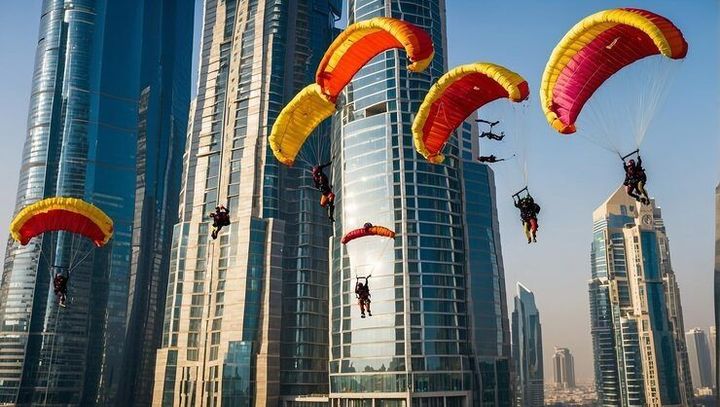
Skydiving in Dubai Guide: Explore Locations, Requirements, Safety, Weather, and Planning Factors
Skydiving in Dubai is an aerial activity in which participants leave an aircraft at altitude and descend using a parachute. Dubai has become associated with skydiving because jumps can provide views of distinctive landscapes, including the Palm Jumeirah coastline and the surrounding desert. Tandem skydiving allows a first-time participant to remain attached to a qualified instructor throughout the jump.
Skydiving developed from early parachuting experiments and military applications into a recreational and competitive sport. Modern skydiving uses specialized parachute systems, harnesses, altimeters, protective equipment, aircraft, and trained personnel. Tandem systems were later developed to allow people without previous skydiving experience to participate under instructor supervision.
In Dubai, the main outdoor skydiving experiences are associated with the Palm Dropzone and the Desert Dropzone. The Palm location provides views toward Palm Jumeirah and Dubai's coastal landmarks, while the Desert location provides views of the city's surrounding sandy landscape.
Tandem Skydiving and Solo Skydiving
Tandem skydiving is generally designed for people experiencing the activity for the first time. The participant is attached to an instructor through a specialized harness system, while the instructor manages the main elements of the jump and parachute operation.
Solo skydiving follows a different pathway. People who want to progress toward independent jumping can undertake structured training such as an Accelerated Freefall course and work toward a recognized skydiving license. Skydive Dubai states that its USPA A-license pathway requires at least 25 skydives and completion of the relevant proficiency and examination requirements.
Importance
Understanding skydiving requirements is important because the activity involves aircraft operations, altitude, parachute equipment, weather conditions, and physical movement during landing. Participants need to understand eligibility requirements and operational procedures before planning a jump.
Skydiving also affects travel planning. A scheduled jump may take place during a trip to Dubai, so weather conditions, check-in requirements, transportation, clothing, identification, and enough time for possible operational changes can all influence the overall plan.
Why Location Matters
Dubai's two principal outdoor settings provide different visual environments. A Palm jump offers an aerial perspective of Palm Jumeirah and nearby coastal landmarks, while a desert jump provides views across the sandy landscape outside the central urban area.
The location can also affect scheduling and availability. A participant should confirm the selected dropzone when planning because the two locations do not provide identical surroundings or operational arrangements.
Main Planning Factors
Several factors should be considered before a skydiving activity:
- Eligibility requirements, including age, weight, and applicable BMI limits
- Physical condition and any medical documentation that may be required
- Weather and wind conditions
- Identification documents
- Appropriate clothing and footwear
- Check-in and transportation time
- Potential weather-related changes to the schedule
- Restrictions concerning alcohol, drugs, and recent scuba diving
For tandem participants at Skydive Dubai, the current published requirements state that participants must be 18 to 75 years old. Female participants must weigh 90 kg or less with a BMI of 27.5 or below, while male participants must weigh 100 kg or less with a BMI of 30.0 or below. Weight is checked with shoes and clothing on the day of the jump.
Recent Updates
From 2024 through 2026, skydiving in Dubai has continued to reflect broader developments in organized adventure tourism, digital scheduling, equipment monitoring, and structured training. Operators have increasingly provided detailed online information covering eligibility, weather procedures, documentation, clothing, and scheduling.
The published tandem information currently identifies both Palm and Desert options, with jumps reaching up to approximately 13,000 feet. The current booking information also indicates different published prices for the Palm and Desert tandem experiences, so travelers should check the current booking system rather than relying on older travel information.
Training and Licensed Skydiving
Training opportunities have also developed alongside recreational tandem experiences. Skydive Dubai's published information describes an AFF pathway for people progressing toward independent skydiving. The school states that AFF jumps are conducted at its Desert Campus, while the Palm Dropzone has a substantially higher experience requirement for certain licensed activities.
For licensed skydivers, the Desert Campus provides facilities for experienced jumpers subject to applicable documentation, license, currency, and equipment requirements. Requirements vary according to the number of logged jumps and recent jumping activity.
Digital Planning
Online booking and information systems have become an important part of planning. Participants can review experience types, locations, eligibility conditions, and operational information before visiting the dropzone.
Weather remains an important variable despite improvements in scheduling systems. The operator explains that poor visibility, precipitation, and wind, particularly at altitude, can delay or suspend operations.
Laws or Policies
Skydiving involves aviation operations, workplace safety, equipment requirements, and participant eligibility. In Dubai, operators must work within applicable UAE aviation and safety frameworks, while participants must also comply with the individual dropzone's operating rules.
For travelers, the practical requirements published by the operator are particularly important. Tandem participants must complete the required waiver and satisfy the applicable age, weight, BMI, and health-related conditions. Certain medical circumstances require a Declaration of Fitness form completed and stamped by a medical practitioner.
Participants aged 70 to 75 must provide a Declaration of Fitness form according to the current tandem requirements. The operator also specifies that alcohol and drugs must not be present in a participant's system for at least 24 hours before the jump. Recent scuba diving is also subject to a 24-hour restriction.
Safety policies also cover clothing and equipment. Participants are expected to wear comfortable athletic clothing and suitable lace-up shoes, while certain footwear and clothing types are not permitted. Protective goggles are provided for participants who wear prescription glasses or lenses.
Weather-related policies are another important consideration. Strong winds, poor visibility, precipitation, or other unsuitable conditions can result in a standby period or cancellation. If an operation is cancelled because of adverse weather, the operator's published policy provides options for rescheduling or refunding the applicable payment.
These requirements can change, so the current operator information should be checked before travel. General information about skydiving does not replace instructions from the dropzone, aviation authorities, medical professionals, or trained instructors.
Tools and Resources
Several resources can help people understand and plan skydiving in Dubai.
Official Dropzone Information
The official Skydive Dubai website provides information about tandem experiences, licensed skydiving, training, requirements, weather procedures, clothing, and operational policies. It is a useful reference for checking current requirements before a scheduled activity.
Weather Forecasts
Weather forecasting platforms can help travelers monitor general conditions in Dubai. However, a general city forecast cannot determine whether a particular skydive will operate. The final decision depends on operational conditions at the dropzone, including wind and visibility.
Travel Planning Tools
A simple planning checklist can include:
| Planning factor | Information to confirm |
|---|---|
| Location | Palm or Desert Dropzone |
| Age | Current minimum and maximum age |
| Weight and BMI | Applicable limits for the participant |
| Identification | Valid government-issued photo ID |
| Clothing | Comfortable clothing and suitable footwear |
| Weather | Wind, visibility, and precipitation |
| Health | Medical declaration requirements, if applicable |
| Schedule | Check-in time and possible delays |
| Recent activities | Scuba diving and substance restrictions |
| Documents | Waiver and required medical forms |
Training Resources
People interested in progressing beyond tandem skydiving can review information about AFF training, logbooks, licenses, and proficiency requirements. Skydive Dubai states that its USPA A-license program involves at least 25 skydives and examination requirements, while the exact training progression depends on the student's performance and conditions.
FAQs
What are the requirements for skydiving in Dubai?
For tandem skydiving at Skydive Dubai, participants must currently be 18 to 75 years old and meet the applicable weight and BMI requirements. The published limits are 90 kg and BMI 27.5 or below for women, and 100 kg and BMI 30.0 or below for men.
Where can you go skydiving in Dubai?
The main outdoor tandem locations are the Palm Dropzone and Desert Dropzone. The Palm experience provides views around Palm Jumeirah, while the Desert experience takes place over Dubai's sandy desert landscape.
Does weather affect skydiving in Dubai?
Yes. Wind, poor visibility, precipitation, and conditions at higher altitudes can delay or suspend skydiving operations. A scheduled jump may therefore be moved to another available time or date when conditions are unsuitable.
What should I wear for skydiving in Dubai?
Comfortable athletic clothing and lace-up sports shoes are generally required. Certain footwear, including sandals, boots, and heeled or platform shoes, is not permitted under the current published guidelines.
Can beginners go skydiving in Dubai?
Yes. Tandem skydiving is designed for participants without previous outdoor skydiving experience because the participant is attached to an instructor. People seeking independent skydiving can instead follow a structured training pathway such as AFF.
Conclusion
Skydiving in Dubai combines organized aviation operations, parachute equipment, trained instructors, and carefully controlled participation requirements. The Palm and Desert locations provide different environments, while tandem and licensed skydiving follow different eligibility and training pathways. Weather, physical requirements, documentation, clothing, and operational policies are important planning factors. Current operator information should be checked because requirements and operating conditions can change.