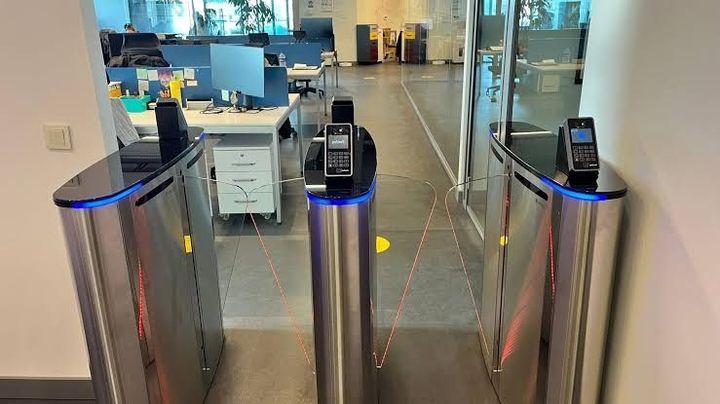
Understanding Commercial Security Turnstiles: Types, Features and Access Control
Commercial buildings often need controlled entry points.
Commercial security turnstiles help manage pedestrian movement while supporting access control and building security.
These systems can verify credentials before allowing entry. They are commonly integrated with cards, mobile credentials, biometric readers, and visitor management systems. Different turnstile designs suit different security levels and traffic patterns.
Quick Answer: What Should You Consider When Choosing Commercial Security Turnstiles?
- Determine the required security level for each entrance.
- Evaluate expected pedestrian traffic and peak-hour flow.
- Select a turnstile type suited to the building environment.
- Check compatibility with existing access control systems.
- Consider emergency egress and accessibility requirements.
- Evaluate indoor or outdoor installation conditions.
- Review available authentication technologies.
- Consider integration with visitor management and building systems.
- Plan sufficient space for safe pedestrian movement.
- Follow applicable building, fire, and accessibility requirements.
What Are Commercial Security Turnstiles?
Commercial security turnstiles are physical entrance systems that regulate pedestrian access.
They create a controlled passage between public and restricted areas. Access is typically granted after a credential is successfully verified.
Turnstiles are commonly found in:
- Corporate offices
- Commercial buildings
- Data centers
- Manufacturing facilities
- Transportation terminals
- Educational campuses
- Government facilities
- Stadiums
- Research facilities
- Warehouses
The appropriate configuration depends on security and operational requirements.
How Do Commercial Security Turnstiles Work?
Most security turnstiles combine a physical barrier with electronic access control.
The basic operating process is straightforward.
- A person approaches the entrance.
- The system requests an authorized credential.
- An access controller verifies the credential.
- The turnstile receives an authorization signal.
- The barrier unlocks or opens.
- Sensors monitor passage through the lane.
- The system returns to its secured position.
Advanced systems can also record access events.
What Are the Main Types of Commercial Security Turnstiles?
Different turnstile designs provide different levels of physical control.
How Do Tripod Turnstiles Work?
Tripod turnstiles use three rotating horizontal arms.
After authorization, the mechanism allows one person to pass through the lane.
They are frequently used in environments requiring organized pedestrian movement.
Common applications include:
- Office entrances
- Manufacturing facilities
- Transportation environments
- Educational campuses
- Recreational facilities
Their compact structure makes them suitable for many controlled entrances.
What Are Optical Turnstiles?
Optical turnstiles use sensors to monitor pedestrian movement.
Some models operate without permanent physical barriers. Others combine sensors with retractable or swinging barriers.
Optical systems can detect:
- Authorized passage
- Unauthorized entry
- Tailgating attempts
- Incorrect travel direction
- Multiple-person passage
They are frequently used in modern commercial lobbies.
What Are Speed Gates?
Speed gates combine electronic sensors with motorized barriers.
The barriers open after successful authentication and close after passage.
Common barrier designs include:
- Swinging panels
- Sliding panels
- Retractable glass barriers
Speed gates can support efficient pedestrian movement in busy facilities.
What Are Full-Height Turnstiles?
Full-height turnstiles create a taller physical barrier.
They generally provide stronger physical access control than waist-height designs.
Typical environments include:
- Industrial facilities
- Restricted infrastructure
- Warehouses
- Outdoor controlled areas
- High-security entrances
Their structure helps discourage unauthorized passage.
What Are Waist-Height Turnstiles?
Waist-height systems create a physical barrier around the lower body.
Tripod mechanisms are a common example.
These systems are useful when controlled pedestrian flow is required without a full-height enclosure.
How Do Turnstiles Integrate With Access Control Systems?
Modern turnstiles usually operate as part of a broader access control system.
The access control platform determines whether an individual has permission to enter.
Authentication methods may include:
- Access cards
- Smart credentials
- Mobile credentials
- PIN-based authentication
- QR codes
- Biometric readers
Once authorization is confirmed, the controller signals the turnstile.
How Do Biometric Readers Work With Security Turnstiles?
Biometric technologies use measurable characteristics for identity verification.
Depending on the system, these can include:
- Fingerprint recognition
- Facial recognition
- Iris recognition
The biometric platform verifies identity before the turnstile permits passage.
Biometric information requires careful privacy and data protection practices.
What Is Anti-Tailgating Technology?
Tailgating occurs when an unauthorized individual follows an authorized person through a controlled entrance.
Some advanced turnstiles use sensors to detect unusual passage patterns.
Detection technologies may monitor:
- Number of people entering
- Direction of movement
- Lane occupancy
- Barrier position
- Passage timing
The system can generate an alert when unexpected behavior occurs.
How Should Security Level Be Evaluated?
The required security level is one of the most important considerations.
A public-facing lobby may have different requirements from a restricted industrial facility.
Consider:
- Sensitivity of protected areas
- Number of authorized users
- Visitor activity
- Existing security controls
- Required physical resistance
- Monitoring capabilities
- Entry and exit procedures
Higher-security areas generally require stronger physical barriers.
How Does Pedestrian Traffic Affect Turnstile Selection?
Traffic volume directly influences entrance design.
A turnstile should accommodate normal and peak pedestrian movement.
Important factors include:
- Users per minute
- Number of lanes
- Shift changes
- Morning arrival periods
- Visitor activity
- Exit requirements
- Credential verification speed
Insufficient lane capacity can create congestion.
Why Is Lane Width Important?
Lane width affects accessibility and pedestrian movement.
Some users may require additional space.
Examples include people using:
- Wheelchairs
- Mobility devices
- Large equipment
- Luggage
Facilities may need dedicated accessible entrance lanes.
Applicable accessibility requirements should guide final system design.
How Should Emergency Egress Be Considered?
Emergency movement is an essential part of entrance planning.
Turnstile configurations must not improperly restrict required evacuation routes.
Depending on the system and applicable regulations, emergency functions may include:
- Automatic barrier opening
- Fail-safe operation
- Integration with fire alarm systems
- Emergency release controls
- Dedicated evacuation pathways
Applicable fire and building requirements should always guide installation.
Can Turnstiles Integrate With Fire Alarm Systems?
Many electronic turnstile systems can interface with fire alarm and life safety systems.
During an emergency, configured barriers may release or move into an appropriate position.
The exact behavior depends on:
- Turnstile design
- Building configuration
- Fire safety strategy
- Local regulations
- Emergency control architecture
Life safety requirements should take priority during system planning.
What Should Be Considered for Indoor Turnstiles?
Indoor systems are protected from many environmental conditions.
Design considerations can include:
- Available floor space
- Interior layout
- Pedestrian traffic
- Building aesthetics
- Electrical connections
- Network connectivity
- Access reader placement
Commercial lobbies often use optical turnstiles or speed gates.
What Should Be Considered for Outdoor Turnstiles?
Outdoor equipment faces more demanding conditions.
Systems may require protection against:
- Rain
- Dust
- Temperature changes
- Humidity
- Corrosion
- Direct sunlight
Environmental ratings should match the intended installation conditions.
What Sensors Are Used in Modern Security Turnstiles?
Advanced turnstiles can contain multiple electronic sensors.
These may include:
- Infrared sensors
- Position sensors
- Presence detectors
- Safety sensors
- Barrier monitoring sensors
Sensor arrays help determine how people move through the lane.
How Do Turnstiles Support Visitor Management?
Turnstiles can integrate with visitor management systems.
Visitors may receive temporary credentials after completing required registration procedures.
Credentials can include:
- Temporary access cards
- QR codes
- Mobile passes
- Time-limited credentials
Access permissions can then be restricted to appropriate locations and periods.
How Can Turnstiles Support Building Security?
Turnstiles provide a physical enforcement point for access policies.
They can help organizations:
- Control entry
- Manage pedestrian movement
- Record access events
- Separate public and restricted areas
- Detect unauthorized passage
- Support security monitoring
- Coordinate visitor access
They work most effectively as part of a layered security strategy.
What Should Be Considered Before Installation?
Installation planning should examine the complete entrance environment.
Important considerations include:
- Available space
- Floor construction
- Electrical infrastructure
- Network connectivity
- Pedestrian flow
- Emergency routes
- Accessible pathways
- Reader positioning
- Security desk visibility
- Building system integration
Early planning can prevent operational problems later.
How Are Commercial Turnstiles Maintained?
Routine inspection supports dependable operation.
Typical maintenance activities include:
- Cleaning sensors
- Inspecting moving barriers
- Checking mechanical components
- Testing credential readers
- Inspecting electrical connections
- Testing safety sensors
- Checking emergency release functions
- Reviewing access events
- Testing system integration
Maintenance requirements vary by turnstile design.
What Technologies Are Improving Commercial Security Turnstiles?
Modern turnstile systems increasingly use connected technologies.
Important developments include:
- Mobile credential integration
- Advanced optical sensing
- Biometric authentication
- Real-time access monitoring
- Automated tailgating detection
- Visitor management integration
- Building management integration
- Remote diagnostics
- Occupancy monitoring
- Data-driven security analytics
These technologies improve entrance visibility and access management.
What Common Turnstile Selection Mistakes Should Be Avoided?
Selecting a system based only on physical appearance can create problems.
Common mistakes include:
- Ignoring peak pedestrian traffic
- Selecting insufficient lane capacity
- Overlooking accessibility requirements
- Ignoring emergency egress
- Choosing incompatible access technologies
- Underestimating environmental conditions
- Failing to plan network connections
- Ignoring future building changes
- Overlooking maintenance access
A complete site assessment helps identify these requirements.
Frequently Asked Questions
What are commercial security turnstiles used for?
They regulate pedestrian entry and support controlled access within commercial facilities.
Which turnstile type provides stronger physical security?
Full-height turnstiles generally provide greater physical restriction than waist-height designs.
Can turnstiles work with access cards?
Yes. Many systems integrate with card-based access control platforms.
Can commercial turnstiles detect tailgating?
Advanced optical systems can identify certain unusual or multiple-person passage patterns.
Can turnstiles integrate with biometric authentication?
Yes. Compatible systems can operate with fingerprint, facial, or other biometric technologies.
Are commercial turnstiles suitable for outdoor environments?
Certain models are designed for outdoor use. Environmental specifications should match site conditions.
Can turnstiles connect with fire alarm systems?
Compatible electronic systems can support emergency integration. Configuration must follow applicable life safety requirements.
Key Takeaways
Commercial Security Turnstiles Summary
- Commercial security turnstiles regulate pedestrian access to controlled areas.
- Tripod, optical, speed gate, and full-height designs serve different environments.
- Security requirements should guide turnstile selection.
- Traffic capacity is important for maintaining efficient pedestrian movement.
- Access cards, mobile credentials, and biometrics can support authentication.
- Sensor technology can help detect unauthorized passage and tailgating.
- Accessibility should be considered during entrance planning.
- Emergency egress and life safety requirements are essential.
- Outdoor systems require appropriate environmental protection.
- Turnstiles work effectively within a layered access control strategy.