Magnetic filtration is a method used to remove ferrous and paramagnetic particles from liquids or gases by applying magnetic fields. It works on the principle that metallic contaminants are attracted to a magnetic source, allowing for cleaner fluids and more efficient processes. This approach is widely used in industrial settings such as manufacturing, food processing, and chemical engineering, as well as in laboratories where precision and contamination control are essential.
The concept exists because conventional filters, such as mesh or cartridge types, may not efficiently capture extremely small or abrasive particles. Magnetic filters, on the other hand, can target particles down to a micron or even sub-micron level. This improves the quality of fluids like lubricants, coolants, or water used in sensitive applications.
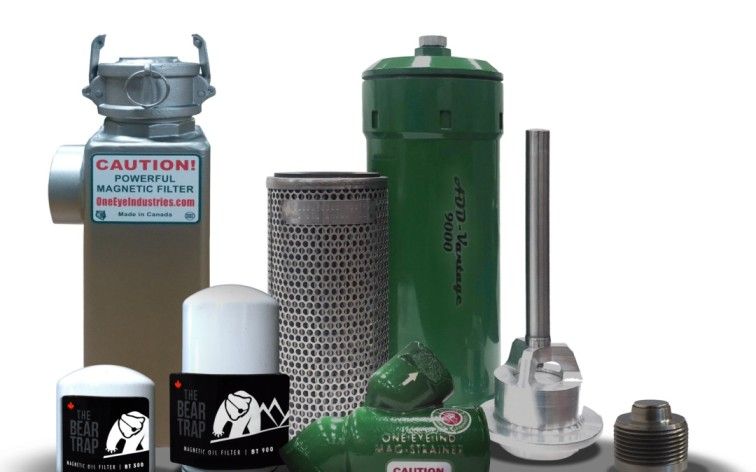
Importance of magnetic filtration today
The importance of magnetic filtration lies in its ability to increase efficiency, protect equipment, and improve sustainability. Modern industries are highly dependent on smooth machinery operations, clean laboratory conditions, and contamination-free production lines. Magnetic filtration contributes in several ways:
-
Protecting machinery: By capturing microscopic metallic debris in lubricants or hydraulic fluids, magnetic filters reduce wear and extend the life of engines, turbines, and pumps.
-
Ensuring product quality: In food, beverage, and pharmaceutical sectors, magnetic separation prevents contamination, safeguarding both consumer safety and brand reputation.
-
Environmental benefits: Clean fluids require fewer replacements, which reduces waste disposal and minimizes environmental impact.
-
Supporting research: Laboratories working with sensitive experiments rely on pure liquids for accurate results, making magnetic filtration a valuable tool.
This topic matters to engineers, laboratory technicians, environmental managers, and researchers who need reliable contamination control methods. It solves problems such as machine downtime, product recalls, and inaccurate test outcomes.
Recent updates and trends
Magnetic filtration has seen notable innovations in the past few years. For example, in 2024, researchers reported advancements in nanomagnetic materials that improve the efficiency of particle capture in water treatment systems. Such materials increase the ability to remove both large and nano-sized metallic impurities.
In 2023, several industries highlighted the growing role of magnetic filtration in renewable energy sectors, such as wind turbines and electric vehicle manufacturing. Clean lubricants and hydraulic fluids are vital in these systems, and magnetic filters are increasingly integrated during design stages.
Another trend is the use of smart monitoring systems combined with magnetic filters. These systems provide real-time data on contamination levels, helping maintenance teams plan predictive interventions rather than relying on scheduled checks.
Laws, standards, and regulations
Magnetic filtration is influenced by laws and standards related to safety, environmental protection, and product quality. While the specific policies vary by country, some key frameworks include:
-
Food safety regulations: In regions such as the European Union and the United States, agencies like the FDA and EFSA require strict contamination controls in food and beverage processing. Magnetic filtration devices often comply with HACCP (Hazard Analysis and Critical Control Points) guidelines.
-
Environmental standards: Wastewater treatment plants using magnetic separation must meet local environmental discharge regulations, such as EPA guidelines in the U.S. or Central Pollution Control Board standards in India.
-
Industrial safety standards: Organizations such as ISO (International Organization for Standardization) provide guidelines on filtration systems, material safety, and equipment performance.
-
Pharmaceutical compliance: In the pharmaceutical industry, the use of magnetic separation aligns with Good Manufacturing Practices (GMP), ensuring drugs remain free of contamination.
Adherence to these rules ensures that magnetic filtration is not just a technical solution but also part of legal and regulatory compliance.
Tools and resources for practical use
There are a variety of tools and resources that help individuals and organizations understand and apply magnetic filtration effectively.
-
Magnetic filter units: Used in pipelines, cooling systems, and lubrication circuits to capture fine metal particles.
-
Magnetic separators for powders and granules: Ideal in industries like food processing, where dry bulk materials need contaminant control.
-
Magnetic filtration calculators: Online calculators offered by technical websites can estimate filtration efficiency, particle size capture, and fluid compatibility.
-
Laboratory testing kits: Small-scale kits are available for research institutions to test filtration performance on various fluids.
-
Technical publications: Journals such as Separation and Purification Technology publish peer-reviewed research on filtration advancements.
-
Web resources:
-
ISO.org for filtration standards
-
EPA.gov for environmental compliance
-
Food-safety-related resources from FDA.gov
-
These tools ensure practical knowledge is accessible for engineers, researchers, and environmental professionals.
Frequently asked questions
What is the main difference between magnetic filtration and traditional filtration?
Magnetic filtration targets ferrous and paramagnetic particles using magnets, whereas traditional filters rely on mesh, fabric, or cartridge media. Magnetic filters can remove particles too small for conventional systems to capture.
Can magnetic filtration remove non-metallic contaminants?
No, magnetic filtration specifically removes metallic particles. Non-metallic impurities such as sand, dust, or plastic fibers require additional mechanical or chemical filtration methods.
Is magnetic filtration safe for food and pharmaceutical use?
Yes, when designed to meet industry standards such as HACCP or GMP, magnetic filtration is widely used in food and pharmaceutical processing. It ensures products remain safe for consumption.
How efficient are magnetic filters in capturing particles?
Magnetic filters can capture particles as small as a few microns, and with advanced materials, sub-micron particles. Efficiency depends on magnet strength, flow rate, and filter design.
What industries benefit the most from magnetic filtration?
Industries such as automotive, aerospace, food and beverage, water treatment, renewable energy, and pharmaceuticals gain the most from magnetic filtration due to their need for high purity and contamination control.
Conclusion
Magnetic filtration is a practical and highly effective method for removing metallic contaminants from fluids and gases. Its relevance has grown in modern industries, laboratories, and environmental applications due to its role in protecting equipment, maintaining product quality, and supporting sustainable practices. Recent developments, such as nanomagnetic materials and smart monitoring, have expanded its capabilities, making it a forward-looking solution in contamination control.
By aligning with regulatory frameworks and leveraging available tools, industries and researchers can integrate magnetic filtration as part of their broader strategy for efficiency and compliance. As innovation continues, magnetic filtration is expected to remain central to clean fluid management and industrial reliability.