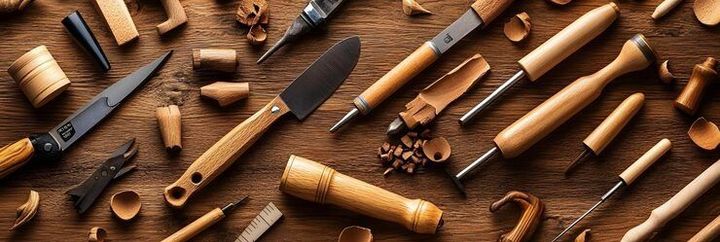
Wood Planers Guide: Explore Types, Components, Applications, Features, and Planning Factors
A wood planer is a woodworking machine or hand-operated tool used to reduce the thickness of wood and create a more even, consistent surface. A wood planers guide helps explain the different types of planers, their components, common applications, operating principles, and factors that influence their use.
Wood planing developed from traditional hand planes, which used a cutting blade to remove thin layers from a wooden surface. As woodworking became more mechanized, powered planers were developed to process boards more quickly and maintain consistent dimensions.
Modern wood planers range from portable benchtop machines to large stationary equipment used in woodworking facilities. Although their designs differ, the basic principle involves moving a board through or across a cutting mechanism that removes a controlled amount of material.
What a Wood Planer Does
A planer is primarily used to make a board's thickness more uniform. It can also help create a smoother surface after rough sawing or other woodworking processes.
A planer generally works by passing wood beneath a rotating cutter head fitted with cutting knives. Feed rollers move the material through the machine while the cutter removes material from the upper surface. The depth of cut can usually be adjusted according to the machine design.
Common Types of Wood Planers
Wood planers are available in several configurations:
- Hand planers are manually operated and commonly used for small-scale woodworking and surface adjustment.
- Benchtop planers are compact powered machines designed for workshops and smaller woodworking projects.
- Portable thickness planers can be moved between work areas and are commonly used where equipment mobility matters.
- Stationary planers are larger machines intended for repeated processing of boards and timber.
- Industrial planers are designed for continuous woodworking operations and can incorporate automated feeding and control systems.
- Combination machines may integrate planing with other woodworking functions.
The appropriate configuration depends on the size of the material, required thickness, workspace, production volume, and level of operator control.
Importance
Wood planers play an important role in preparing timber for furniture, flooring, doors, cabinets, construction components, and other woodworking applications. A consistent board thickness can make later cutting, joining, assembly, and finishing processes easier to manage.
Planing is also useful when rough-sawn timber has an uneven surface. Removing a controlled layer can produce a more consistent reference surface and help bring boards closer to their required dimensions.
Common Applications
Wood planers are used across different areas of woodworking. Common applications include:
- Preparing boards for furniture production
- Adjusting timber thickness
- Smoothing rough-sawn wood
- Preparing boards for joining
- Producing consistent flooring components
- Preparing door and cabinet components
- Processing timber for interior woodworking
- Creating uniform stock for further machining
The machine does not necessarily complete every stage of wood preparation. Planing may be combined with jointing, sawing, sanding, routing, or other processes.
Benefits of Consistent Thickness
Consistent thickness can simplify the assembly of wooden components. When boards have significant variations in thickness, joints may become uneven and additional adjustment may be required.
Planing can also provide a controlled surface from which additional woodworking operations can be performed. However, the final surface condition depends on factors such as blade sharpness, feed speed, wood grain, cutting depth, and the condition of the timber.
Recent Updates
From 2024 through 2026, developments in woodworking equipment have generally focused on improved dust management, operator safety, digital controls, automation, and more efficient material handling.
Modern powered planers may incorporate electronic controls that allow operators to monitor settings and machine conditions. Some larger systems use automated feeding, adjustable cutter-head configurations, and integrated material handling to support repeated processing.
Dust Collection and Workplace Conditions
Dust control remains an important consideration in woodworking. Planing produces wood particles that can become airborne if they are not effectively captured. Modern workshop setups commonly integrate planers with dust-extraction systems designed to collect chips and airborne particles.
Improved extraction arrangements can also help maintain visibility around the cutting area and reduce the accumulation of wood waste around machinery.
Automated Wood Processing
Larger woodworking operations increasingly combine planers with automated feeding and material-handling systems. These systems can move boards through multiple processing stages while electronic controls monitor machine settings.
Automation is particularly relevant when many boards need to pass through a repeatable process. The specific level of automation depends on the machine configuration and production environment.
Cutter and Knife Developments
Planer cutter heads are available in different configurations. Traditional straight knives remain common, while helical or spiral cutter heads use multiple smaller cutting inserts arranged around the cutter head.
These designs can influence cutting action, noise characteristics, surface results, and maintenance procedures. The suitability of a particular cutter configuration depends on the wood species, machine design, and intended application.
Laws or Policies
In India, woodworking machinery used in industrial workplaces is subject to occupational safety requirements. The Factories Act, 1948 contains provisions concerning the fencing of machinery, precautions around moving machinery, and safe working practices. Requirements can also depend on the type of workplace and machinery involved. (labour.gov.in)
The Occupational Safety, Health and Working Conditions Code provides a broader framework for occupational safety and working conditions in India. Relevant rules and implementation requirements can vary according to the workplace and applicable government provisions. (labour.gov.in)
Woodworking workplaces should also consider requirements concerning airborne dust, ventilation, machine guarding, worker training, personal protective equipment, and emergency procedures where applicable.
Bureau of Indian Standards resources can be used to identify applicable Indian Standards for machinery and workplace equipment. BIS provides an online standards search platform that allows users to look up standards by subject and standard number. (bis.gov.in)
Because requirements can differ according to machine type and workplace conditions, the applicable regulations and standards should be checked for the specific installation.
Tools and Resources
Several tools and references can help readers understand wood planers and woodworking processes.
Thickness Measurement Tools
Digital calipers, vernier calipers, micrometers, and thickness gauges can be used to measure board dimensions. A suitable measuring tool depends on the required level of precision and the material being inspected.
Moisture Meters
A wood moisture meter can help determine the moisture condition of timber before machining. Wood moisture content can affect dimensional stability, so understanding the material condition is useful when planning and processing boards.
Dust-Collection Systems
Dust collectors, extraction hoses, filters, and separators are commonly used with powered woodworking machinery. The extraction arrangement should be compatible with the machine and the type and volume of wood particles produced.
Manufacturer Manuals
Machine manuals provide model-specific information about cutter installation, maximum material dimensions, feed settings, operating procedures, maintenance, and safety precautions. They are more specific than general woodworking references because machine designs differ.
Basic Planning Table
| Planning factor | What to consider |
|---|---|
| Board thickness | Starting and required finished thickness |
| Board width | Maximum material width supported by the machine |
| Material length | Minimum and maximum workable board length |
| Wood species | Hardness, grain direction, and characteristics |
| Cutting depth | Amount of material removed per pass |
| Feed rate | Speed at which the board moves through the cutter |
| Cutter condition | Sharpness and condition of knives or inserts |
| Dust control | Extraction capacity and collection arrangement |
| Workspace | Clearance around the machine and material path |
| Safety equipment | Guards and appropriate protective equipment |
FAQs
What is a wood planer used for?
A wood planer is used to reduce and control the thickness of wooden boards while producing a more uniform surface. It is commonly used during furniture, cabinet, flooring, and general woodworking preparation.
How does a wood planer work?
A powered wood planer normally uses feed rollers to move a board beneath a rotating cutter head. The cutting knives remove a controlled layer from the upper surface as the material passes through the machine.
What are the main components of a wood planer?
Common components include a cutter head, cutting knives or inserts, feed rollers, height-adjustment mechanism, motor, bed or table, controls, guards, and chip or dust extraction connections.
What factors should be considered when using a wood planer?
Important planning factors include board dimensions, wood species, grain direction, moisture condition, cutting depth, feed rate, cutter condition, machine capacity, dust control, and workplace safety requirements.
What is the difference between a planer and a jointer?
A planer primarily controls the thickness of a board and creates a parallel surface relative to the machine bed. A jointer is mainly used to flatten a face or create a straight edge. Both machines can be used together when preparing rough timber.
Conclusion
Wood planers are used to control timber thickness and create more uniform surfaces for subsequent woodworking operations. Different designs range from hand tools and portable machines to stationary and automated industrial equipment. Machine selection and operating conditions depend on material dimensions, wood characteristics, required thickness, cutter configuration, and workspace requirements. Safety practices, dust management, appropriate measurements, and applicable Indian regulations are important considerations when using powered woodworking equipment.