A Professional Guide to Modular Refinery Equipment: Advanced Refining Technologies and Industry Best Practices
Modular refinery equipment refers to compact refinery units that are designed, manufactured, and assembled in standardized modules before being transported to an installation site. Unlike large conventional refineries that require extensive on-site construction, modular systems are built using pre-engineered sections that can be connected to create a complete refining facility.
Small scale refinery equipment is commonly used where production capacity requirements are lower than those of large national refineries. These systems process crude oil into various petroleum products through controlled refining processes. Modern modular oil refinery systems combine mechanical equipment, piping, instrumentation, process controls, and safety systems into integrated production units.
The concept of modular construction has been used in several industries for decades. In petroleum refining, modular construction allows individual processing units to be manufactured separately before final assembly. Skid mounted refinery equipment further simplifies transportation by placing process equipment on structural frames that can be transported as complete assemblies.
Today, modern crude oil refinery equipment increasingly incorporates digital monitoring, automation, and remote operational support to improve process stability and operational efficiency.
How Modular Refineries Work
A refinery separates crude oil into different petroleum fractions through heating and various refining processes.
Crude oil first enters storage and pretreatment systems where water, salts, and impurities are reduced. The oil then moves into heating equipment before entering atmospheric distillation units. Inside the distillation column, hydrocarbons separate according to their boiling temperatures.
Depending on refinery design, additional processing units may improve fuel quality or separate additional products.
Modern mini refinery plant equipment integrates pumps, heat exchangers, pressure vessels, piping, instrumentation, and computerized control systems into compact layouts.
Main Components of Modular Oil Refinery Systems
Typical modular refinery equipment includes:
- Crude oil storage tanks
- Feed pumps
- Heat exchangers
- Fired heaters
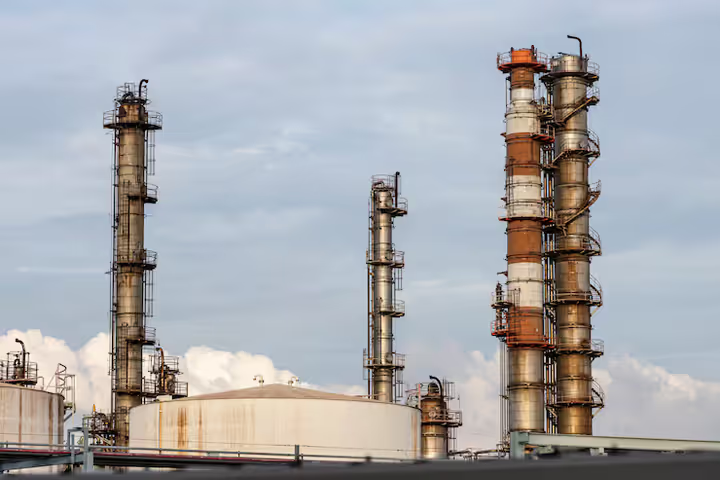
- Atmospheric distillation columns
- Condensers
- Product storage tanks
- Instrumentation systems
- Process control equipment
- Safety shutdown systems
- Utility systems
- Skid mounted refinery equipment
Each component performs a specific function during the refining process.
Importance
Supporting Regional Fuel Production
Small scale refinery equipment may support petroleum processing in locations where large refining complexes are not practical. Modular systems provide refining capacity that can be adapted to local production requirements.
These facilities contribute to regional petroleum processing infrastructure where appropriate regulatory approval has been obtained.
Reducing Construction Complexity
Traditional refineries require extensive civil construction, equipment installation, and field assembly.
Modular oil refinery systems reduce on-site construction by allowing much of the equipment to be manufactured and assembled before transportation.
Improving Project Flexibility
Because modular refinery equipment consists of standardized process sections, production capacity may be planned according to operational requirements.
Additional processing modules can sometimes be integrated into refinery layouts during future expansion projects.
Supporting Digital Operations
Modern crude oil refinery equipment increasingly includes digital monitoring systems that provide operators with real-time information about temperatures, pressures, flow rates, and equipment performance.
These technologies improve process visibility across refinery operations.
Enhancing Operational Consistency
Automation systems help maintain stable process conditions throughout refining by continuously adjusting process variables according to programmed operating parameters.
This supports consistent refinery operation during normal production.
Types of Modular Refinery Equipment
Atmospheric Distillation Units
Atmospheric distillation is often the primary refining process within modular refinery systems.
The unit separates crude oil into various fractions according to boiling temperature.
Pretreatment Systems
Pretreatment equipment removes contaminants such as water and salts before crude oil enters the distillation process.
This stage helps protect downstream refinery equipment.
Product Storage Systems
Storage tanks temporarily hold intermediate and finished petroleum products before further handling.
Tank design depends on refinery configuration and operational requirements.
Utility Systems
Utility equipment supports refinery operation through steam generation, cooling water circulation, compressed air systems, and electrical distribution.
Instrumentation and Automation
Modern Industry 4.0 refinery automation integrates sensors, programmable controllers, and supervisory software throughout refinery operations.
Operators monitor equipment performance using centralized control interfaces.
Typical Refinery Processing Flow
| Processing Stage | Main Function |
|---|---|
| Crude oil storage | Store incoming crude oil |
| Pretreatment | Remove impurities |
| Heating | Raise feed temperature |
| Atmospheric distillation | Separate hydrocarbon fractions |
| Product cooling | Reduce product temperature |
| Product storage | Store refined products |
| Process monitoring | Maintain operating conditions |
Each stage contributes to overall refinery operation.
Recent Updates
Expanded Digital Automation
Between 2024 and 2026, refinery operators have continued adopting Industry 4.0 refinery automation technologies.
Digital monitoring systems provide continuous operational information from process equipment located throughout refinery facilities.
AI-Powered Refinery Process Optimization
AI-powered refinery process optimization has become increasingly integrated into refinery control strategies.
Artificial intelligence analyzes operational information collected from sensors and assists engineers in identifying trends related to equipment performance, energy consumption, and production stability.
These systems support operational decision-making rather than replacing engineering oversight.
Remote Equipment Monitoring
Modern modular refinery equipment often incorporates remote monitoring capabilities that allow engineers to observe operating conditions from centralized control locations.
Remote diagnostics improve visibility into refinery performance.
Predictive Maintenance
Digital maintenance platforms increasingly analyze vibration, temperature, pressure, and equipment condition data to assist maintenance planning.
Predictive maintenance supports scheduled equipment inspections before significant operational interruptions occur.
Energy Management
Refineries continue improving heat recovery systems, process integration, insulation, and utility management to improve overall energy efficiency.
Laws or Policies
Petroleum refining operates within comprehensive regulatory frameworks established by national governments.
Common regulatory areas include:
- Environmental protection regulations
- Air emission standards
- Water discharge regulations
- Industrial safety requirements
- Pressure vessel standards
- Hazardous materials regulations
- Fire protection requirements
- Occupational safety regulations
Refinery construction typically requires environmental review, engineering approval, and operating permits before production begins.
Specific regulatory requirements vary by country.
Tools and Resources
Engineers, researchers, and students use various technical resources to understand refinery engineering and process operations.
Useful resources include:
- Petroleum engineering textbooks
- Refinery process simulation software
- Process flow diagram software
- Process instrumentation references
- Industrial automation platforms
- Pressure vessel design standards
- Environmental regulatory guidance
- Engineering journals
- Process safety publications
- Technical conference proceedings
These resources explain refinery design, process engineering, automation, and equipment operation.
Frequently Asked Questions
What is modular refinery equipment?
Modular refinery equipment consists of standardized refinery units that are manufactured as transportable modules and assembled into complete petroleum refining facilities.
How is small scale refinery equipment different from conventional refineries?
Small scale refinery equipment generally has lower production capacity and uses modular construction methods, while conventional refineries typically involve much larger integrated processing complexes.
What is skid mounted refinery equipment?
Skid mounted refinery equipment is installed on structural frames that allow process units to be transported and positioned as complete assemblies during refinery construction.
How does Industry 4.0 refinery automation improve refinery operations?
Industry 4.0 refinery automation integrates sensors, digital monitoring, process control software, and communication systems to improve operational visibility and support stable refinery operation.
What is AI-powered refinery process optimization?
AI-powered refinery process optimization uses artificial intelligence to analyze refinery operating data and assist engineers in identifying patterns related to process performance and equipment operation.
Conclusion
Modular refinery equipment represents an important approach to modern petroleum processing by combining standardized engineering with flexible facility design. Small scale refinery equipment, modular oil refinery systems, and skid mounted refinery equipment simplify many aspects of refinery construction while supporting efficient operations. Continued advances in Industry 4.0 refinery automation and AI-powered refinery process optimization are contributing to more connected and digitally monitored refinery facilities. These developments continue shaping the evolution of modern petroleum refining.