Aerospace Manufacturing Details: Explore Processes, Components, Materials, Automation, and Safety Considerations
Aerospace manufacturing is the process of designing, producing, assembling, testing, and inspecting components used in aircraft, spacecraft, and related systems. It combines engineering, materials science, machining, fabrication, electronics, software, and quality control to produce components that must meet defined technical and safety requirements.
The industry developed from early aircraft construction methods that relied heavily on wood, fabric, and basic metalworking. As aviation expanded, manufacturers introduced aluminum alloys, advanced machining methods, composite materials, computer-aided design, and increasingly automated production systems.
Today, aerospace manufacturing covers a wide range of activities. These include producing structural parts, engine components, landing-gear assemblies, electrical systems, cabin components, control systems, and spacecraft structures. Each component follows manufacturing and inspection procedures suited to its intended function and material.
What Aerospace Manufacturing Involves
A typical aerospace manufacturing process can involve several connected stages. Engineers first define the component's design and technical requirements. Materials are then selected, parts are manufactured through appropriate processes, and components undergo inspection and testing before assembly or integration.
Traceability is an important feature of aerospace production. Records can connect materials, manufacturing processes, inspections, tests, and finished components to defined specifications. This helps organizations investigate quality issues and maintain documented production histories.
Main Aerospace Products
Aerospace manufacturing can involve products such as:
- Aircraft fuselage and wing structures
- Engine and propulsion components
- Landing-gear assemblies
- Flight-control components
- Electrical and electronic systems
- Interior structures and cabin components
- Satellite structures
- Rocket and spacecraft components
- Communication and navigation equipment
The manufacturing method depends on the component's geometry, material, structural role, operating environment, and applicable technical requirements.
Importance
Aerospace manufacturing is important because aircraft and spacecraft operate in environments where components can experience vibration, temperature changes, pressure differences, mechanical loads, corrosion, and repeated operating cycles. Manufacturing processes must therefore be controlled so that components conform to their specified design requirements.
The industry also affects many supporting fields, including metal production, composite manufacturing, electronics, machining, software, robotics, logistics, inspection, and research. Changes in aerospace production methods can therefore influence a broad industrial supply chain.
Why Manufacturing Precision Matters
Aircraft and spacecraft contain many interconnected components. A small variation in a manufactured part can affect assembly, alignment, weight, aerodynamic performance, or the operation of another system.
For this reason, aerospace manufacturers use dimensional inspection, material verification, non-destructive testing, process controls, and documented quality procedures. The exact inspection method depends on the component and the requirements associated with it.
Production Challenges
Aerospace manufacturers commonly need to manage several challenges:
- Complex component geometries
- Tight dimensional requirements
- Lightweight material requirements
- High-temperature operating conditions
- Material traceability
- Repeated inspection requirements
- Long production cycles
- Supply-chain coordination
- Configuration management
- Regulatory compliance
The combination of these factors makes aerospace production different from many forms of general industrial manufacturing.
Recent Updates
From 2024 through 2026, aerospace manufacturing has continued to develop around automation, digital engineering, additive manufacturing, advanced composites, robotics, and data-driven production. These technologies are being integrated into existing manufacturing systems rather than replacing every conventional process.
Digital Manufacturing
Digital engineering connects product designs with manufacturing information, inspection data, and production planning. Digital models can help teams evaluate component designs and manufacturing sequences before physical production begins.
Digital twins are also being explored for manufacturing and maintenance applications. A digital representation can combine information from engineering models, production records, and operational data, although the scope and accuracy depend on the system being implemented.
Robotics and Automation
Robotic systems can perform repetitive activities such as drilling, fastening, material handling, inspection, and surface treatment. Automation can also support large components where consistent movement and positioning are difficult to achieve manually.
Human operators remain important because automated systems require programming, monitoring, maintenance, inspection, and process decisions. In many facilities, automation is therefore used as part of a combined human-machine production system.
Additive Manufacturing
Additive manufacturing builds components layer by layer from digital design information. Aerospace organizations have investigated metal and polymer additive manufacturing for selected components, tooling, prototypes, and production applications.
Its potential applications include geometrically complex parts and components where conventional manufacturing would involve substantial material removal. However, additive manufacturing requires process qualification, material control, inspection, and appropriate post-processing for applications with demanding requirements.
Advanced Materials
Aerospace manufacturing increasingly uses combinations of metals, composites, ceramics, and specialized alloys. Carbon-fiber-reinforced polymer composites can provide high stiffness relative to their weight, while nickel-based superalloys and other high-temperature materials are used in demanding engine environments.
Material selection depends on factors such as strength, temperature resistance, fatigue behavior, corrosion resistance, weight, manufacturability, and operating environment.
Laws or Policies
Aerospace manufacturing is strongly influenced by aviation regulations and technical standards. In India, the Directorate General of Civil Aviation (DGCA) is responsible for civil aviation safety regulation and oversight. Requirements can apply to aircraft design, production, maintenance, airworthiness, organizations, personnel, and related activities.
India's Aircraft Rules and associated regulatory framework establish requirements for civil aviation activities. Organizations involved in aircraft production or related approved activities may need to meet specific authorization, documentation, quality, and airworthiness requirements.
Internationally, the International Civil Aviation Organization (ICAO) establishes international standards and recommended practices for civil aviation. National aviation authorities then implement and administer applicable requirements within their jurisdictions.
The Federal Aviation Administration (FAA) in the United States and the European Union Aviation Safety Agency (EASA) in Europe also maintain detailed regulatory frameworks covering aircraft certification, production, continuing airworthiness, and related organizations.
Manufacturing Quality Requirements
Aerospace organizations may use recognized quality-management standards such as AS9100. The standard is part of the IAQG 9100 series and is designed for organizations operating within the aviation, space, and defense sectors.
Regulatory approval and certification requirements vary according to the aircraft, component, organization, jurisdiction, and activity. Manufacturers must therefore determine which regulations and standards apply to their specific operations.
Tools and Resources
Aerospace manufacturing uses a combination of engineering, production, inspection, and management tools.
Computer-Aided Design and Manufacturing
CAD systems are used to create and manage three-dimensional component designs. CAM systems can translate manufacturing information into instructions for CNC equipment and other production technologies.
These systems can also support design validation, tooling development, assembly planning, and production documentation.
CNC Machining
CNC machines are widely used for producing aerospace components from metals and other materials. Multi-axis machining can produce complex geometries while maintaining controlled tool movement.
Typical operations include milling, turning, drilling, boring, and finishing. Cutting parameters depend on the material, tool, machine, component geometry, and manufacturing requirements.
Inspection Equipment
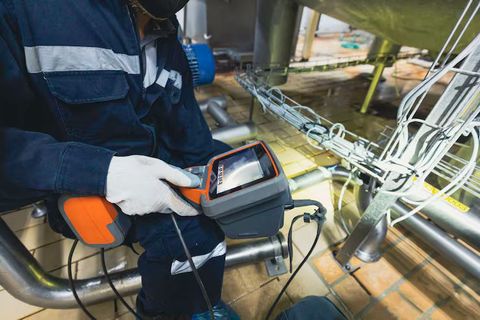
Inspection systems can include coordinate measuring machines, laser scanners, optical measurement systems, ultrasonic testing equipment, radiographic inspection, and other non-destructive testing technologies.
The appropriate method depends on the type of defect or measurement being investigated. Dimensional inspection and material inspection serve different purposes and may be used together.
Manufacturing Data Systems
Manufacturing execution systems and enterprise software can connect production planning, inventory information, work instructions, inspection records, and production status. These systems can support traceability and configuration management when properly integrated with manufacturing processes.
Common Manufacturing Processes
| Process | Typical aerospace application | Main purpose |
|---|---|---|
| CNC machining | Structural and engine components | Controlled material removal |
| Sheet-metal forming | Aircraft structures | Creating shaped metal parts |
| Composite layup | Wings and structural panels | Building composite structures |
| Additive manufacturing | Selected components and tooling | Layer-by-layer production |
| Casting | Selected metal components | Producing complex shapes |
| Forging | Structural and high-load parts | Forming strong metal components |
| Welding and joining | Selected assemblies | Connecting components |
| Surface treatment | Metal components | Controlling surface characteristics |
| Non-destructive testing | Various components | Detecting internal or surface indications |
FAQs
What is aerospace manufacturing?
Aerospace manufacturing is the production and assembly of components and systems used in aircraft, spacecraft, and related aerospace applications. It includes processes such as machining, forming, composite fabrication, additive manufacturing, assembly, and inspection.
What materials are used in aerospace manufacturing?
Common aerospace materials include aluminum alloys, titanium alloys, nickel-based alloys, steels, composites, and specialized polymers. Material selection depends on mechanical properties, temperature, weight, corrosion resistance, and the intended application.
How is automation used in aerospace manufacturing?
Automation can support machining, drilling, fastening, material handling, inspection, surface treatment, and assembly. Robotics and digitally controlled equipment can perform programmed tasks while operators oversee processes and verify results.
What are the main components made through aerospace manufacturing?
Aerospace manufacturing can produce structural components, engine parts, landing-gear components, flight-control systems, electrical equipment, cabin structures, satellite components, and spacecraft structures.
What safety considerations apply to aerospace manufacturing?
Safety considerations include machine guarding, chemical handling, fire prevention, electrical safety, workplace ergonomics, material handling, noise exposure, dust control, and appropriate personal protective equipment. Aerospace organizations must also follow applicable aviation regulations, workplace requirements, technical procedures, and equipment instructions.
Conclusion
Aerospace manufacturing combines advanced materials, precision production, assembly, inspection, and quality management to produce aircraft and spacecraft components. CNC machining, composites, additive manufacturing, robotics, digital engineering, and inspection technologies are increasingly connected within modern production environments. Regulations and industry standards provide frameworks for airworthiness, manufacturing quality, traceability, and workplace safety. The specific processes and requirements vary according to the component, aircraft or spacecraft, manufacturing organization, and applicable jurisdiction.