Brake Dynamometer Systems Guide: Basics, Working, and Key Insights Explained
Brake dynamometer systems are specialized testing devices used to measure the performance of braking systems in vehicles. These systems simulate real-world driving conditions to evaluate how brakes perform under different loads, speeds, and environmental conditions.
A brake dynamometer, often called a “brake dyno,” is a testing system used to measure braking performance under controlled conditions. It works by applying resistance to a rotating component such as a brake rotor or drum.
This allows engineers to evaluate key parameters like torque, braking force, friction levels, heat generation, and wear patterns. These insights help improve brake system design and ensure safety standards are met.
Types of Brake Dynamometer Systems
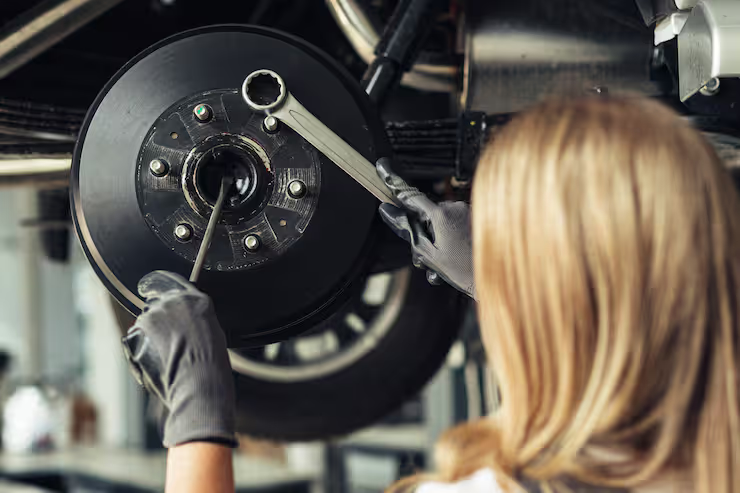
Brake dynamometers come in different configurations depending on testing requirements. Each type serves a specific purpose in automotive and industrial testing.
Common Types
-
Inertia dynamometers
Simulate vehicle mass to replicate real driving conditions. -
Engine-driven dynamometers
Provide controlled torque input for component-level testing. -
Chassis dynamometers
Test full vehicles in simulated road environments. -
Regenerative dynamometers
Capture and reuse energy, mainly used in electric vehicle testing.
Comparison of Dynamometer Types
| Dynamometer Type | Key Feature | Typical Application |
|---|---|---|
| Inertia Dynamometer | Simulates vehicle mass | Passenger vehicle testing |
| Engine Dynamometer | Controlled torque input | Component-level testing |
| Chassis Dynamometer | Full vehicle testing | Road simulation environments |
| Regenerative Dynamometer | Energy recovery capability | Electric vehicle systems |
Why Brake Dynamometer Systems Matter Today
Brake dynamometer systems play a critical role in ensuring vehicle safety and reliability. Braking performance directly affects accident prevention, vehicle control, and passenger protection.
This topic has gained importance due to evolving automotive technologies and stricter safety regulations.
Key Reasons for Importance
- Growth of electric vehicles requiring regenerative braking validation
- Stricter global safety and emissions regulations
- Increased focus on durability and lifecycle performance
- Rising demand for high-performance braking systems
Problems These Systems Help Solve
- Identifying brake fade under high temperatures
- Measuring stopping efficiency under different loads
- Evaluating noise, vibration, and harshness (NVH)
- Testing advanced materials like ceramic brake pads
Industries That Use Brake Dynamometers
- Automotive manufacturing
- Aerospace engineering
- Rail transportation
- Heavy machinery and industrial equipment
Recent Trends and Developments in 2025
Brake dynamometer technology has advanced significantly in 2025. Modern systems now integrate digital tools and automation to improve testing accuracy and efficiency.
One major trend is the use of AI-based analytics. These systems analyze large datasets to detect anomalies and predict component wear.
Key Innovations in 2025
- Adoption of digital twin technology for simulation
- Advanced thermal imaging for heat analysis
- Automated test cycles for consistent results
- Cloud-based monitoring platforms for real-time insights
Another important development is electric vehicle brake testing. Since EVs rely on regenerative braking, traditional brakes are used less frequently, creating new challenges like corrosion and reduced usage performance.
Focus on Sustainability
Manufacturers are also designing systems that:
- Consume less energy
- Produce lower emissions during testing
- Improve overall testing efficiency
Regulations and Compliance Standards
Brake dynamometer systems must comply with strict safety and environmental regulations. These standards ensure that braking systems perform reliably under various conditions.
Regulatory Bodies in India
- Automotive Research Association of India (ARAI)
- Ministry of Road Transport and Highways (MoRTH)
Global Standards
- ISO 26867 for brake testing procedures
- SAE (Society of Automotive Engineers) standards
- UNECE vehicle safety regulations
Key Compliance Areas
- Brake performance testing requirements
- Heat resistance and fade testing
- Noise and vibration limits
- Environmental impact such as particulate emissions
These standards ensure vehicles meet defined stopping distance and safety benchmarks before approval.
Tools and Resources for Brake Testing
Brake dynamometer systems rely on multiple tools and software platforms to enhance testing accuracy. These tools support data collection, analysis, and reporting.
Common Supporting Tools
- Data acquisition systems (DAQ)
- Thermal imaging cameras
- Vibration analysis software
- Simulation and modeling tools
- Brake performance calculators
Software Capabilities
- Real-time performance monitoring
- Automated report generation
- Predictive maintenance insights
- Integration with CAD and CAE systems
Basic Brake Testing Workflow
- Prepare the test sample (pad, rotor, or system)
- Configure parameters like speed, load, and temperature
- Run automated test cycles
- Record performance data
- Analyze results and generate reports
Technical Insights and Performance Metrics
Brake dynamometer systems provide detailed performance data that supports engineering improvements. These metrics help optimize braking systems for safety and efficiency.
Key Parameters Measured
- Torque output
- Coefficient of friction
- Thermal behavior
- Wear rate of brake components
- Noise and vibration levels
Performance Focus Areas
| Performance Parameter | Importance Level |
|---|---|
| Thermal Stability | High |
| Friction Consistency | High |
| Wear Resistance | Moderate |
| Noise Reduction | Moderate |
Modern systems use sensors to monitor temperature changes in real time. This is crucial because excessive heat can lead to brake fade and reduced efficiency.
Material testing is also important, especially for advanced materials like carbon-ceramic composites. These require specialized evaluation under extreme conditions.
Frequently Asked Questions
What is a brake dynamometer used for?
A brake dynamometer is used to measure braking performance, including torque, friction, heat generation, and wear under controlled conditions.
How does a brake dynamometer work?
It applies controlled resistance to a rotating brake component. This simulates real-world braking conditions while collecting performance data.
Why is brake testing important for electric vehicles?
Electric vehicles use regenerative braking, which reduces reliance on traditional brakes. Testing ensures reliability and prevents issues like corrosion or reduced effectiveness.
What factors are measured during brake testing?
Key factors include braking force, temperature, wear rate, noise levels, and stopping efficiency.
Are brake dynamometer systems used outside automotive industries?
Yes, they are widely used in aerospace, rail systems, and industrial machinery for evaluating braking performance.
Conclusion
Brake dynamometer systems are essential tools in modern engineering. They enable accurate testing of braking systems, ensuring safety, compliance, and performance optimization.
With advancements in AI, automation, and electric vehicle technologies, these systems are becoming more sophisticated. Their role will continue to grow as the demand for safer and more efficient transportation increases.