Cable & Wire Manufacturing Overview: Essential Processes, Materials, and Industrial Applications
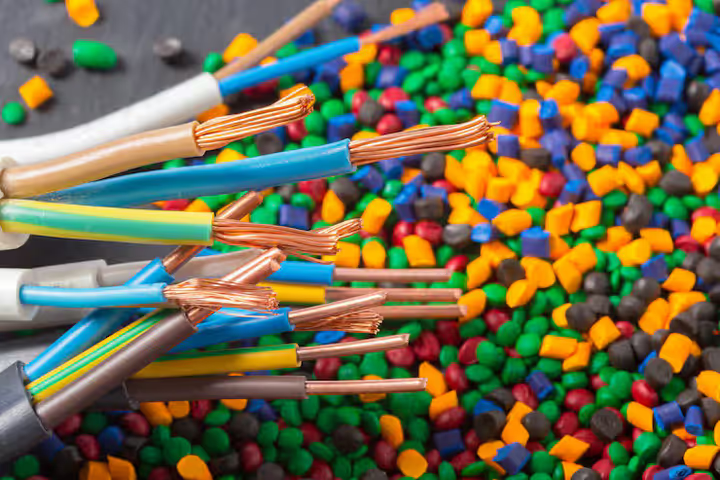
Cable & wire manufacturing is the industrial process of producing electrical wires and cables used for transmitting electrical power, communication signals, and data. These products are essential in homes, commercial buildings, transportation systems, energy infrastructure, telecommunications, and industrial facilities.
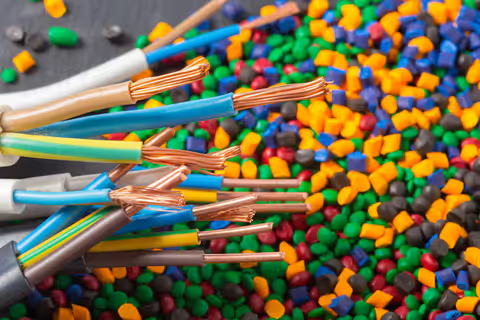
The manufacturing process involves transforming raw conductive materials, insulating compounds, and protective coverings into finished cables designed for specific applications.
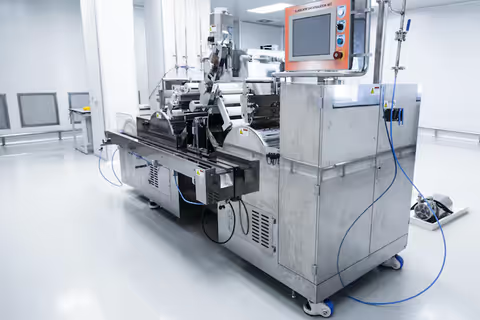
Modern cable & wire manufacturing relies on advanced machinery to improve precision, consistency, and production efficiency. Facilities use cable manufacturing machines, wire manufacturing equipment, electrical wire production machines, and specialized power cable manufacturing equipment to produce cables of various sizes and performance characteristics. High voltage cable manufacturing requires additional processing and testing to meet engineering specifications for electrical transmission networks.
As manufacturing technologies continue to evolve, many OEM cable manufacturing machinery providers develop integrated production systems that combine automation, digital monitoring, and quality inspection. Cable testing equipment also plays an important role by verifying electrical and mechanical performance before products move to the next stage of production or distribution.
Evolution of Cable Manufacturing
Early electrical wires consisted of simple metal conductors with basic insulation materials. As electricity became widely used, manufacturing techniques advanced to improve conductivity, insulation performance, flexibility, and durability.
Today, industrial cable manufacturing combines precision engineering, computer-controlled machinery, automated material handling, and advanced testing technologies. These developments support the production of cables used in renewable energy, transportation, telecommunications, consumer electronics, and industrial automation.
Main Stages of Manufacturing
Cable production includes several coordinated manufacturing processes.
Typical stages include:
- Wire drawing
- Annealing
- Insulation extrusion
- Cabling
- Shielding
- Jacketing
- Printing and marking
- Testing
- Inspection
- Packaging
Each stage contributes to the mechanical strength, electrical performance, and overall quality of the finished cable.
Importance
Supporting Electrical Infrastructure
Cable & wire manufacturing supports nearly every modern electrical system. Electrical cables connect power generation facilities with homes, businesses, factories, transportation systems, and communication networks.
Reliable cables help distribute electricity safely and efficiently across many sectors.
Enabling Industrial Development
Industrial cable manufacturing supports manufacturing facilities, automation systems, mining operations, construction projects, and processing plants.
Specialized cables are designed to operate under different environmental conditions, including heat, moisture, vibration, and mechanical stress.
Advancing Communication Networks
Modern communication systems depend on various cable technologies to transmit voice, video, internet traffic, and digital information.
Wire manufacturing equipment produces conductors used in telecommunications infrastructure, data centers, and networking systems.
Supporting Renewable Energy
Renewable energy facilities require specialized cables for solar installations, wind farms, battery storage systems, and electrical substations.
High voltage cable manufacturing contributes to electrical transmission between power generation sites and distribution networks.
Improving Product Consistency
Electrical wire production machines provide controlled manufacturing processes that improve dimensional accuracy, insulation quality, and conductor consistency.
Automated production also supports repeatable manufacturing procedures.
Major Types of Manufacturing Equipment
Cable Manufacturing Machines
Cable manufacturing machines perform multiple production operations, including insulation application, conductor assembly, extrusion, winding, and protective covering.
Different machines are selected according to cable type and production requirements.
Wire Manufacturing Equipment
Wire manufacturing equipment prepares metal conductors through drawing, straightening, annealing, and surface treatment processes.
These machines produce conductors with different diameters and mechanical properties.
Electrical Wire Production Machines
Electrical wire production machines integrate conductor processing, insulation application, cooling, marking, and winding into coordinated production lines.
Automation supports consistent manufacturing throughout the process.
Power Cable Manufacturing Equipment
Power cable manufacturing equipment produces cables designed for electrical distribution and industrial applications.
Production lines may include conductor stranding systems, insulation extrusion equipment, armoring machines, and protective jacketing systems.
Cable Testing Equipment
Cable testing equipment verifies the electrical and physical properties of finished cables before they proceed through quality inspection.
Testing may include measurements related to:
- Electrical continuity
- Insulation resistance
- Voltage performance
- Mechanical strength
- Dimensional accuracy
- Surface quality
These evaluations help confirm that manufactured products meet established engineering specifications.
Comparison of Cable Manufacturing Equipment
| Equipment Type | Primary Function | Typical Applications |
|---|---|---|
| Cable manufacturing machines | Produce insulated cables | Electrical manufacturing |
| Wire manufacturing equipment | Prepare conductors | Wire production facilities |
| Electrical wire production machines | Integrated wire production | Industrial manufacturing |
| Power cable manufacturing equipment | Produce power transmission cables | Energy infrastructure |
| Cable testing equipment | Verify cable quality | Manufacturing inspection |
| High voltage cable manufacturing systems | Produce transmission cables | Utility networks |
Each equipment category contributes to different stages of cable production and quality management.
Recent Updates
Increased Automation
Between 2024 and 2026, cable manufacturing facilities have continued expanding automation through programmable controllers, robotic material handling, and automated production monitoring.
Automation supports consistent production while simplifying repetitive manufacturing activities.
Digital Manufacturing
Modern cable manufacturing machines increasingly connect with digital production platforms that organize manufacturing information, equipment status, and production records.
Digital connectivity supports coordinated production planning.
Artificial Intelligence Applications
Artificial intelligence is gradually being incorporated into manufacturing environments to analyze production information, monitor equipment performance, and assist predictive maintenance planning.
Engineering decisions continue to rely on qualified personnel and established manufacturing procedures.
Advanced Materials
Manufacturers continue developing improved insulation materials, lightweight cable structures, and enhanced protective coverings suitable for demanding operating environments.
Material research supports changing requirements across transportation, renewable energy, and communication industries.
Improved Quality Monitoring
Cable testing equipment increasingly includes automated inspection systems capable of monitoring conductor dimensions, insulation quality, and production consistency throughout manufacturing.
Continuous monitoring supports organized quality management.
Laws or Policies
Electrical Safety Standards
Cable manufacturing generally follows national and international electrical standards that establish requirements for conductor materials, insulation performance, testing procedures, and product identification.
These standards support safe electrical installations.
Workplace Safety Regulations
Manufacturing facilities operate under workplace safety regulations covering machinery operation, electrical systems, material handling, and emergency procedures.
These regulations help reduce operational risks.
Environmental Requirements
Cable production facilities may follow environmental regulations related to emissions, waste management, recycling, chemical handling, and resource conservation.
These measures encourage environmentally responsible manufacturing.
Quality Management Systems
Many manufacturers implement quality management frameworks that establish procedures for inspection, testing, documentation, equipment calibration, and process control.
These systems support consistent manufacturing practices.
Energy Efficiency Programs
Industrial facilities may participate in energy efficiency initiatives that encourage responsible use of electricity, efficient production technologies, and resource management.
Such initiatives contribute to sustainable manufacturing practices.
Tools and Resources
Several educational resources help engineers, technicians, students, and manufacturing professionals understand cable production technologies.
Useful resources include:
- Electrical engineering textbooks
- Cable design reference manuals
- International electrical standards
- Engineering calculation software
- Manufacturing automation guides
- Material science publications
- Government industry information portals
- Technical research journals
- Quality management documentation
- Equipment maintenance manuals
These resources explain manufacturing processes, cable design, electrical engineering principles, testing methods, and industrial safety.
FAQs
What is cable & wire manufacturing?
Cable & wire manufacturing is the industrial process of producing electrical wires and cables used for power transmission, communications, industrial equipment, and electronic systems.
What are cable manufacturing machines used for?
Cable manufacturing machines perform production processes such as insulation extrusion, conductor assembly, jacketing, winding, and finishing during cable manufacturing.
What is wire manufacturing equipment?
Wire manufacturing equipment includes machines used for wire drawing, annealing, straightening, surface treatment, and conductor preparation before cable production.
What is high voltage cable manufacturing?
High voltage cable manufacturing involves producing electrical transmission cables designed for power networks using specialized insulation, conductor processing, and quality testing procedures.
Why is cable testing equipment important?
Cable testing equipment evaluates electrical and mechanical characteristics such as insulation resistance, continuity, dimensional accuracy, and voltage performance to verify product quality during manufacturing.
Conclusion
Cable & wire manufacturing remains an essential industry supporting electrical infrastructure, communication systems, transportation, renewable energy, and industrial development. Modern cable manufacturing machines, wire manufacturing equipment, electrical wire production machines, power cable manufacturing equipment, and cable testing equipment continue evolving through automation, digital monitoring, advanced materials, and intelligent manufacturing technologies. These developments contribute to efficient production while supporting the growing demand for reliable electrical and communication networks.