Expert Guide to Direct Lithium Extraction Equipment: Analysis, Research, and Emerging Battery Materials Trends
Direct lithium extraction equipment refers to specialized industrial systems used to recover lithium directly from lithium-rich brines. Unlike traditional evaporation pond methods, direct lithium extraction technology separates lithium ions through engineered processes such as adsorption, ion exchange, solvent extraction, or membrane separation.
These approaches aim to recover lithium more efficiently while reducing the physical footprint of processing facilities.
Lithium has become an important raw material for rechargeable batteries used in electric vehicles, portable electronics, renewable energy storage, and industrial equipment. As global demand has increased, researchers and manufacturers have explored alternative extraction methods that can improve recovery rates and shorten production timelines.
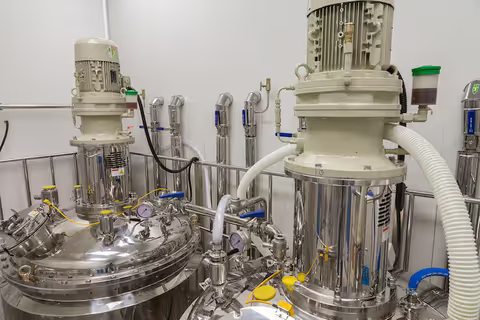
Modern lithium extraction equipment forms part of larger processing facilities that include pretreatment units, separation systems, purification stages, concentration equipment, and final refining operations. Many projects combine multiple technologies depending on the chemistry of the brine and the desired lithium product.
How Direct Lithium Extraction Technology Works
Direct lithium extraction technology begins by collecting lithium-bearing brine from underground reservoirs or geothermal sources. Before lithium separation begins, suspended solids and unwanted minerals are removed through pretreatment processes.
The prepared brine then passes through specialized lithium recovery systems that selectively capture lithium ions while allowing other dissolved salts to remain in solution. After separation, lithium is released from the extraction material and undergoes additional purification before entering lithium refinery equipment for further processing.
The remaining brine may be treated and managed according to local environmental regulations before reinjection or additional processing.
Major Components of a Lithium Processing Facility
Most industrial lithium processing equipment includes several interconnected systems.
Typical equipment includes:
- Brine pretreatment units
- Filtration equipment
- Adsorption or ion exchange columns
- Membrane separation units
- Solvent extraction equipment
- Lithium concentration systems
- Purification equipment
- Drying systems
- Process control systems
- Monitoring instruments
Each component performs a specific function within the overall lithium recovery process.
Importance
Supporting Battery Manufacturing
Lithium is a key ingredient in many rechargeable battery chemistries. Direct lithium extraction equipment supports the growing supply chain required for electric transportation, renewable energy storage, consumer electronics, and industrial battery applications.
As battery production expands globally, reliable lithium recovery methods have become increasingly important.
Improving Resource Utilization
Traditional evaporation methods may require extended processing periods and large evaporation ponds. Direct lithium extraction technology provides an alternative approach that can recover lithium through engineered separation processes rather than relying primarily on natural evaporation.
The suitability of each method depends on local geology, water chemistry, and project design.
Expanding Resource Development
Lithium-rich brines exist in different geological environments, including salt flats, geothermal reservoirs, and oilfield brines. Various types of lithium brine extraction equipment are being evaluated to determine whether these resources can contribute to future lithium production.
Supporting Industrial Innovation
Advances in separation science, materials engineering, automation, and digital monitoring continue to improve lithium processing equipment. These developments contribute to more efficient process control and consistent product quality.
Encouraging Responsible Resource Management
Many research programs are examining methods that improve water management, reduce waste generation, and increase resource efficiency throughout lithium production. Equipment design plays an important role in achieving these objectives.
Main Types of Direct Lithium Extraction Technology
Adsorption Systems
Adsorption systems use specially engineered materials that selectively capture lithium ions from brine. Once saturated, the material releases lithium during a controlled recovery process and may be reused multiple times depending on its operating characteristics.
Ion Exchange Systems
Ion exchange technology exchanges lithium ions with ions attached to specialized resin materials. This approach can achieve selective separation under appropriate operating conditions.
Solvent Extraction
Some lithium processing equipment uses solvent extraction techniques, where lithium is transferred between liquid phases using carefully selected chemical compounds. Additional purification stages follow before refining.
Membrane Separation
Membrane-based systems separate dissolved substances using selective membranes. Research continues to improve membrane durability, selectivity, and operating efficiency for lithium recovery applications.
Hybrid Systems
Some facilities combine multiple extraction technologies within a single processing sequence. Hybrid designs allow engineers to optimize recovery according to the chemical composition of each lithium resource.
Typical Equipment Used in Lithium Processing
| Equipment | Primary Function |
|---|---|
| Pretreatment unit | Removes suspended materials |
| Filtration system | Improves brine quality |
| Adsorption column | Captures lithium ions |
| Ion exchange unit | Separates lithium selectively |
| Membrane system | Performs selective filtration |
| Concentration equipment | Increases lithium concentration |
| Purification system | Removes remaining impurities |
| Lithium refinery equipment | Produces refined lithium compounds |
These components work together within industrial lithium processing facilities.
General Processing Flow
| Processing Stage | Purpose |
|---|---|
| Brine collection | Obtains lithium-rich solution |
| Pretreatment | Removes unwanted materials |
| Lithium separation | Extracts lithium ions |
| Purification | Improves product quality |
| Concentration | Increases lithium content |
| Refining | Produces final lithium materials |
Processing sequences vary depending on project requirements and resource characteristics.
Recent Updates
Continued Technology Development
Between 2024 and 2026, research institutions and industrial companies have continued developing improved direct lithium extraction technology. Many projects focus on increasing recovery efficiency while improving process stability.
Pilot and Commercial Facilities
Several regions with significant lithium resources have expanded pilot-scale and commercial-scale evaluations of direct extraction systems. These projects help engineers better understand equipment performance under different geological conditions.
Increased Automation
Modern lithium extraction equipment increasingly incorporates automated controls, digital sensors, and continuous monitoring systems. Automation supports more consistent operating conditions and improved equipment management.
Advances in Materials Science
Researchers continue developing improved adsorbents, membranes, and ion exchange materials that enhance lithium selectivity while increasing operational durability.
Digital Process Monitoring
Industrial facilities are adopting advanced monitoring systems that collect operational information from pumps, valves, filters, separation columns, and analytical instruments. Digital monitoring supports process optimization and maintenance planning.
Laws or Policies
Environmental Regulations
Lithium extraction projects typically operate under environmental regulations covering water management, waste handling, emissions, and ecosystem protection. Requirements vary according to national and regional authorities.
Mining Regulations
Where lithium originates from mineral resources or underground brines, mining legislation generally governs exploration, resource development, and operational permits.
Water Resource Management
Lithium brine extraction equipment often operates within regions where groundwater management is carefully regulated. Authorities may establish requirements regarding water withdrawal, monitoring, reinjection, and environmental protection.
Industrial Safety Standards
Lithium refinery equipment and industrial processing facilities generally follow workplace safety regulations covering chemical handling, electrical systems, pressure equipment, and emergency preparedness.
Product Quality Standards
Lithium products intended for battery manufacturing commonly follow internationally recognized quality specifications to support consistent manufacturing processes.
Tools and Resources
Numerous educational resources help engineers, researchers, students, and industrial professionals understand lithium processing technologies.
Useful resources include:
- Geological survey publications
- Mining engineering textbooks
- Metallurgical engineering references
- International Energy Agency publications
- Battery technology research journals
- Process simulation software
- Industrial process monitoring platforms
- Environmental assessment guidance
- Technical standards documentation
- University research databases
These materials explain lithium geology, extraction methods, processing technologies, and industrial operations.
FAQs
What is direct lithium extraction equipment?
Direct lithium extraction equipment includes industrial systems designed to recover lithium directly from lithium-rich brines using selective separation technologies rather than relying mainly on evaporation ponds.
How does direct lithium extraction technology differ from traditional methods?
Direct lithium extraction technology separates lithium through engineered processes such as adsorption, membranes, ion exchange, or solvent extraction, while traditional approaches often depend on long-term evaporation before further processing.
What types of lithium processing equipment are commonly used?
Typical lithium processing equipment includes filtration units, adsorption columns, membrane systems, purification equipment, concentration systems, analytical instruments, and lithium refinery equipment.
What are lithium recovery systems?
Lithium recovery systems are integrated processing units that separate lithium from brines, concentrate the recovered material, and prepare it for refining into battery-grade compounds or other industrial products.
What is a turnkey lithium processing plants concept?
A turnkey lithium processing plants concept refers to a fully integrated facility that combines brine treatment, lithium separation, purification, refining, utilities, automation, and supporting infrastructure into one coordinated operation.
Conclusion
Direct lithium extraction equipment represents an important area of development within modern mineral processing. Direct lithium extraction technology combines advanced separation methods with automated process control to recover lithium from naturally occurring brines. Continued improvements in lithium recovery systems, lithium processing equipment, and lithium refinery equipment are supporting the evolution of battery material production. As research advances, these technologies are expected to remain an important part of the broader lithium supply chain.