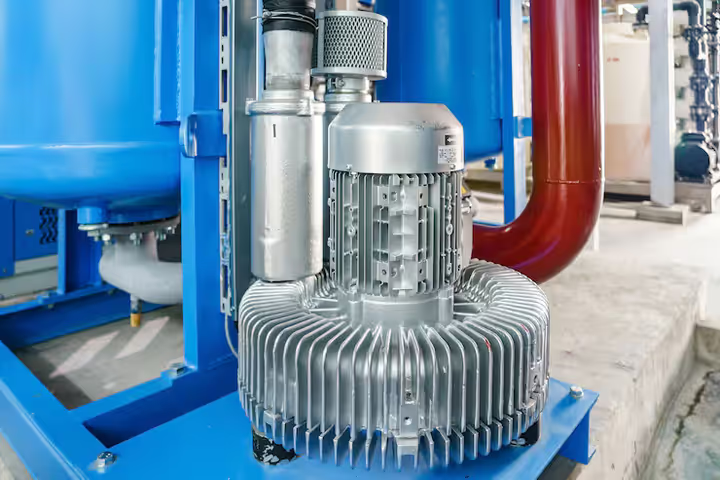
Industrial Screw Compressors Explained: How Rotary Compression Works
Industrial screw compressors are machines that produce compressed air or gas through the rotation of two interlocking helical rotors. Unlike reciprocating compressors that use pistons moving back and forth, screw compressors use continuous rotary motion.
This design allows compressed air systems to support many industrial activities, including manufacturing, food processing, chemical production, packaging, automotive assembly, and general plant operations.
Industrial screw compressors are available in different configurations, including oil-injected and oil-free designs. Their selection depends on factors such as pressure, airflow requirements, air quality, operating environment, duty cycle, and the type of equipment receiving the compressed air.
Context
What Is an Industrial Screw Compressor?
An industrial screw compressor is a rotary machine that increases the pressure of air or another compatible gas. Its main compression mechanism consists of two helical rotors positioned inside a housing.
As the rotors turn, air enters through an inlet opening and becomes trapped between the rotor surfaces and the housing. The available space decreases as the trapped air moves along the rotors, causing its pressure to increase before it leaves through the discharge side.
A typical compressed-air installation can contain several supporting components:
- Air inlet and filtration equipment
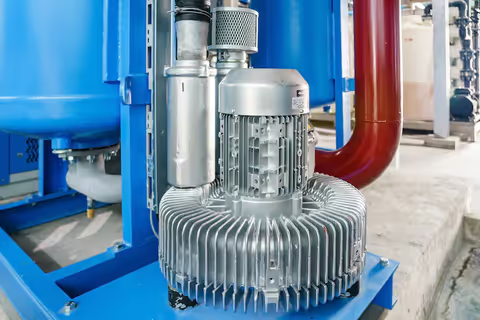
- Screw compressor assembly
- Motor or other drive system
- Cooling equipment
- Air or oil separation components
- Compressed-air receiver
- Drying and filtration equipment
- Control and monitoring systems
The exact arrangement depends on the application and required air quality.
Oil-Injected and Oil-Free Designs
Industrial screw compressors are commonly divided into oil-injected and oil-free types. In an oil-injected compressor, oil is introduced into the compression chamber for functions such as cooling, sealing, and lubrication. The compressed mixture then passes through separation equipment before the air continues through the system.
Oil-free screw compressors use a different compression arrangement that avoids introducing oil directly into the compression chamber. These systems can be relevant where compressed-air purity is particularly important, although downstream filtration and air-treatment requirements still depend on the application.
How Screw Compression Works
The basic compression sequence involves several stages. First, atmospheric air enters through the inlet. The rotating screws then trap and transport the air along the compression chamber.
As the trapped volume decreases, pressure rises. The compressed air is subsequently discharged into the downstream system, where it can pass through cooling, drying, filtration, and storage equipment before reaching production machinery.
Importance
Why Industrial Screw Compressors Matter
Compressed air is often used as a source of power or process support in industrial facilities. It can operate pneumatic tools, control valves, actuators, conveyors, packaging equipment, and automated production systems.
The reliability of the compressed-air supply can therefore influence the operation of equipment connected to it. Pressure fluctuations, moisture, oil contamination, or insufficient airflow can affect pneumatic equipment and production processes.
Screw compressors are particularly associated with applications that require a relatively continuous supply of compressed air. Their rotary operating principle allows them to run for extended periods when appropriately selected and maintained.
Common Industrial Applications
Industrial screw compressors can be found across several sectors.
| Industry | Typical compressed-air applications |
|---|---|
| Automotive | Assembly tools, painting, automation |
| Food processing | Packaging and pneumatic controls |
| Pharmaceuticals | Process equipment and controlled environments |
| Chemical processing | Instrumentation and pneumatic equipment |
| Metalworking | Machine tools and pneumatic systems |
| Electronics | Automation and controlled production equipment |
| Textiles | Pneumatic machinery and process control |
| Packaging | Filling, sealing, and automated handling |
| General manufacturing | Tools, actuators, and plant automation |
The required air quality can differ significantly between these applications. Food, pharmaceutical, and electronics facilities may have more stringent requirements than general industrial applications.
Fixed-Speed and Variable-Speed Operation
Screw compressors can use fixed-speed or variable-speed drives. A fixed-speed system generally operates at a defined motor speed, while a variable-speed drive adjusts motor speed according to changes in compressed-air demand.
Variable-speed operation can be useful in facilities where demand changes substantially during normal production. However, the suitability of a particular drive arrangement depends on operating conditions, control strategy, motor characteristics, and the overall compressed-air system.
Pressure and Airflow
Two important specifications are pressure and airflow. Pressure is commonly expressed in bar, psi, or similar units, while airflow may be expressed in cubic meters per minute, liters per second, or cubic feet per minute.
A compressor should not be evaluated from pressure alone. The connected equipment also needs sufficient airflow at the required pressure. Incorrect sizing can result in unstable system operation or unnecessary energy use.
Recent Updates
Energy Management and System Controls
Recent developments in industrial screw compressors have increasingly focused on energy management and intelligent controls. Since compression requires substantial electrical input, manufacturers and plant operators have placed greater attention on motor efficiency, operating profiles, pressure management, and system monitoring.
Modern control systems can monitor parameters such as discharge pressure, temperature, operating hours, load condition, and maintenance indicators. Connected monitoring can also allow operating data to be reviewed through plant management systems.
Variable-Speed Technology
Variable-speed screw compressors continue to be used in applications where compressed-air demand changes throughout the production cycle. Electronic drive systems can adjust compressor output as demand changes instead of maintaining one operating speed at all times.
The actual energy effect depends on the load profile and control strategy. A variable-speed system does not automatically provide the same result in every installation.
Heat Recovery
Compression generates heat, and some industrial installations use heat-recovery arrangements to capture part of that energy. Recovered heat may be directed toward suitable plant processes, space heating, or water heating where the temperature and system configuration allow it.
Heat recovery depends on operating conditions and requires appropriate integration with the facility's existing heating system.
Digital Monitoring
Digital sensors and industrial communication systems are increasingly used to collect information from compressors. Data may include pressure, temperature, motor status, operating hours, and alarm conditions.
These systems can help plant personnel understand operating patterns and identify changes that may require inspection. Digital monitoring does not replace physical inspection, maintenance procedures, or qualified technical assessment.
Laws or Policies
Industrial Equipment Rules in India
In India, industrial compressed-air equipment operates within a wider framework of workplace safety, electrical safety, environmental regulation, and industrial standards. Requirements can vary according to the industry, equipment configuration, pressure level, installation, and location.
The Directorate General Factory Advice Service and Labour Institutes and relevant state authorities are involved in occupational safety and factory-related regulatory matters. The applicable requirements should be determined according to the specific installation and jurisdiction.
Pressure Equipment Considerations
Compressed-air receivers and other pressure-containing equipment require particular attention because stored compressed gas contains significant energy. Applicable inspection, testing, installation, and workplace-safety requirements depend on the equipment and jurisdiction.
Industrial facilities should also consider relevant Indian Standards and applicable technical requirements when designing or operating compressed-air systems.
Electrical and Environmental Requirements
Industrial screw compressors normally use electric motors, meaning electrical installation requirements can also apply. Facilities may need to follow applicable electrical safety rules and standards relating to motors, wiring, grounding, control panels, and industrial installations.
Environmental requirements can also apply to compressor rooms and associated equipment, particularly regarding noise, waste oil, used filters, and other materials generated during maintenance.
Tools and Resources
Compressor Selection Information
Several technical measurements help describe a screw compressor and its suitability for an application. Important parameters include:
- Required operating pressure
- Airflow demand
- Operating hours
- Duty cycle
- Ambient temperature
- Air quality requirements
- Available electrical supply
- Receiver capacity
- Cooling requirements
These parameters provide a starting point for understanding how a compressor fits into a compressed-air system.
Airflow and Pressure Calculations
Compressed-air system calculations can help estimate demand, pressure drops, receiver requirements, and leakage. Manufacturer technical manuals, engineering references, and industrial compressed-air guidelines provide calculation methods and terminology.
A pressure gauge alone does not show the complete condition of an air system. Flow measurements and operating data may be needed to understand whether supply matches actual demand.
Standards and Technical Resources
Useful information can be obtained from organizations and resources such as the Bureau of Indian Standards, International Organization for Standardization, International Electrotechnical Commission, and relevant industrial safety authorities.
Standards relating to compressed-air quality, compressor testing, electrical equipment, pressure vessels, and workplace safety can help explain technical requirements. The applicable standard depends on the equipment and application.
Maintenance Records
A maintenance record can contain information such as operating hours, lubricant changes, filter replacement, temperature readings, pressure readings, inspection findings, and alarm history.
Keeping these records can help identify changes in operating conditions over time. Maintenance intervals should follow the compressor manufacturer's technical documentation and the conditions under which the equipment operates.
FAQs
What are industrial screw compressors used for?
Industrial screw compressors produce compressed air for pneumatic tools, automation systems, actuators, packaging equipment, process controls, and other industrial applications. They are commonly used where a relatively continuous compressed-air supply is required.
How does an industrial screw compressor work?
Two helical rotors rotate inside a housing and trap incoming air. As the air moves along the rotors, the available volume decreases, increasing pressure before the compressed air exits the compressor.
What is the difference between oil-injected and oil-free screw compressors?
Oil-injected screw compressors introduce oil into the compression chamber for cooling, sealing, and lubrication. Oil-free designs use a compression arrangement that does not introduce oil directly into the compression chamber and may be selected for applications with stricter air-purity requirements.
Are industrial screw compressors suitable for continuous operation?
Screw compressors are commonly used in applications involving extended operating periods. Whether a particular unit is suitable for continuous operation depends on its design, rated duty, cooling arrangement, ambient conditions, maintenance requirements, and operating profile.
What factors should be considered when selecting an industrial screw compressor?
Important factors include required pressure, airflow, duty cycle, air quality, operating environment, electrical supply, cooling requirements, receiver capacity, and the characteristics of connected equipment. The complete compressed-air system should be considered rather than the compressor alone.
Conclusion
Industrial screw compressors use rotating helical elements to produce compressed air or gas for a wide range of industrial applications. Oil-injected and oil-free configurations address different operating and air-quality requirements, while fixed-speed and variable-speed arrangements respond to different demand patterns. Recent developments have focused on energy management, digital monitoring, variable-speed operation, and heat recovery. Safe operation also depends on appropriate pressure-equipment practices, electrical requirements, maintenance procedures, and applicable industrial regulations.