AI Contract Management: A Guide for Modern Businesses
In today's fast-paced digital world, the role of artificial intelligence (AI) in contract management is evolving rapidly. As businesses strive for efficiency and precision, AI-powered tools are stepping in to revolutionize the way contracts are organized and managed. Whether it's reducing manual workloads or enhancing the accuracy of contract processes, AI is transforming traditional methods in contract management.
Understanding the capabilities of AI in contract management requires an exploration of its foundational technologies. At the heart of AI's prowess in this field is natural language processing (NLP), machine learning, and data analytics. These technologies enable the automation of tasks that once required human intervention, such as contract sorting, identifying key contract clauses, and monitoring compliance. NLP, in particular, is powerful for reading and understanding vast amounts of contract text, making it easier for businesses to manage large volumes of documents efficiently.
A fundamental aspect where AI is making significant strides is in the automation of contract creation. Contract creation can be a time-consuming process involving multiple parties and iterations. AI tools, powered by machine learning algorithms, can analyze past contract data and generate templates that conform to standard business practices. This not only speeds up the process but also reduces the likelihood of human error and biases, ensuring consistency and adherence to business policies.
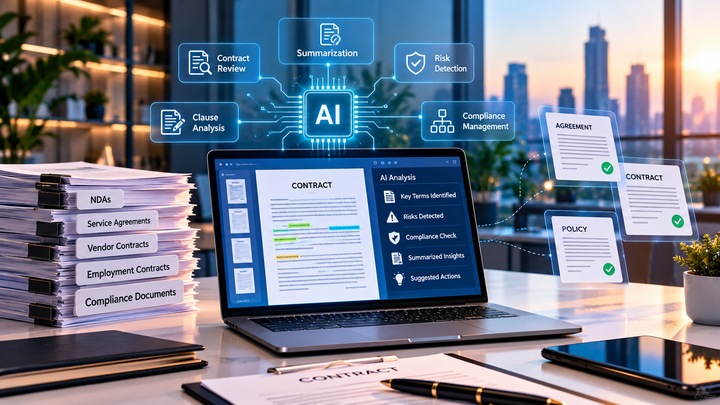
Moreover, AI plays a crucial role in contract review and analysis. Manual review can be tedious and prone to oversight, especially when dealing with complex legal language and voluminous documentation. AI systems equipped with machine learning can sift through contracts, identifying anomalies, loopholes, or unfavorable terms. This assists legal teams in spotting potential risks early and making informed decisions without the need for exhaustive manual checks.
Contract management doesn't end with signing. Compliance and fulfillment are critical stages where AI continues to add value. AI-driven systems can monitor contract terms in real-time, facilitating ongoing compliance checks. These systems can alert management to deadlines, renewals, or any actions required as per the contract terms, ensuring nothing slips through the cracks. By doing so, businesses can better manage their contractual obligations, mitigate risks, and uphold their reputation.
The predictive capabilities of AI also contribute to smarter contract management. Through analyzing historical and current data, AI can forecast trends and provide insights that could impact future contracts. This foresight is invaluable for businesses looking to negotiate favorable terms and avoid potential pitfalls. Predictive algorithms can assess the likelihood of a contract's adherence or default, enabling companies to proactively address issues before they arise.
Collaboration is another area where AI is transforming contract management. AI-powered platforms facilitate smoother communication and coordination among stakeholders. Features such as automated reminders, shared access to contract documents, and real-time updates ensure that all parties are on the same page. This collaborative environment reduces misunderstandings and promotes transparency, essential factors in maintaining strong business relationships.
In addition to these practical applications, privacy and security are inherent concerns in contract management. AI tools are designed with robust data protection mechanisms to ensure that sensitive information is safeguarded against breaches. With the implementation of encryption technologies and secure cloud storage, businesses can be assured of compliance with data protection regulations, which are critical in maintaining trust and legal compliance.
Despite the advantages, the integration of AI in contract management requires thoughtful implementation. Businesses must consider the training and change management required for employees to adapt to these new tools. It is essential to understand that AI complements human expertise; it does not replace it. The human touch is still valuable in negotiating terms and making strategic decisions that machines cannot wholly replicate.
The future of AI in contract management looks promising, with ongoing advancements expected to refine and enhance existing systems. As businesses continue to navigate the complexities of global operations, the adoption of AI in contract management offers a path towards greater efficiency, reliability, and strategic advantage.
The educational journey into AI-powered contract management tools reflects an ongoing commitment to innovation in the business sector. As such, understanding and embracing these tools will be crucial for businesses looking to maintain competitive edges and improve operational efficiencies. The marriage between AI and contract management represents a significant step toward smarter, more sophisticated business practices in the modern era.