Chemical Mixing Equipment Guide: Types, Uses, and Key Selection Insights
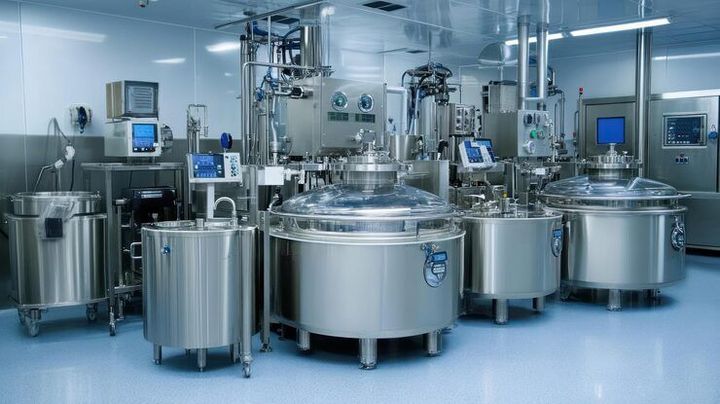
Chemical mixing equipment refers to specialized machinery used to combine liquids, powders, gases, or other materials to create uniform mixtures. These systems are essential in industries where precise chemical reactions and consistent material composition are required. Mixing equipment helps achieve the correct concentration, stability, and texture in chemical products.
Chemical processing often involves combining multiple substances under controlled conditions. Proper mixing ensures ingredients are evenly distributed, which directly affects product quality, safety, and performance .
Industrial mixing equipment is widely used across sectors such as pharmaceuticals, chemical manufacturing, food processing, and water treatment. These machines range from basic agitators to advanced automated systems with digital monitoring capabilities.
Common Types of Mixing Equipment
Different mixers are designed to handle specific material properties like viscosity, particle size, and reactivity.
- Agitators – Used for liquid blending
- Static mixers – Suitable for continuous flow processes
- Ribbon blenders – Ideal for powder mixing
- Paddle mixers – Used for solid-liquid combinations
- High-shear mixers – Designed for emulsions and suspensions
- Magnetic mixers – Used in sterile or sealed environments
- Planetary mixers – Suitable for high-viscosity materials
Modern systems often include automation features that control speed, temperature, and pressure for consistent results.
Importance of Chemical Mixing Equipment
Chemical mixing equipment plays a crucial role in ensuring accurate formulations across industries. Even small inconsistencies can lead to unstable compounds or reduced product efficiency .
Industries depend on precise mixing to maintain quality, safety, and performance standards.
Key Benefits
- Maintains uniform chemical composition
- Supports large-scale production
- Improves product consistency and reliability
- Reduces material waste
- Enables controlled chemical reactions
For example, pharmaceutical manufacturing requires precise mixing to ensure correct dosage levels. Similarly, wastewater treatment plants rely on mixers to distribute treatment chemicals effectively.
Recent Updates in Mixing Technology (2025)
Recent advancements have significantly improved chemical mixing processes. Many systems now integrate smart monitoring and digital technologies to enhance efficiency and control .
Key Trends
- Smart monitoring systems track viscosity, torque, and temperature
- Energy-efficient motors and VFDs optimize power consumption
- Industrial IoT (IIoT) enables real-time data collection and analysis
- Continuous mixing technology improves production speed
- Advanced high-shear systems enhance dispersion of complex materials
- Sustainability-focused designs reduce energy and material waste
These innovations are helping industries move toward more efficient and environmentally responsible operations.
Laws and Policies
Chemical mixing operations are governed by strict regulations due to safety and environmental concerns. These rules ensure responsible handling of chemicals and safe operation of industrial equipment .
Key Regulatory Areas
- Worker safety standards
- Environmental protection
- Hazardous material handling
- Equipment safety compliance
In the United States, OSHA sets safety guidelines for industrial operations. The EPA regulates emissions and waste management, while the European Union enforces REACH regulations for chemical safety.
Compliance with these regulations protects workers, communities, and the environment.
Tools and Resources for Chemical Mixing
Engineers and plant operators use various tools to optimize mixing processes. These tools support simulation, monitoring, and system design.
Common Tools
- Process simulation software
- Computational Fluid Dynamics (CFD) tools
- Industrial automation systems
- Sensor-based monitoring dashboards
- Engineering calculation tools
Key Parameters Monitored
- Mixing speed
- Viscosity
- Temperature
- Pressure
- Particle dispersion
Chemical Mixer Types and Applications
| Mixer Type | Common Application | Mixing Characteristics |
|---|---|---|
| Agitator | Liquid blending | Moderate intensity |
| Ribbon Blender | Powder mixing | Uniform dry blending |
| Paddle Mixer | Solid-liquid mixtures | Gentle mixing |
| High-Shear Mixer | Emulsions and suspensions | High energy dispersion |
| Static Mixer | Continuous flow systems | No moving parts |
Equipment Selection Factors
| Selection Factor | Importance Level |
|---|---|
| Material viscosity | High |
| Chemical compatibility | High |
| Production volume | Medium |
| Energy efficiency | Medium |
| Automation capability | High |
These resources help improve efficiency, safety, and process reliability in industrial environments.
Frequently Asked Questions
What is chemical mixing equipment used for?
Chemical mixing equipment is used to combine materials into uniform mixtures for industries such as pharmaceuticals, coatings, and water treatment.
What factors affect mixing performance?
Key factors include viscosity, temperature, particle size, mixing speed, and chemical properties.
What is the difference between batch and continuous mixing?
Batch mixing processes materials in separate cycles, while continuous mixing blends materials in a steady flow.
Why is high-shear mixing important?
High-shear mixing is used to disperse particles and create stable emulsions that require strong mechanical force.
How does automation improve mixing?
Automation enables real-time monitoring and control of parameters, ensuring consistent quality and improved efficiency.
Conclusion
Chemical mixing equipment is essential for modern industrial manufacturing. It ensures accurate blending of materials, supporting industries from pharmaceuticals to environmental engineering .
Advancements such as smart monitoring, energy-efficient systems, and digital automation are transforming mixing technologies. These innovations improve efficiency, safety, and sustainability.
Understanding mixing equipment, technologies, and regulations helps professionals design better and more reliable chemical processing systems.