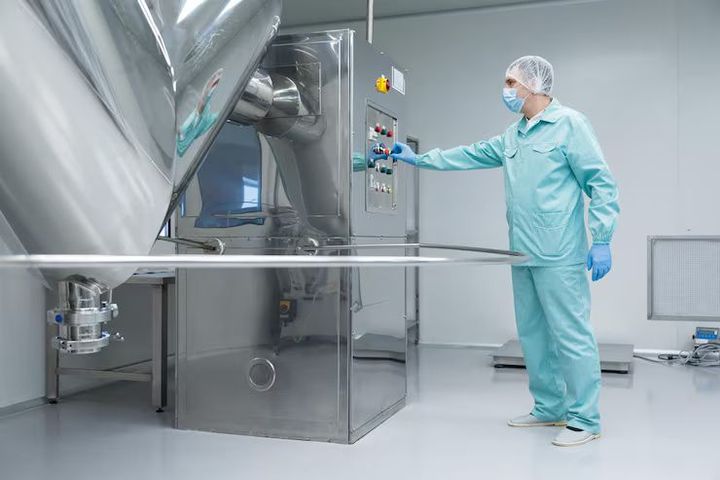
A cleanroom is an enclosed environment where contamination levels are strictly controlled. Even microscopic particles like dust, bacteria, or chemical vapors can disrupt sensitive manufacturing processes. Cleanroom air handling units ensure that the air circulating inside these spaces remains clean and stable.
Cleanroom AHUs function as part of a broader HVAC system specifically designed for contamination control. Unlike standard systems, they include advanced filtration, airflow management, and environmental monitoring technologies.
Key Components of Cleanroom AHUs
Cleanroom air handling units consist of multiple specialized components working together to maintain air purity and stability. These systems are designed to continuously filter and circulate air within controlled environments.
-
High Efficiency Particulate Air (HEPA) or Ultra-Low Particulate Air (ULPA) filters
-
Pre-filtration stages for larger particles
-
Temperature and humidity control modules
-
Airflow distribution fans and blowers
-
Pressure control mechanisms
-
Monitoring sensors and automated control systems
These components ensure that cleanroom environments meet strict cleanliness classifications required by advanced industries.
Why Cleanroom Air Handling Units Matter Today
The demand for controlled manufacturing environments has increased due to rapid advancements in technology and healthcare. Cleanroom AHUs help maintain environments where even the smallest particles can affect product quality and performance.
Industries That Depend on Cleanrooms
Several industries rely heavily on cleanroom environments for precision and safety. These sectors require consistent air purity to prevent contamination-related failures.
-
Semiconductor fabrication and microelectronics
-
Pharmaceutical research and vaccine production
-
Medical device manufacturing
-
Aerospace engineering and satellite components
-
Biotechnology laboratories
Key Problems Solved by Cleanroom AHUs
Cleanroom air handling systems address critical contamination and environmental challenges. These issues can directly impact product reliability and research outcomes.
-
Particle contamination affecting microchips
-
Microbial contamination in pharmaceuticals
-
Chemical vapor interference in labs
-
Temperature instability impacting sensitive materials
Modern systems also incorporate energy-efficient technologies that balance environmental control with reduced energy consumption.
Recent Developments in Cleanroom Air Handling Technology
Cleanroom air handling technology has evolved significantly, especially with the rise of smart manufacturing and sustainability initiatives. Recent innovations focus on improving monitoring, efficiency, and predictive capabilities.
Key Technological Trends
Recent advancements highlight the integration of digital technologies into cleanroom systems. These innovations enhance performance and reduce operational risks.
-
Integration of IoT sensors for real-time monitoring
-
AI-based predictive maintenance systems
-
High-efficiency fan systems for energy savings
-
Advanced filtration for nanometer-level particles
Engineers are also using advanced simulation tools to design optimized airflow systems with minimal turbulence. Sustainability efforts now focus on reducing carbon emissions and improving energy recovery systems.
Regulations and Policies Affecting Cleanroom Environments
Cleanroom systems operate under strict global standards to ensure safety and quality. These regulations guide design, operation, and maintenance processes.
Key Regulatory Frameworks
Several international and industry-specific regulations influence cleanroom environments. Compliance ensures product safety and operational consistency.
-
ISO 14644 cleanroom standards
-
Good Manufacturing Practice (GMP) regulations
-
FDA guidelines for healthcare environments
-
Environmental protection regulations
Cleanroom Classification Table
Below is a simplified table of common cleanroom classifications and their applications:
| Cleanroom Class | Maximum Particles per m³ (0.5 µm) | Typical Industry Use |
|---|
| ISO Class 3 | 1,000 | Semiconductor fabrication |
| ISO Class 5 | 100,000 | Pharmaceutical production |
| ISO Class 7 | 352,000 | Medical device assembly |
| ISO Class 8 | 3,520,000 | General electronics manufacturing |
These classifications define acceptable particle levels and help standardize cleanroom operations worldwide.
Tools and Resources for Cleanroom Air Handling Systems
Engineers and facility managers use specialized tools to design and maintain cleanroom AHUs. These tools improve accuracy, efficiency, and compliance during system planning and operation.
Common Tools Used
Various digital tools assist in analyzing airflow, filtration, and energy performance. These tools are essential for optimizing cleanroom environments.
-
HVAC load calculation software
-
Computational Fluid Dynamics (CFD) tools
-
Building automation systems (BAS)
-
Compliance checklists and documentation
-
Energy efficiency analysis platforms
Airflow Management Types
Different airflow strategies are used depending on the cleanroom application. Each approach helps control contamination levels effectively.
| Airflow Type | Description | Typical Application |
|---|
| Laminar Flow | Uniform air movement with minimal turbulence | Semiconductor fabrication |
| Turbulent Flow | Continuous air mixing to dilute contaminants | General manufacturing cleanrooms |
| Unidirectional Flow | Vertical or horizontal controlled airflow | Pharmaceutical processing |
Monitoring systems track pressure, temperature, humidity, and particle levels in real time. Predictive maintenance dashboards also help ensure consistent system performance.
Frequently Asked Questions
What is the main purpose of a cleanroom air handling unit?
A cleanroom AHU controls airflow, filtration, temperature, and humidity. Its primary goal is to maintain low levels of airborne contamination.
How do HEPA filters work?
HEPA filters capture extremely small particles using dense fiber structures. They can remove at least 99.97% of particles measuring 0.3 microns.
What industries use cleanroom systems?
Industries include semiconductor manufacturing, pharmaceuticals, biotechnology, aerospace, and medical device production. These sectors rely on contamination-free environments.
Why is airflow pattern important?
Proper airflow patterns help remove contaminants efficiently. They also prevent particles from settling on sensitive equipment or materials.
How are cleanrooms monitored?
Cleanrooms use sensors and monitoring systems to track particle counts, temperature, humidity, and pressure. These systems ensure consistent environmental conditions.
Conclusion
Cleanroom air handling units are essential for maintaining controlled environments in modern industries. They regulate air purity, temperature, humidity, and pressure to meet strict cleanliness standards.
With the growth of semiconductor manufacturing, biotechnology, and pharmaceutical research, demand for advanced cleanroom systems continues to rise. These systems support precision manufacturing and reliable scientific processes.
Technological advancements such as IoT monitoring and energy-efficient ventilation are improving system performance. At the same time, regulatory standards ensure compliance and safety. Cleanroom air handling units will remain critical as industries evolve and require higher levels of environmental control.