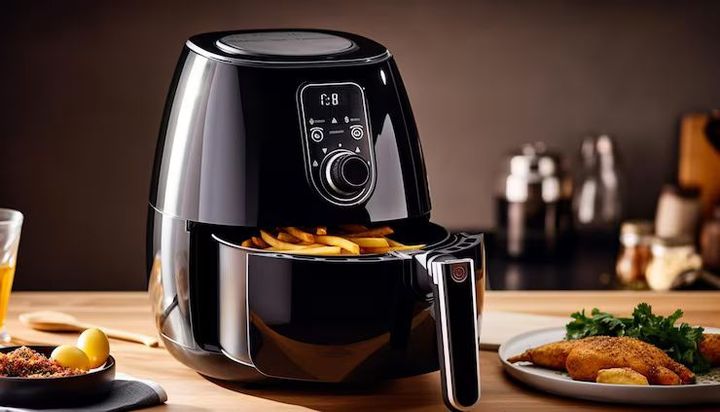
Commercial Air Fryer Guide: Essential Features & Smart Insights
Learn how commercial air fryers work, their essential features, current industry trends, regulations, practical tools, and key considerations for efficient food preparation.
Commercial air fryers have become an important part of modern food preparation environments. Unlike traditional deep frying equipment, these appliances use rapid hot air circulation to cook food with minimal added oil. They are designed for larger cooking volumes, consistent performance, and improved energy efficiency.
Many commercial kitchens, educational institutions, healthcare facilities, and hospitality environments use this equipment to prepare a variety of foods while maintaining consistent cooking quality. Advances in digital temperature control, programmable cooking cycles, and energy management have made commercial air fryers increasingly reliable for everyday operations.
Understanding Commercial Air Fryers
A commercial air fryer is a high-capacity cooking appliance that circulates heated air at high speed around food. This process creates a crispy outer texture while cooking the inside evenly.
Common applications include:
- Vegetables
- Poultry
- Seafood
- Frozen foods
- Bakery products
- Snack items
Commercial kitchen equipment is designed to withstand continuous use while maintaining food quality and operational efficiency.
Why Commercial Air Fryers Matter
Commercial air fryers support several important goals in modern food preparation.
Improved Cooking Consistency
Digital controls help maintain stable temperatures throughout the cooking process, producing more predictable results.
Better Energy Efficiency
Many newer models include energy-efficient heating systems that reduce unnecessary power consumption during operation.
Faster Food Preparation
Rapid air circulation shortens cooking times for many menu items, helping improve kitchen workflow.
Easier Kitchen Management
Programmable cooking settings reduce manual adjustments and help standardize preparation procedures.
Supports Food Quality
Controlled airflow helps maintain texture while reducing excess oil usage compared with conventional deep frying methods.
Essential Features to Consider
The following table highlights common features found in commercial air fryers.
| Feature | Purpose |
|---|---|
| Digital Temperature Control | Maintains accurate cooking temperatures |
| Programmable Cooking Modes | Simplifies repetitive cooking tasks |
| Large Capacity Basket | Handles higher food volumes |
| Adjustable Fan Speed | Supports different cooking requirements |
| Stainless Steel Construction | Improves durability and hygiene |
| Automatic Shut-Off | Enhances operational safety |
| Easy-Clean Components | Simplifies maintenance |
| Energy Monitoring Functions | Supports efficient energy management |
These features contribute to improved kitchen efficiency while supporting consistent cooking performance.
Recent Updates in Commercial Air Fryer Technology
Commercial cooking technology has continued to evolve throughout 2025 and early 2026.
Several noticeable developments include:
- Greater use of smart digital control panels
- Improved airflow engineering for more even cooking
- Better insulation to reduce heat loss
- Expanded programmable cooking presets
- Enhanced touchscreen interfaces
- Increased focus on energy-efficient commercial kitchen equipment
Manufacturers are also introducing more compact designs that maximize cooking capacity while reducing floor space requirements.
Industry Trend Snapshot
| Trend | Industry Impact |
|---|---|
| Smart Digital Controls | Easier operation |
| Energy-Efficient Heating | Lower energy consumption |
| Improved Air Circulation | Better cooking consistency |
| Touchscreen Operation | Faster user interaction |
| Compact Equipment Design | Better space utilization |
Laws and Policies
Commercial air fryer use is influenced by food safety and electrical regulations that vary by country.
Common regulatory areas include:
- Food hygiene requirements
- Commercial kitchen sanitation standards
- Electrical equipment safety regulations
- Workplace health and safety guidelines
- Energy efficiency certification programs
Operators are generally expected to follow local food handling procedures, routine equipment maintenance schedules, and workplace safety practices. These regulations help maintain safe food preparation environments and reliable equipment operation.
Tools and Resources
Several general resources can help users better understand commercial kitchen equipment.
Useful resources include:
- Energy consumption calculators
- Kitchen layout planning templates
- Food safety training materials
- Equipment maintenance checklists
- Temperature recording logs
- Preventive maintenance schedules
- Commercial kitchen planning guides
- Food preparation workflow templates
These resources support better equipment management and operational planning.
Frequently Asked Questions
What is the main purpose of a commercial air fryer?
A commercial air fryer prepares larger quantities of food using rapid hot air circulation, providing consistent cooking results with minimal added oil.
Can commercial air fryers cook different types of food?
Yes. They are commonly used for vegetables, poultry, seafood, frozen foods, baked products, and various snack items.
Why is digital temperature control important?
Accurate temperature control helps improve consistency, reduces cooking variation, and supports repeatable food preparation.
Are commercial air fryers energy efficient?
Many modern models are designed with improved insulation, optimized heating systems, and smart controls that help reduce unnecessary energy use.
How often should commercial air fryers be maintained?
Routine cleaning after use and regular preventive maintenance help maintain performance, food safety, and equipment reliability.
Conclusion
Commercial air fryers have become valuable equipment in modern food preparation by combining efficient cooking technology with consistent performance. Features such as programmable controls, improved airflow systems, energy-efficient operation, and durable construction continue to support evolving commercial kitchen needs. As technology advances, these appliances are expected to become even smarter, easier to manage, and better suited for high-volume cooking environments while maintaining food quality and operational efficiency.
Disclaimer
This article is intended for educational and informational purposes only. Equipment features, regulations, and operational requirements may vary by manufacturer, region, and local authority. Users should follow applicable food safety standards and local regulations when operating commercial kitchen equipment.