Commercial Solar Installation: Complete Guide to Business Solar Energy Systems
Commercial solar installation refers to the process of designing and deploying solar energy systems for businesses, industrial facilities, educational institutions, healthcare centers, and large commercial properties.
As energy consumption continues to rise, organizations are exploring alternative energy solutions that can support long-term sustainability goals. Commercial solar energy systems have become an important part of modern energy infrastructure because they generate electricity directly from sunlight.
From office buildings to manufacturing facilities, commercial solar installations are helping organizations diversify their energy sources while supporting environmental objectives.
Quick Summary Table
| Aspect | Description |
|---|---|
| Topic | Commercial Solar Installation |
| Purpose | Generate electricity using solar energy |
| Main Components | Solar panels, inverters, mounting structures, monitoring equipment |
| Key Benefits | Energy efficiency, sustainability, reduced grid dependence |
| Common Applications | Offices, factories, warehouses, schools, hospitals |
| Energy Source | Sunlight |
| System Types | Rooftop, ground-mounted, carport solar systems |
| Industry Focus | Renewable energy and commercial power generation |
Understanding the Concept
Commercial solar installation involves setting up solar photovoltaic systems that convert sunlight into usable electricity for commercial operations.
Unlike residential systems, commercial solar projects are generally larger and designed to meet higher energy demands. These systems may be installed on rooftops, open land, parking structures, or industrial facilities.
The main goal is to generate clean electricity that can support daily business operations while reducing reliance on traditional power sources.
Commercial solar energy has become an important part of renewable energy development because it provides scalable solutions for organizations of various sizes.
Key Types or Categories
Commercial solar installations can be categorized based on location, structure, and application.
Rooftop Solar Systems
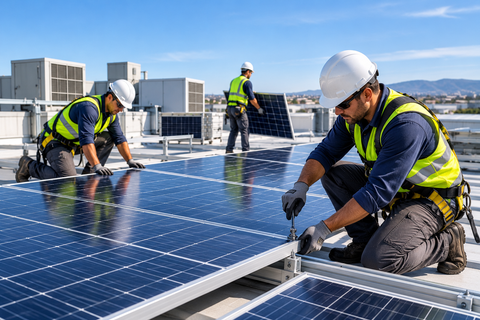
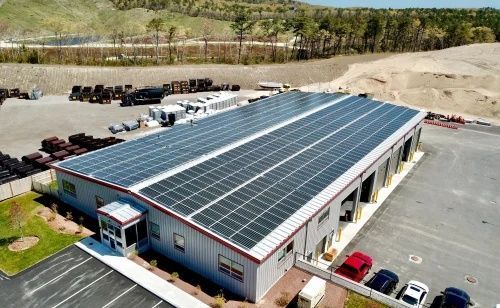
These systems are installed on commercial building roofs.
Advantages include:
- Efficient use of available space
- Minimal land requirements
- Easy integration with existing structures
Ground-Mounted Solar Systems
Ground-mounted systems are installed on open land near commercial facilities.
Benefits include:
- Flexible design options
- Larger system capacity
- Easier maintenance access
Solar Carport Systems
Solar panels are mounted above parking areas.
Key features include:
- Dual-purpose land utilization
- Vehicle shade protection
- Additional power generation capacity
On-Grid Solar Installations
These systems remain connected to the utility power network.
They can use solar-generated electricity while accessing grid electricity when necessary.
Off-Grid Solar Installations
Off-grid systems operate independently and are commonly combined with battery energy storage solutions.
They are often used in remote locations where utility infrastructure is limited.
How It Works
Commercial solar installations follow a straightforward energy generation process.
Step 1: Sunlight Reaches Solar Panels
Solar panels absorb sunlight throughout the day.
Step 2: Electricity Generation
Photovoltaic cells convert sunlight into direct current electricity.
Step 3: Power Conversion
Inverters convert direct current into alternating current electricity suitable for commercial equipment.
Step 4: Electricity Distribution
The generated electricity flows into the building's electrical system.
Step 5: Energy Monitoring
Monitoring equipment tracks energy production and system performance.
Step 6: Grid Interaction
Excess electricity may be directed to the utility network depending on local regulations and system design.
Core Components and Features
Several components work together to ensure reliable energy production.
Solar Panels
- Capture sunlight
- Generate electrical energy
- Form the foundation of the system
Solar Inverters
- Convert electricity into usable form
- Improve system efficiency
- Support performance optimization
Mounting Structures
- Secure solar panels
- Maintain proper panel orientation
- Withstand environmental conditions
Monitoring Systems
- Track energy production
- Detect performance issues
- Provide operational insights
Electrical Protection Equipment
- Protects against electrical faults
- Supports operational safety
- Enhances system reliability
Battery Storage Systems
Some commercial installations include energy storage solutions that store excess electricity for later use.
Benefits and Advantages
Commercial solar installations provide several practical benefits.
Renewable Energy Generation
Solar energy is generated directly from sunlight without consuming conventional fuel resources.
Reduced Grid Dependence
Organizations can generate a portion of their electricity on-site.
Environmental Sustainability
Solar energy contributes to lower greenhouse gas emissions compared to many conventional energy sources.
Long-Term Energy Planning
Commercial solar systems support predictable energy generation over extended periods.
Scalable Design
Systems can be expanded as energy requirements increase.
Energy Resilience
When combined with battery storage, solar installations can improve energy reliability.
Positive Environmental Impact
Organizations can support sustainability initiatives and environmental responsibility goals.
Real-World Examples and Applications
Commercial solar systems are used across many industries.
Office Buildings
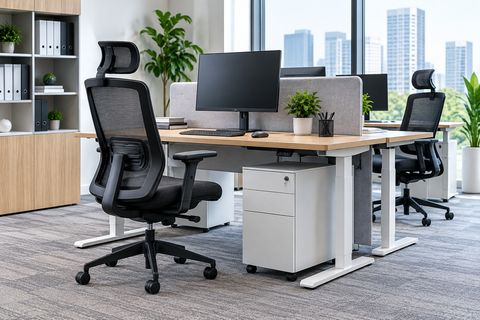
Office complexes use rooftop solar installations to support daily electricity consumption.
Manufacturing Facilities
Factories often install large-scale solar systems to power machinery, lighting, and production processes.
Warehouses
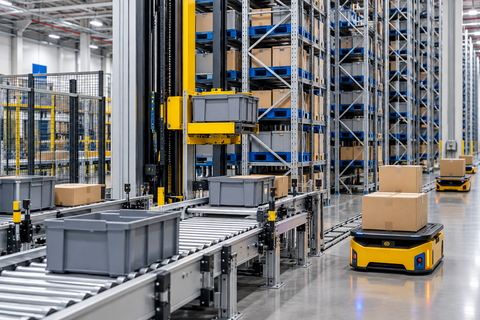
Large warehouse roofs provide ideal locations for extensive solar panel installations.
Healthcare Facilities
Hospitals use solar energy systems as part of broader energy management strategies.
Educational Institutions
Schools and universities increasingly adopt solar energy to support sustainability objectives.
Shopping Centers
Retail complexes often utilize solar systems to offset energy demands associated with lighting and climate control.
Agricultural Operations
Agricultural facilities use solar energy for irrigation systems, storage facilities, and operational equipment.
Important Factors to Understand
Several factors influence the success of a commercial solar installation.
Site Assessment
The installation location should receive sufficient sunlight throughout the year.
Roof Condition
For rooftop systems, structural integrity and available space are important considerations.
Energy Consumption Patterns
Understanding electricity usage helps determine appropriate system sizing.
Local Climate
Weather conditions can influence energy production levels.
Shading Analysis
Nearby buildings, trees, and structures may affect solar panel performance.
Regulatory Requirements
Commercial projects must comply with local electrical and construction standards.
Future Expansion Plans
Organizations should consider future growth when planning system capacity.
Common Challenges and Solutions
Commercial solar projects can encounter several challenges.
Challenge: Limited Installation Space
Some facilities have restricted rooftop or land availability.
Solution:
- High-efficiency solar panels
- Solar carport systems
- Optimized system layouts
Challenge: Variable Weather Conditions
Solar energy production depends on sunlight availability.
Solution:
- Battery energy storage
- Hybrid energy systems
- Advanced forecasting tools
Challenge: System Maintenance Requirements
Equipment performance should be monitored regularly.
Solution:
- Scheduled inspections
- Performance monitoring systems
- Preventive maintenance programs
Challenge: Electrical Integration
Large facilities may have complex electrical infrastructure.
Solution:
- Professional engineering assessments
- Proper system design
- Careful integration planning
Future Trends and Industry Insights
Commercial solar installation continues to evolve through technological advancements.
High-Efficiency Solar Panels
New panel technologies are improving energy conversion rates.
Battery Energy Storage Integration
Energy storage systems are becoming increasingly common in commercial projects.
Smart Energy Management
Advanced monitoring technologies help optimize electricity generation and consumption.
Solar Microgrids
Commercial facilities are exploring localized energy networks that combine solar generation and storage.
Artificial Intelligence Applications
AI-based analytics are helping improve performance forecasting and maintenance planning.
Sustainable Building Development
Solar energy is becoming an important component of modern green building initiatives.
Advanced Solar Materials
Researchers continue developing materials that improve efficiency and durability.
Key Takeaways
- Commercial solar installation involves deploying solar energy systems for businesses and organizations.
- Solar panels convert sunlight into electricity through photovoltaic technology.
- Common installation types include rooftop, ground-mounted, and solar carport systems.
- Commercial solar energy supports renewable power generation and sustainability goals.
- Key components include solar panels, inverters, monitoring equipment, and mounting structures.
- Applications span offices, factories, hospitals, warehouses, and educational institutions.
- Battery storage and smart energy management are becoming important industry trends.
- Future developments focus on efficiency improvements and advanced energy integration.
Frequently Asked Questions (FAQ)
What is a commercial solar installation?
A commercial solar installation is a solar energy system designed to generate electricity for businesses, institutions, and industrial facilities.
How do commercial solar panels generate electricity?
Solar panels use photovoltaic cells to convert sunlight into electrical energy.
What are the main types of commercial solar systems?
The most common types include rooftop systems, ground-mounted systems, and solar carport installations.
Can commercial solar systems operate with battery storage?
Yes. Many systems integrate battery energy storage to improve energy management and reliability.
Which industries commonly use commercial solar energy?
Industries such as manufacturing, healthcare, education, agriculture, logistics, and retail frequently utilize commercial solar installations.
What factors affect solar energy production?
Sunlight availability, weather conditions, panel orientation, shading, and system design all influence performance.
Are commercial solar installations scalable?
Yes. Many systems can be expanded to accommodate future energy requirements.
What is the future of commercial solar technology?
Future developments include advanced solar panels, energy storage integration, smart monitoring systems, and solar microgrid solutions.
Conclusion
Commercial solar installation has become an important component of modern energy infrastructure. By converting sunlight into usable electricity, these systems support renewable energy generation across a wide range of industries.
From office buildings and manufacturing facilities to hospitals and educational campuses, commercial solar systems provide scalable energy solutions that align with evolving sustainability goals.
As technology continues to advance, innovations in solar panels, battery storage, and energy management systems are expected to enhance the role of commercial solar installations in the global energy landscape.