Dry Granulation Machine Guide: How It Works and Where It Is Used
Dry granulation machines are used in many industries where powders need to be turned into larger, more uniform particles without using liquid. This process is especially useful when the material is sensitive to heat or moisture and cannot go through wet processing methods.
In simple terms, a dry granulation machine takes fine powder and compresses it into compact sheets or flakes. These compacted pieces are then broken down into granules of a more consistent size. The final granules are often easier to handle, store, transport, and process in later production steps.
Dry granulation is widely used in pharmaceutical, chemical, food, and fertilizer manufacturing. It helps improve powder flow, reduce dust, and create a material that behaves more predictably during tablet making, capsule filling, blending, or packaging. For industries that need cleaner handling and more stable materials, this method can be very useful.
This article explains what a dry granulation machine is, how it works, where it is used, what benefits it brings, and what factors matter when evaluating one. The goal is to make the topic easier to understand for readers who may not have a technical background but want a clear overview of the machine and its role in powder processing.
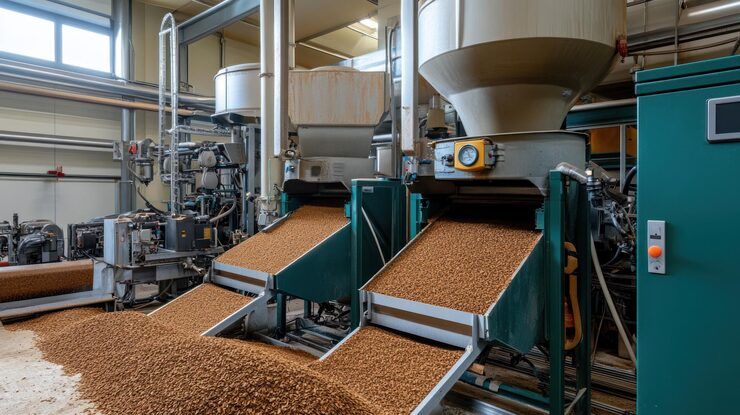
What Is a Dry Granulation Machine?
A dry granulation machine is a type of processing equipment designed to convert powder into granules without adding water, solvents, or other liquid binders. Instead of using moisture to form particles, the machine uses pressure to compress powder into a denser form.
The compacted material is then milled or broken into granules. These granules are more uniform than loose powder and are often easier to use in later manufacturing stages. The machine is commonly used when a material cannot tolerate moisture or high temperatures, which may happen in some pharmaceutical ingredients, chemical compounds, and nutritional powders.
Unlike wet granulation, which usually needs drying after the granules are formed, dry granulation skips that step. This can simplify the process and reduce the number of production stages.
Why Granulation Matters
Powder processing can be difficult when the material is very fine, dusty, uneven, or hard to control. Powders may not flow smoothly into dies, capsules, containers, or mixers. They can also separate during movement if the particles differ in size or density.
Granulation helps solve many of these issues. By turning powder into granules, manufacturers can often improve:
- Flowability during processing
- Uniformity of the material
- Dust control in the work area
- Compression performance for tablets
- Handling and storage stability
- Metering and filling accuracy
A dry granulation machine supports these improvements without exposing the material to liquid, which is one of its main advantages.
How a Dry Granulation Machine Works
Although machine designs vary, the dry granulation process usually follows a few basic steps.
1. Powder Feeding
The raw powder is first fed into the machine. This may happen through a hopper and feeding system that moves the material toward the compression area. Consistent feeding is important because it affects how evenly the powder is compacted.
2. Compression
The powder is compressed between rollers or inside a compaction chamber, depending on the machine type. In roller compaction systems, the powder passes between two rotating rollers that apply strong pressure. This pressure forms a dense ribbon or sheet of compacted material.
3. Size Reduction
After compaction, the ribbon or flakes are broken into smaller pieces. A milling or granulating section reduces the compacted material into granules.
4. Screening and Collection
The machine may include a screening step to help separate granules by size. Oversized pieces can be reduced further, while undersized particles may be returned for another pass, depending on the production setup.
The result is a batch of granules that are denser and easier to manage than the original powder.
Main Types of Dry Granulation Machines
There are different machine designs used for dry granulation, but roller compactors are among the most common.
Roller Compactor
A roller compactor compresses powder between two rollers to form ribbons or flakes. It is widely used in pharmaceutical and chemical manufacturing because it can handle many dry powders and produce fairly consistent granules.
Slugging Setup
Slugging is an older dry granulation method in which powder is compressed into large tablets or slugs using a tablet press. These slugs are then milled into granules. While still relevant in some cases, roller compaction is generally more common in modern production environments.
Common Uses of Dry Granulation Machines
Dry granulation machines are used in many industries where powders must be made easier to process or where moisture must be avoided.
Pharmaceutical Industry
In pharmaceutical manufacturing, dry granulation is often used for active ingredients and formulations that are sensitive to moisture or heat. It can help prepare materials for tablet compression or capsule filling.
Food and Nutritional Products
Some food ingredients, supplements, and nutritional powders may benefit from dry granulation because it can improve handling and reduce dust during packaging and blending.
Chemical Industry
Chemical powders can be difficult to manage when they are too fine or uneven. Dry granulation can improve consistency and make storage and downstream processing easier.
Fertilizer and Agricultural Materials
Certain powdered agricultural materials may be compacted into granules to improve application, handling, and packaging.
Advantages of Dry Granulation Machines
Dry granulation machines are valued for several practical reasons, especially in processes where moisture is a concern.
No Liquid Required
One of the biggest advantages is that the process does not depend on water or solvents. This is useful for moisture-sensitive materials and helps avoid an additional drying stage.
Simpler Processing Flow
Because there is no wetting and drying step, the process can be shorter than wet granulation. That may help reduce production time and simplify plant operations.
Better Powder Handling
Granules are usually easier to handle than fine powder. They tend to flow more consistently, create less dust, and behave more predictably during packaging or compression.
Improved Material Density
Dry granulation can increase bulk density, which may help with storage efficiency and downstream equipment performance.
Suitable for Heat-Sensitive Materials
Since the process avoids liquid and often reduces the need for heat-based drying, it can be a practical choice for ingredients that degrade under heat or moisture.
Limitations to Understand
Dry granulation is useful, but it is not ideal for every material or application.
Not Every Powder Compacts Well
Some powders do not form strong ribbons or slugs under pressure. If the material has poor compressibility, the granules may be weak or inconsistent.
Granule Size Control Can Be Challenging
Granule size depends on pressure, feed rate, milling settings, and material properties. Achieving a very narrow size distribution may require careful adjustment.
Equipment Pressure Must Be Managed Carefully
Too much pressure can affect material properties, while too little may produce fragile granules. Process settings must match the formulation.
Fines May Still Be Produced
Even after compaction, some fine particles may remain or be created during milling. In some production lines, these fines are recirculated.
Key Parts of a Dry Granulation Machine
A dry granulation machine usually includes several important components:
- Feeding system – moves powder into the compaction area
- Rollers or compaction chamber – applies pressure to the material
- Milling unit – breaks compacted ribbons or flakes into granules
- Screening system – helps control granule size
- Control panel – allows operators to adjust settings such as pressure and feed rate
- Collection area – gathers the finished granules
The exact design depends on the machine model and the industry where it is used.
What to Consider When Evaluating a Dry Granulation Machine
When reviewing a dry granulation machine, it helps to look at the machine from both a process and maintenance point of view.
Material Compatibility
Different powders behave differently under pressure. The machine should match the physical properties of the material, including particle size, density, moisture sensitivity, and compressibility.
Output Requirements
Production volume matters. Some machines are intended for research and small-batch work, while others are designed for continuous industrial production.
Granule Size Needs
If the process requires a specific granule size range, the machine’s milling and screening setup becomes especially important.
Cleaning and Changeover
In industries such as pharmaceuticals and food, cleaning procedures matter. Equipment that is easier to access and clean may support better hygiene and faster product changeovers.
Process Control
Stable pressure, controlled feeding, and repeatable performance are important for consistent granule quality. Machines with clear monitoring and control features can support process reliability.
Space and Integration
The machine should fit into the available production layout and work well with upstream and downstream equipment such as mixers, blenders, tablet presses, or packaging lines.
Dry Granulation vs Wet Granulation
Understanding the difference between dry and wet granulation can make the role of a dry granulation machine much clearer.
| Feature | Dry Granulation | Wet Granulation |
|---|---|---|
| Uses liquid | No | Yes |
| Drying step needed | Usually no | Yes |
| Suitable for moisture-sensitive materials | Yes | Often no |
| Process complexity | Often simpler | Usually more steps |
| Common equipment | Roller compactor, slugging press | High-shear granulator, fluid bed dryer |
Dry granulation is often chosen when protecting the material from moisture is a priority or when a shorter process flow is preferred.
Final Thoughts
A dry granulation machine plays an important role in turning difficult powders into more manageable granules without using liquid. That makes it especially useful for moisture-sensitive and heat-sensitive materials in pharmaceutical, chemical, food, and agricultural applications.
For general readers, the simplest way to understand this machine is to think of it as a tool that presses powder into a denser form and then breaks it into granules that are easier to handle. This can improve powder flow, reduce dust, and support more consistent manufacturing.
While dry granulation is not the right fit for every material, it remains an important process in industries that need controlled powder handling without wet processing. Understanding how the machine works, where it is used, and what factors affect its performance can make the topic much easier to follow, even without an engineering background.