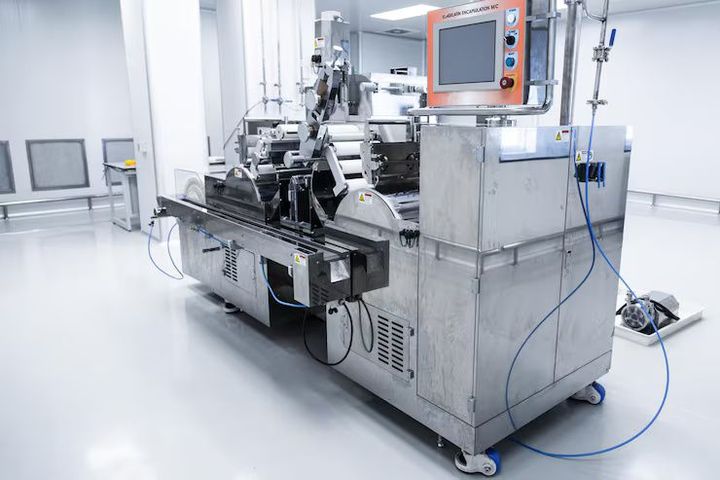
Explore Blow Molding Machine Components, Functions and Working Methods
Blow molding machines are widely used to produce hollow plastic articles such as bottles, containers, drums, tanks, and other lightweight products.
Understanding blow molding machine components helps explain how plastic material moves through heating, shaping, forming, cooling, and final removal.
A typical blow molding machine combines mechanical, electrical, pneumatic, hydraulic, and temperature-control systems. The exact arrangement depends on whether the equipment uses extrusion blow molding, injection blow molding, or stretch blow molding technology.
Context
Blow molding is a manufacturing process used to create hollow plastic shapes. The basic principle is similar to blowing air into a heated plastic tube or preform while it is positioned inside a mold. Air pressure pushes the softened plastic against the internal surface of the mold, creating the required shape.
The machine normally begins with plastic resin supplied as pellets. The material enters the feeding system and moves toward a heated processing area. Heat softens the polymer so it can be shaped without breaking.
In extrusion blow molding, the machine produces a hot tube of plastic known as a parison. The mold closes around the parison, and compressed air expands the material against the mold walls.
Injection blow molding uses an injection-molded preform before the blowing stage. Stretch blow molding adds mechanical stretching to the preform before or during air expansion, which can improve material orientation and container characteristics.
Main Blow Molding Machine Components
| Component | Main function |
|---|---|
| Hopper | Holds and feeds plastic pellets |
| Extruder | Melts and transports polymer |
| Barrel and heaters | Provide controlled heating |
| Screw | Moves and mixes the plastic material |
| Die head | Forms the parison in extrusion systems |
| Mold | Defines the external shape |
| Clamping unit | Opens and closes the mold |
| Air system | Expands the plastic against the mold |
| Cooling system | Removes heat from the formed article |
| Control system | Manages temperature, pressure, timing, and sequences |
| Hydraulic or electric drive | Produces required mechanical movement |
| Sensors | Monitor process conditions |
| Trimming system | Removes unwanted plastic from selected articles |
Each component has a specific role, but the machine operates as an integrated system. A problem in temperature control, air pressure, mold alignment, or material flow can affect the final shape.
Importance
Understanding blow molding machine components is important for engineers, machine operators, maintenance teams, production planners, and students studying plastics manufacturing.
The process affects several important characteristics of a finished article, including wall thickness, dimensional accuracy, appearance, strength, weight, and cooling behavior.
A properly coordinated system helps maintain consistent processing conditions. For example, the extruder must deliver stable material flow, while the mold must close accurately around the parison. The cooling system then removes heat at a controlled rate.
Important factors include:
- Polymer type and processing temperature
- Parison or preform dimensions
- Mold temperature
- Air pressure and timing
- Cooling efficiency
- Mold design
- Machine cycle sequence
- Wall-thickness distribution
Different applications require different machine configurations. A small container may require a different process arrangement from a large industrial drum or hollow technical component.
The machine also affects material efficiency and energy use. Precise control of heating, extrusion, air pressure, and cooling can reduce unnecessary process variation and help manufacturers understand where material and energy are being consumed.
Recent Updates
Blow molding technology continues to develop around automation, electric motion systems, process monitoring, energy management, and material efficiency.
One notable development is the expansion of fully electric extrusion blow molding systems. In February 2026, Bekum announced its SmartLine series and reported the use of optimized drive technology, process control, and material-efficiency improvements.
Modern machines increasingly use digital control systems to coordinate several process variables. Sensors can monitor temperature, pressure, position, and other operating conditions, allowing control systems to identify deviations during production.
Automation is also becoming more important. Automated mold movement, material handling, quality monitoring, and process data collection can reduce manual intervention and improve repeatability.
Another development is greater attention to lightweighting and recycled plastic content. Manufacturers are studying how material distribution, mold design, processing conditions, and polymer characteristics can work together to maintain required performance while using resources efficiently.
Recent systems may also include:
- Servo-electric drives
- Digital temperature controllers
- Automated process recipes
- In-line monitoring
- Advanced cooling circuits
- Energy monitoring
- Automated defect detection
- Data logging and production analytics
These developments do not eliminate the importance of fundamental machine knowledge. Understanding the components and working methods remains necessary for interpreting process data and diagnosing operating problems.
Laws or Policies
Blow molding equipment can be affected by machinery safety, workplace safety, environmental, and plastic-waste regulations. The applicable requirements depend on the country, machine configuration, workplace, and products being manufactured.
In India, the Plastic Waste Management Rules, 2016 and subsequent amendments establish requirements related to plastic waste management. The 2022 amendment introduced a framework for Extended Producer Responsibility for plastic packaging, including responsibilities involving producers, importers, brand owners, recyclers, and waste processors.
India's Occupational Safety, Health and Working Conditions Code, 2020 provides a broader legal framework concerning occupational safety, health, and working conditions, including provisions relevant to factories.
The European Union has also updated its machinery legislation. Regulation (EU) 2023/1230 establishes health and safety requirements for machinery and related products. The regulation is scheduled to apply from 20 January 2027, with certain provisions applying earlier.
For any specific installation, organizations should check the current national and regional requirements applicable to the equipment and workplace. Technical compliance can involve machine guarding, emergency controls, electrical safety, documentation, risk assessment, environmental requirements, and conformity procedures.
Tools and Resources
Several resources can help people understand blow molding machine components, process conditions, and regulatory requirements.
Useful resources include:
- Manufacturer technical manuals for machine-specific component information
- Polymer technical data sheets for processing characteristics
- Mold design references for cavity and cooling considerations
- Process calculators for material and production calculations
- Government environmental portals for plastic-waste requirements
- Occupational safety publications for workplace practices
- EUR-Lex for European Union legislation
- Engineering textbooks covering polymer processing
- Machine-control documentation for understanding sensors and automation
Technical manuals are particularly useful because component names and control arrangements can differ between machine models. A die head, for example, can have different designs depending on the type of extrusion process and required parison control.
Process data should also be interpreted carefully. A temperature reading by itself does not explain the entire process because material residence time, shear, cooling, mold temperature, and pressure can also influence results.
FAQs
What are the main blow molding machine components?
The main components generally include the hopper, extruder, screw, barrel heaters, die head, mold, clamping unit, air system, cooling system, sensors, and control system. Injection and stretch blow molding machines use additional preform-related components.
How does an extrusion blow molding machine work?
Plastic pellets enter the extruder and are heated until they become a workable polymer melt. The die head forms a parison, the mold closes around it, compressed air expands the material against the mold surface, and cooling solidifies the finished shape.
What is the difference between extrusion and injection blow molding?
Extrusion blow molding creates a hot parison directly from an extruder. Injection blow molding first creates a preform through injection molding and then expands that preform inside a blow mold.
Why is mold cooling important?
Cooling removes heat from the plastic after it has expanded against the mold. Consistent cooling helps the article retain its intended shape and can influence cycle time, dimensional stability, and surface characteristics.
What factors influence blow molding quality?
Important factors include polymer characteristics, melt temperature, parison or preform dimensions, air pressure, mold temperature, cooling conditions, mold design, cycle timing, and machine alignment.
Conclusion
Blow molding machines combine material handling, heating, extrusion or preform production, mold movement, compressed air, cooling, and computerized control. Understanding these components makes it easier to understand how hollow plastic articles are formed and why process conditions matter.
The three major working methods are extrusion blow molding, injection blow molding, and stretch blow molding. Each method uses a different approach to prepare and shape the plastic material.
Recent developments are placing greater attention on electric drives, automation, digital monitoring, energy management, and material efficiency. These technologies are changing machine operation while keeping the basic principles of controlled heating, shaping, air expansion, and cooling.
For technical or industrial applications, machine documentation and applicable regulations should always be reviewed alongside general educational information. Requirements can vary according to the equipment, material, workplace, and country.