Explore Hot Foil Stamping Machines: A Beginner’s Guide to Modern Printing Technology
Hot foil stamping is a printing and finishing process that transfers metallic or pigmented foil onto a surface through heat and pressure. Discussions involving hot foil stamping machine manufacturers often focus on packaging, labeling, publishing, and decorative applications.
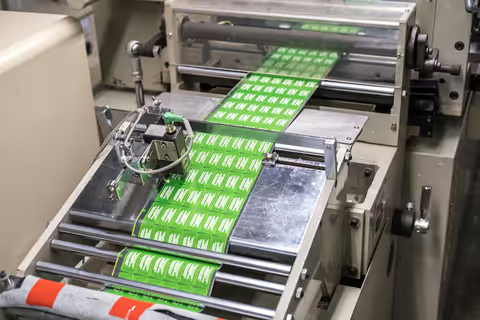
The process creates distinctive visual effects on materials such as paper, cardboard, plastics, leather substitutes, and certain textiles. Automatic hot foil stamping machines enable continuous production while maintaining consistent positioning and pattern transfer.
Industrial foil stamping equipment has evolved from manually operated presses into sophisticated systems that integrate digital controls, automated feeding mechanisms, and precision temperature management. These developments support a broad range of manufacturing activities.
Historical Background
Foil decoration techniques have roots in traditional bookbinding and artistic printing. Early methods relied on hand-operated tools and metallic leaf materials applied individually.
Industrialization introduced mechanical presses capable of repeating designs at larger scales. As packaging industries expanded, label foil printing machines and dedicated production equipment became increasingly important.
Today, high speed foil stamping machines combine automation, electronic monitoring, and advanced engineering principles to accommodate diverse industrial requirements.
Core Components of a Foil Stamping System
Industrial foil stamping equipment typically includes several interconnected elements:
- Heating systems that maintain controlled temperatures.
- Dies or plates containing the desired patterns.
- Pressure mechanisms that transfer foil onto materials.
- Feeding units that position substrates accurately.
- Foil handling assemblies that manage material movement.
- Control panels that coordinate operational settings.
OEM hot foil stamping machine manufacturers often develop equipment configurations suited to packaging, labeling, publishing, and specialty printing environments.
Importance
Supporting Modern Packaging
Packaging influences product identification, information presentation, and visual communication. Packaging foil stamping systems contribute decorative and functional elements used in food packaging, cosmetics, pharmaceuticals, and consumer goods.
Metallic finishes and embossed features can improve readability and create distinct visual characteristics. These processes support brand recognition without altering the underlying product composition.
Automatic hot foil stamping machines enable manufacturers to process large volumes while maintaining consistent placement and quality standards.
Applications Across Multiple Industries
Hot foil stamping technology extends beyond consumer packaging.
Common sectors include:
- Publishing and book production.
- Greeting card manufacturing.
- Security printing.
- Luxury packaging design.
- Label production.
- Stationery manufacturing.
Label foil printing machines remain particularly important for product identification and decorative labeling requirements.
Supporting Manufacturing Efficiency
Automation helps coordinate temperature control, pressure application, and substrate movement.
High speed foil stamping machines reduce interruptions between production cycles and maintain stable operating conditions. These capabilities contribute to efficient manufacturing workflows across many industrial environments.
Digital monitoring systems also provide information regarding machine performance and material utilization.
Cultural and Artistic Value
Foil stamping contributes to visual communication in books, certificates, invitations, and commemorative materials.
Decorative printing traditions continue to influence modern production methods. Industrial equipment allows artistic concepts to be reproduced consistently at larger scales while preserving intricate details.
The combination of engineering and design remains an important aspect of the industry.
Recent Updates
Greater Automation Integration
Recent developments have increased the use of automation throughout printing and packaging facilities.
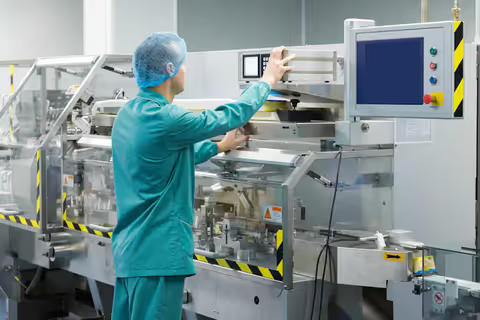
Automatic hot foil stamping machines now incorporate programmable controls, digital displays, and sensor-based monitoring systems. Operators can manage production settings more precisely while responding to changing requirements.
Automation also supports smoother transitions between different product formats.
Smart Manufacturing Technologies
Industrial foil stamping equipment increasingly connects with broader manufacturing management platforms.
Modern systems may include:
- Real-time performance monitoring.
- Digital maintenance records.
- Production data analysis.
- Remote diagnostic functions.
- Automated quality checks.
These capabilities align with broader smart manufacturing trends across industrial sectors.
Sustainable Material Developments
Environmental considerations have encouraged research into recyclable substrates and alternative foil materials.
Packaging producers continue exploring methods that support material recovery while maintaining decorative qualities. Equipment manufacturers adapt machine designs to accommodate evolving material characteristics.
Such developments reflect wider sustainability initiatives throughout global manufacturing industries.
Advances in Precision Engineering
High speed foil stamping machines have benefited from improvements in servo controls and electronic synchronization.
Enhanced positioning accuracy reduces material waste and supports consistent results across long production runs. Precision engineering also assists in maintaining registration between printed graphics and foil elements.
Growth in Label Production Technologies
Label foil printing machines have evolved alongside digital printing methods.
Hybrid production systems now combine traditional finishing techniques with advanced digital workflows. This integration enables greater flexibility within packaging and labeling operations.
Common Machine Categories
| Machine Type | Main Application | Typical Features |
|---|---|---|
| Manual stamping units | Small-scale production | Basic controls |
| Automatic hot foil stamping machines | Continuous manufacturing | Automated feeding |
| Label foil printing machines | Label production | Precision alignment |
| High speed foil stamping machines | Large-volume output | Rapid cycling |
| Packaging foil stamping systems | Cartons and packaging | Integrated finishing |
| Specialty presses | Decorative applications | Customized configurations |
Laws or Policies
Packaging Regulations
Packaging industries operate under national and regional regulations concerning labeling information, consumer safety, and environmental responsibilities.
Packaging foil stamping systems must function within frameworks that address material composition and product identification requirements. These regulations vary according to market sectors and geographic regions.
Workplace Safety Standards
Industrial foil stamping equipment involves heated components, moving mechanisms, and electrical systems.
Common safety measures include:
- Protective barriers around operational areas.
- Emergency shutdown controls.
- Temperature monitoring systems.
- Regular equipment inspections.
- Training procedures for machine operators.
These requirements support safer manufacturing environments.
Environmental Policies
Many countries encourage sustainable production methods and material recovery initiatives.
Manufacturers increasingly examine recyclable substrates, reduced waste generation, and energy-efficient equipment designs. Environmental frameworks influence both machine development and operational planning.
Intellectual Property Considerations
Decorative patterns, logos, and specialized designs often fall within intellectual property regulations.
Printing organizations maintain procedures that respect copyrights, trademarks, and design ownership. Digital workflow systems assist in documenting approved production materials.
Tools and Resources
Computer-Aided Design Software
Design software helps create stamping dies, decorative patterns, and packaging layouts.
Engineers and designers use digital modeling tools to evaluate dimensions, spacing, and alignment requirements before production begins.
Production Management Platforms
Manufacturing facilities increasingly rely on software that coordinates printing, finishing, and packaging activities.
Functions commonly include:
- Production scheduling.
- Equipment monitoring.
- Inventory tracking.
- Quality documentation.
- Maintenance planning.
These systems improve communication between operational teams.
Industry Organizations
Printing and packaging associations publish technical information regarding manufacturing processes, environmental topics, and technological developments.
Educational materials support knowledge sharing among researchers, engineers, and production specialists.
Technical Standards Documentation
International standards provide guidance regarding machinery safety, electrical systems, and industrial operations.
OEM hot foil stamping machine manufacturers frequently consider these frameworks when designing equipment for different markets.
FAQs
What do hot foil stamping machine manufacturers produce?
Hot foil stamping machine manufacturers design equipment that transfers decorative foils onto materials through controlled heat and pressure. Applications include packaging, labels, books, and specialty printing products.
How do automatic hot foil stamping machines operate?
Automatic hot foil stamping machines coordinate heating systems, pressure mechanisms, foil feeding assemblies, and substrate positioning through programmable controls and sensor technology.
What industries use industrial foil stamping equipment?
Industrial foil stamping equipment appears in packaging, publishing, cosmetics, food processing, pharmaceutical labeling, stationery production, and decorative printing environments.
Why are label foil printing machines important?
Label foil printing machines support accurate decorative finishing and product identification. They help maintain consistent alignment and visual quality across large production volumes.
What distinguishes high speed foil stamping machines from traditional systems?
High speed foil stamping machines incorporate advanced motion controls, automated feeding mechanisms, and digital monitoring features that enable continuous operation and precise pattern placement.
Conclusion
Hot foil stamping technology combines artistic traditions with modern industrial engineering. Automatic hot foil stamping machines and industrial foil stamping equipment support packaging, labeling, publishing, and decorative applications across many sectors. Recent developments in automation, precision controls, and sustainable materials continue shaping the industry. Understanding these systems provides valuable insight into the technologies behind everyday printed and packaged products.