Smart Conveyor Sorting Machines: Explore Automated Material Handling and Sorting Technology
Smart conveyor sorting machines form the backbone of modern automated material handling systems. They combine conveyor technology, sensors, identification systems, and intelligent controls to classify and route items to specific destinations with minimal human intervention.
Smart conveyor sorting machines form the backbone of modern automated material handling systems. They combine conveyor technology, sensors, identification systems, and intelligent controls to classify and route items to specific destinations with minimal human intervention. Used extensively in warehouses, distribution centers, parcel hubs, manufacturing plants, and recycling facilities, these systems deliver high throughput, accuracy, and operational flexibility. This overview examines the core technologies, major sorter types, enabling components, benefits, and practical considerations for automated sorting.
Fundamentals of Automated Sorting Systems
An automated sorting system moves items along a conveyor path, identifies them, and diverts each item to the correct destination based on predefined rules.
Core Process Flow
Typical stages include:
- Induction — Items are singulated (separated) and fed onto the sorter in a controlled manner.
- Identification — Barcode scanners, RFID readers, dimensioning systems, or vision cameras capture product data.
- Sortation — The mechanical or motorized divert mechanism directs the item to the assigned lane, chute, or conveyor.
- Discharge and takeaway — Sorted items move to packing stations, shipping docks, storage, or further processing.
Smart Capabilities
Modern systems go beyond basic diverting. They incorporate real-time data processing, adaptive routing, performance monitoring, and integration with warehouse control systems (WCS) or warehouse management systems (WMS). AI and machine vision further enhance identification of irregular items, quality checks, and dynamic decision-making.
Major Types of Conveyor Sorting Technologies
No single sorter suits every application. Selection depends on throughput targets, product characteristics, available space, and budget.
Sliding Shoe Sorters
These systems use a flat conveyor surface with rows of sliding “shoes.” When an item reaches its divert point, the shoes move diagonally across the belt and gently push the item onto a takeaway conveyor. They handle cartons, totes, and polybags effectively at rates commonly ranging from several thousand to more than 15,000 items per hour. They are valued for gentle handling and high accuracy with stable, flat-bottomed products.
Cross-Belt Sorters
Cross-belt sorters feature individual carrier carts, each equipped with a small powered belt oriented perpendicular to the main travel direction. At the destination, the onboard belt activates and transfers the item sideways into a chute. These systems excel with a wide variety of item shapes, sizes, and weights—including fragile or high-friction products—and support very high throughputs, often exceeding 15,000–20,000 items per hour in large installations.
Tilt-Tray Sorters
Items travel on individual trays mounted on a continuous loop. When the tray reaches the assigned destination, it tilts to discharge the item into a chute or bin. Tilt-tray systems handle diverse product mixes well, including soft goods, apparel, and small parcels, and are widely used in e-commerce and postal applications.
Pop-Up Wheel, Swivel Wheel, and Other Linear Sorters
Pop-up or swivel-wheel sorters raise or rotate wheels to divert items at an angle. These compact systems suit moderate throughputs and are often used for routing cartons or totes to packing stations. Pusher-arm and transfer mechanisms serve lower-volume or simpler divert needs.
Emerging and Hybrid Approaches
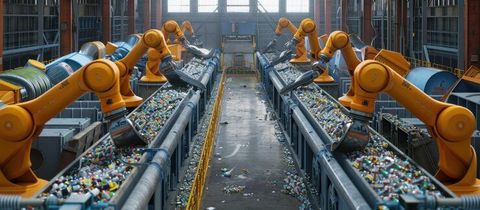
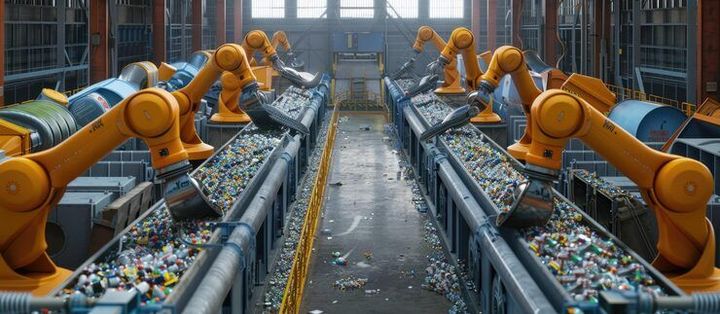
Robotic sortation using autonomous mobile robots (AMRs) and modular robotic cells offers high flexibility for variable volumes and changing layouts. Optical and AI-powered systems, especially in recycling, combine conveyors with hyperspectral imaging, cameras, and robotic arms for material-specific separation.
Enabling Technologies
Smart sorting depends on several integrated technologies.
Identification and Sensing
Barcode and 2D code scanners, RFID, dimensioning-weighing-scanning (DWS) systems, and machine vision cameras provide the data needed for routing decisions. Advanced vision and AI models can identify items by shape, color, or material type even when labels are missing or damaged.
Controls and Software
Programmable logic controllers (PLCs), industrial PCs, and specialized sortation software manage timing, divert activation, and traffic flow. Higher-level WCS software optimizes routing, balances destinations, and interfaces with upstream and downstream systems.
Mechanical and Drive Systems
Reliable motors, precise positioning, and robust mechanical components ensure consistent performance at high speeds. Modular designs allow expansion or reconfiguration as operational needs change.
Data and Connectivity
Real-time monitoring of throughput, error rates, and equipment status supports predictive maintenance and continuous improvement. Integration with enterprise systems enables end-to-end visibility from receiving to shipping.
Benefits of Smart Conveyor Sorting
Automated sorting delivers clear operational advantages:
- High throughput and consistent accuracy far beyond manual sorting.
- Reduced labor requirements for repetitive diverting tasks.
- Improved handling of diverse product mixes and peak volumes.
- Lower error rates and better order accuracy.
- Scalability through modular expansion.
- Data-driven insights for process optimization and maintenance planning.
In high-volume environments such as e-commerce fulfillment and parcel distribution, these systems are often essential for meeting service-level commitments.
Application Areas
Smart conveyor sorting machines are widely deployed in:
- E-commerce and retail distribution centers for order consolidation and shipping sortation.
- Parcel and postal hubs for destination-based routing.
- Manufacturing for routing components or finished goods.
- Recycling and waste management for material separation using optical and AI technologies.
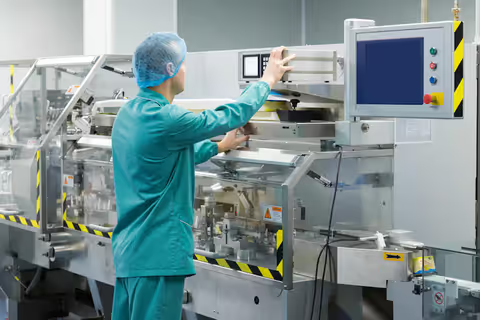
- Food, pharmaceutical, and other industries requiring gentle or hygienic handling.
Selection and Implementation Considerations
Choosing the right system requires careful matching of technology to requirements.
Key Decision Factors
Evaluate expected throughput (items per hour), product size and weight range, fragility, available floor space, number of destinations, and future growth plans. Gentle handling needs may favor cross-belt or tilt-tray designs, while high-volume carton sorting often suits sliding shoe systems.
Integration and Layout
Successful installations consider induction methods, chute or lane design, takeaway capacity, and software interfaces. Simulation tools help validate performance before physical installation.
Operational Factors
Plan for maintenance access, spare parts, operator training, and changeover procedures. Noise levels, energy consumption, and safety features also influence long-term suitability.
Challenges
High capital cost, the need for consistent item presentation, and managing exceptions (unreadable labels, jams, or oversized items) require robust system design and operational processes. Hybrid solutions that combine automated sorting with manual exception handling often provide the best balance.
Outlook and Trends
Sorting technology continues to evolve toward greater intelligence and flexibility. AI-driven identification improves handling of non-standard items. Adaptive controls adjust processes based on real-time material flow. Modular and robotic systems support faster reconfiguration for changing product mixes or seasonal peaks. Integration with broader warehouse automation—including autonomous mobile robots and goods-to-person systems—creates more seamless material flows.
Smart conveyor sorting machines transform material handling from a labor-intensive process into a high-speed, data-driven operation. By combining reliable mechanical divert mechanisms with advanced identification, controls, and software, these systems deliver the throughput, accuracy, and adaptability required in modern logistics and manufacturing environments. When properly selected and integrated, they become a foundational element of efficient, scalable automated operations.