Explore the Basics of Gear and Bevel Gear Manufacturing: A Complete Guide
Gears are mechanical components used to transmit motion and power between rotating parts. They have been part of engineering systems for centuries, appearing in early clocks, mills, and later in vehicles and industrial machinery. Today, gear and bevel gear manufacturing plays an essential role in many everyday technologies, from automobiles and bicycles to household appliances.
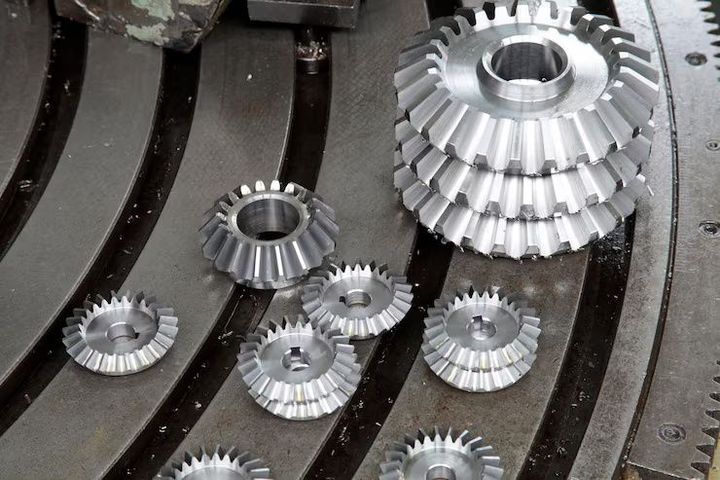
A gear typically consists of a rotating wheel with teeth that mesh with another gear. This interaction allows movement and force to transfer efficiently. Among various types, bevel gears are designed with angled teeth and are used to transmit motion between intersecting shafts, often at right angles.
Gear and bevel gear manufacturing refers to the process of designing, shaping, and finishing these components to meet precise functional requirements. It involves several steps, including material selection, cutting, shaping, heat treatment, and quality inspection. These processes ensure that gears operate smoothly, reduce friction, and maintain durability over time.
Understanding the basics of gear and bevel gear manufacturing helps explain how many machines function reliably in daily life. It also provides insight into the engineering behind motion control systems used in multiple industries.
Importance
Gear systems are fundamental to modern mechanical operations. Without them, transferring motion and torque between components would be less efficient and more complex. Gear and bevel gear manufacturing supports industries such as automotive, aerospace, construction, and energy.
For everyday users, gears are present in items like cars, washing machines, fans, and even handheld tools. These components help regulate speed, direction, and force. For example, bevel gears allow a vehicle’s differential to distribute power to wheels while enabling smooth turns.
The importance of gear manufacturing can be understood through key functions:
- Motion control: Gears regulate speed and torque, enabling machines to perform tasks accurately.
- Direction change: Bevel gears change the direction of rotation, which is essential in many mechanical systems.
- Load distribution: Properly manufactured gears distribute mechanical load evenly, reducing wear and tear.
- Energy efficiency: Well-designed gears reduce energy loss due to friction and misalignment.
Inaccurate or poorly manufactured gears can lead to noise, vibration, and mechanical failure. Therefore, precision in gear and bevel gear manufacturing is essential for maintaining reliability and safety.
Recent Updates
In recent years, gear and bevel gear manufacturing has evolved with advancements in digital technologies and materials science. Modern manufacturing methods focus on improving precision, reducing waste, and enhancing performance.
One significant trend is the use of computer numerical control (CNC) machines. These machines allow precise cutting and shaping of gears based on digital designs. This improves consistency and reduces manual errors.
Another development is the growing use of simulation software. Engineers can now model gear performance before physical production. This helps identify potential issues such as stress concentration or misalignment early in the design stage.
Additive manufacturing, also known as 3D printing, is being explored for certain gear applications. While not yet widely used for heavy-duty gears, it is useful for prototyping and lightweight components.
Material improvements are also shaping the industry. Advanced alloys and surface treatments increase durability and resistance to wear. Additionally, environmentally conscious manufacturing practices are gaining attention, focusing on reducing material waste and energy consumption.
Automation and robotics are increasingly integrated into gear manufacturing processes. These technologies improve production efficiency and consistency, especially in large-scale operations.
Laws or Policies
Gear and bevel gear manufacturing is influenced by various standards and regulations that ensure safety, quality, and environmental responsibility. These rules vary by country but generally follow internationally recognized guidelines.
Manufacturing standards are often set by organizations such as ISO (International Organization for Standardization) and AGMA (American Gear Manufacturers Association). These standards define specifications for gear design, dimensions, tolerances, and performance.
In many countries, industrial production must comply with workplace safety regulations. These rules govern machine operation, worker protection, and handling of materials during gear manufacturing processes.
Environmental regulations also play a role. Manufacturers must follow guidelines related to emissions, waste management, and the use of chemicals in processes like heat treatment and surface finishing.
Quality control policies require regular inspection and testing of gears. This includes checking parameters such as tooth profile accuracy, hardness, and alignment. Compliance with these policies ensures that gears function reliably in their intended applications.
Tools and Resources
Gear and bevel gear manufacturing relies on a variety of tools and resources that support design, production, and quality control. These tools help ensure precision and consistency throughout the process.
Commonly used tools include:
- Design software: Computer-aided design (CAD) software is used to create detailed gear models and specifications.
- Simulation tools: These tools analyze stress, load distribution, and performance before manufacturing begins.
- CNC machines: Automated machines that cut and shape gears with high precision.
- Gear hobbing machines: Used for cutting gear teeth in cylindrical gears.
- Gear shaping machines: Suitable for internal and external gears with complex profiles.
- Inspection equipment: Devices such as coordinate measuring machines (CMM) and gear testers ensure dimensional accuracy.
Below is a simple comparison of common gear types used in manufacturing:
| Gear Type | Shaft Orientation | Common Use Case | Key Feature |
|---|---|---|---|
| Spur Gear | Parallel | Basic machinery, clocks | Straight teeth, simple design |
| Helical Gear | Parallel | Automotive transmissions | Angled teeth, smoother operation |
| Bevel Gear | Intersecting | Differentials, power tools | Transfers motion at angles |
| Worm Gear | Perpendicular (non-intersecting) | Lifts, conveyors | High torque, compact design |
Online engineering platforms and educational resources also provide tutorials, calculators, and design references for understanding gear ratios, tooth geometry, and material properties.
FAQs
What is gear and bevel gear manufacturing?
Gear and bevel gear manufacturing is the process of designing and producing gears that transmit motion and power between machine parts. It includes steps such as cutting, shaping, heat treatment, and inspection to ensure accurate performance.
How are bevel gears different from other gears?
Bevel gears are designed to operate on intersecting shafts, usually at a right angle. Unlike spur or helical gears, which work on parallel shafts, bevel gears change the direction of motion.
What materials are commonly used in gear manufacturing?
Common materials include steel, cast iron, brass, and specialized alloys. The choice depends on factors such as load, speed, and operating conditions.
Why is precision important in gear and bevel gear manufacturing?
Precision ensures smooth operation, reduces noise, and prevents premature wear. Even small errors in tooth shape or alignment can affect performance and durability.
What industries use gear and bevel gear manufacturing?
Industries such as automotive, aerospace, construction, energy, and manufacturing rely on gears for motion control and power transmission.
Conclusion
Gear and bevel gear manufacturing forms the foundation of many mechanical systems used in daily life. These components enable efficient motion transfer, direction control, and load management across a wide range of applications. Advances in technology have improved precision, materials, and production methods, making gears more reliable and efficient. Understanding the basics of this field helps explain how machines operate and why accurate manufacturing processes are essential for long-term performance.