Exploring Smart Fitness Watches & Trackers: Key Features
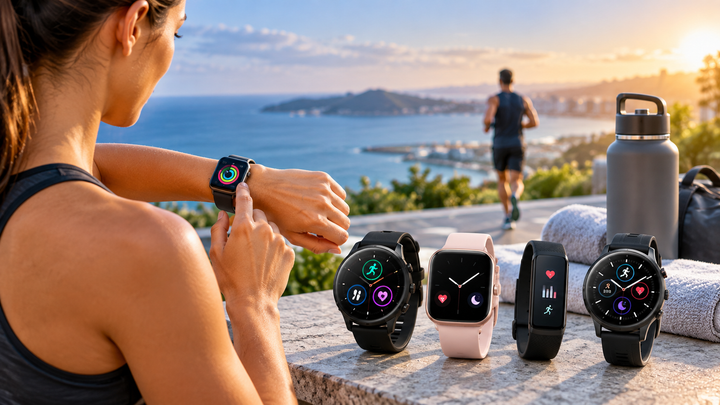
Smart fitness watches and fitness trackers have transformed the way people monitor health, physical activity, and daily routines.
These wearable devices combine sensors, connectivity, and digital technology to provide valuable insights into movement, exercise, sleep patterns, and overall wellness.
As wearable technology continues to evolve, modern fitness watches and trackers offer much more than simple step counting. They can monitor heart rate, track workouts, analyze sleep quality, measure activity levels, and provide personalized health data that helps users better understand their daily habits.
Whether used by athletes, fitness enthusiasts, office professionals, or individuals interested in healthier lifestyles, smart fitness wearables have become an important part of modern personal technology.
Understanding Smart Fitness Watches and Trackers
Smart fitness watches and trackers are wearable electronic devices designed to collect and analyze activity and health-related information.
While fitness trackers primarily focus on activity monitoring, smart fitness watches often include additional functions such as notifications, navigation tools, communication features, and advanced health monitoring capabilities.
These devices use sensors and intelligent algorithms to convert physical activity into useful data that users can review through companion applications and connected platforms.
Quick Facts About Smart Fitness Watches & Trackers
| Feature | Description |
|---|---|
| Device Type | Wearable Technology |
| Primary Purpose | Activity and health monitoring |
| Common Sensors | Heart rate, motion, GPS |
| Connectivity | Bluetooth, Wi-Fi |
| Power Source | Rechargeable battery |
| Display Type | Touchscreen or digital display |
| Common Users | Athletes, professionals, fitness enthusiasts |
| Data Tracking | Activity, sleep, workouts, wellness metrics |
Evolution of Fitness Wearables
The first activity tracking devices focused mainly on step counting. Modern wearable technology now includes advanced sensors capable of monitoring multiple health and activity indicators.
Early Generation Devices
- Basic step tracking
- Distance estimation
- Simple calorie calculations
Modern Wearables
- Heart rate monitoring
- Sleep analysis
- GPS tracking
- Workout recognition
- Health insights
- Connected ecosystem support
Smart Fitness Watch Architecture
Understanding device architecture helps explain how these wearables function.
Sensor System
Sensors collect movement and physiological data.
Processing Unit
The internal processor analyzes information gathered by sensors.
Display Interface
Displays activity metrics, notifications, and device controls.
Battery System
Provides power for continuous operation.
Connectivity Module
Supports communication with smartphones and other devices.
Companion Platform
Stores, organizes, and visualizes collected activity information.
Key Components of Smart Fitness Wearables
| Component | Function |
|---|---|
| Accelerometer | Tracks movement and steps |
| Optical Heart Sensor | Measures heart rate |
| GPS Module | Tracks location and distance |
| Gyroscope | Detects motion and orientation |
| Battery | Powers the device |
| Display | Shows information |
| Connectivity Chip | Enables wireless communication |
Core Features of Smart Fitness Watches & Trackers
Activity Tracking
Activity tracking remains one of the most common wearable functions.
Typical measurements include:
- Steps
- Distance traveled
- Active minutes
- Calories burned
- Exercise duration
Activity data helps users better understand their daily movement patterns.
Heart Rate Monitoring
Optical sensors measure heart rate throughout the day.
Common uses include:
- Workout monitoring
- Recovery tracking
- Exercise intensity analysis
- General wellness awareness
Sleep Tracking
Many devices analyze sleep patterns by monitoring movement and heart rate changes.
Sleep tracking often includes:
- Sleep duration
- Sleep stages
- Sleep consistency
- Overnight activity trends
Workout Tracking
Fitness watches commonly support multiple exercise modes.
Examples include:
- Running
- Walking
- Cycling
- Strength training
- Swimming
- Hiking
- Yoga
GPS Tracking
Built-in GPS helps track:
- Running routes
- Walking routes
- Cycling activities
- Outdoor adventures
GPS data provides distance, pace, and route information.
Fitness Tracking Features Comparison
| Feature | Fitness Tracker | Smart Fitness Watch |
|---|---|---|
| Step Tracking | Yes | Yes |
| Heart Rate Monitoring | Yes | Yes |
| Sleep Tracking | Yes | Yes |
| GPS Tracking | Limited on some models | Common |
| Notifications | Basic | Advanced |
| Workout Modes | Standard | Extensive |
| Display Size | Smaller | Larger |
| Connectivity Features | Basic | Advanced |
Health Monitoring Features
Resting Heart Rate
Monitoring resting heart rate can provide insights into overall fitness trends.
Blood Oxygen Monitoring
Some devices include sensors that estimate blood oxygen levels.
Stress Monitoring
Wearables may analyze physiological indicators to estimate stress trends.
Recovery Insights
Advanced devices provide recovery information following workouts.
Wellness Tracking
Wellness tools help users understand long-term activity and lifestyle patterns.
Smart Features Beyond Fitness
Modern fitness watches often include features beyond activity tracking.
Smartphone Notifications
Users can receive alerts directly on their wrist.
Calendar Reminders
Important events and appointments can be displayed.
Weather Updates
Weather information may be accessible from the device.
Navigation Assistance
Some models provide route guidance.
Contactless Payments
Certain devices support secure digital payment systems.
Connectivity Technologies
| Technology | Purpose |
|---|---|
| Bluetooth | Smartphone synchronization |
| Wi-Fi | Data transfer |
| GPS | Location tracking |
| NFC | Digital payments |
| Cellular Connectivity | Independent communication |
Benefits of Smart Fitness Watches & Trackers
Increased Activity Awareness
Users can better understand daily movement habits.
Goal Tracking
Wearables help users monitor progress toward fitness objectives.
Workout Monitoring
Exercise performance can be tracked more accurately.
Health Data Collection
Long-term data trends provide useful insights.
Convenience
Information remains easily accessible throughout the day.
Motivation
Progress tracking often encourages consistent activity.
Real-World Applications
Personal Fitness
Individuals use wearables to support exercise routines.
Sports Training
Athletes monitor performance metrics during training.
Outdoor Activities
GPS-enabled devices support hiking and cycling.
Workplace Wellness
Many professionals use fitness trackers to monitor activity levels.
Travel and Adventure
Wearables provide navigation and activity tracking support.
Application Comparison Table
| Application | Primary Benefit |
|---|---|
| Running | Pace and distance tracking |
| Cycling | Route and speed monitoring |
| Walking | Daily activity measurement |
| Hiking | GPS navigation |
| Strength Training | Workout tracking |
| General Wellness | Lifestyle monitoring |
Environmental Considerations
Energy Efficiency
Modern wearables use low-power electronics to maximize battery life.
Rechargeable Design
Rechargeable batteries reduce reliance on disposable batteries.
Longer Product Lifespan
Durable construction supports extended device use.
Digital Health Monitoring
Wearables help users monitor wellness without requiring additional equipment.
Industry Standards and Data Security
Sensor Accuracy
Manufacturers continually improve sensor performance and measurement consistency.
Device Durability
Many wearables are designed for daily use and active lifestyles.
Water Resistance
Various models include water-resistant designs for exercise and outdoor use.
Data Protection
Modern devices use security measures to help protect personal information.
Battery Life Comparison
| Device Category | Typical Battery Duration |
|---|---|
| Basic Fitness Tracker | Several days to weeks |
| Standard Smart Fitness Watch | Several days |
| GPS Intensive Usage | Shorter duration |
| Power-Saving Mode | Extended duration |
Common Challenges and Practical Solutions
| Challenge | Practical Solution |
|---|---|
| Battery Drain | Use power-saving settings |
| Inaccurate Tracking | Ensure proper fit |
| Connectivity Issues | Maintain updated device settings |
| Sensor Interruption | Keep sensors clean |
| Limited Storage | Synchronize data regularly |
| GPS Accuracy Variations | Use open outdoor areas |
Maintenance Schedule
| Maintenance Task | Frequency | Purpose |
|---|---|---|
| Clean Sensors | Weekly | Improve measurement quality |
| Recharge Battery | As Needed | Maintain operation |
| Update Firmware | Periodically | Improve functionality |
| Inspect Strap | Monthly | Ensure comfort |
| Check Connectivity | Monthly | Verify synchronization |
| Clean Display | Weekly | Maintain visibility |
Best Practices for Smart Fitness Wearables
- Wear the device correctly for accurate readings.
- Keep sensors clean.
- Update device firmware regularly.
- Recharge before extended activities.
- Review health and activity data consistently.
- Use workout modes appropriate for each activity.
Expert Insights
Wearable technology specialists often recommend selecting a fitness watch or tracker based on personal goals rather than focusing solely on advanced features.
For general wellness monitoring, activity tracking, sleep analysis, and heart rate monitoring are often sufficient. Individuals engaged in endurance sports or outdoor activities may benefit from advanced GPS capabilities and specialized training metrics.
Key Facts About Smart Fitness Watches & Trackers
- Activity tracking remains the most widely used wearable feature.
- Heart rate monitoring is now common across many wearable categories.
- GPS functionality supports outdoor exercise tracking.
- Sleep monitoring continues to be a major area of development.
- Wearable technology continues to integrate additional wellness features.
Future Trends and Industry Insights
Advanced Health Sensors
Future devices may include additional physiological monitoring capabilities.
Improved Battery Technology
Longer battery life remains a major development focus.
Artificial Intelligence Integration
Wearables may provide more personalized fitness recommendations.
Enhanced Sensor Accuracy
Future sensors are expected to improve measurement precision.
Expanded Wellness Analytics
Devices may deliver deeper lifestyle and activity insights.
Frequently Asked Questions
What is a smart fitness watch?
A wearable device that tracks activity, health metrics, and various connected features.
What is the difference between a fitness tracker and a fitness watch?
Fitness trackers focus primarily on activity monitoring, while fitness watches typically include broader smart features.
How do fitness watches count steps?
They use motion sensors such as accelerometers to detect movement patterns.
Can fitness trackers monitor sleep?
Many modern devices include sleep tracking capabilities.
Why is GPS useful in fitness watches?
GPS helps track routes, pace, and distance during outdoor activities.
What health metrics can be monitored?
Many devices track heart rate, activity levels, sleep patterns, and wellness indicators.
Are smart fitness watches suitable for athletes?
Many athletes use wearable technology to monitor training performance.
How often should wearable devices be charged?
Charging frequency depends on battery capacity and feature usage.
What affects battery life?
Display usage, GPS tracking, connectivity features, and sensor activity all influence battery duration.
What future improvements are expected?
Advances in sensors, battery technology, artificial intelligence, and health monitoring are expected to drive future innovation.
Conclusion
Smart fitness watches and trackers have evolved into sophisticated wearable devices that help users monitor activity, exercise, sleep, and wellness. Through advanced sensors, connectivity features, and intelligent data analysis, these wearables provide valuable insights that support healthier and more informed lifestyles.
As technology continues to advance, future smart fitness watches and trackers are expected to deliver even greater accuracy, longer battery life, improved health monitoring capabilities, and more personalized fitness experiences.