Identity Verification: A Complete Guide to Secure Digital and Physical Authentication
Identity verification is the process of confirming that a person is truly who they claim to be.
It plays an important role in protecting personal information, financial accounts, digital platforms, and physical locations from unauthorized access.
As more daily activities move online, the need for reliable identity verification continues to grow. From opening a bank account to accessing healthcare records or signing into an online platform, identity verification helps build trust while reducing the risk of fraud and identity theft. This guide explains the topic in simple language, making it easy for beginners to understand how identity verification works and why it matters.
Understanding the Concept
Identity verification is the process of checking personal information, official documents, or unique personal characteristics to confirm someone's identity. The goal is to ensure that only authorized individuals gain access to accounts, systems, facilities, or important information.
Traditional identity verification often relied on physical documents such as passports or driver's licenses. Today, digital identity verification combines document analysis, biometric authentication, artificial intelligence, and secure verification platforms to improve both accuracy and efficiency.
The growing use of online banking, digital payments, remote work, cloud computing, and electronic transactions has made identity verification an essential part of cybersecurity and digital trust.
Key Features or Core Components
Effective identity verification typically includes several important components.
- Government-issued document verification
- Facial recognition technology
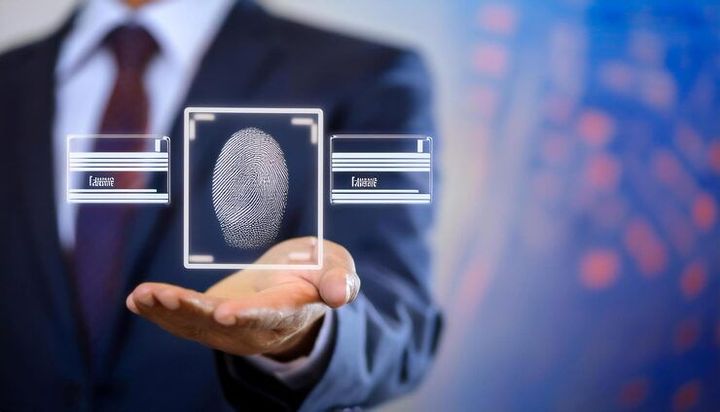
- Fingerprint authentication
- Biometric authentication
- Multi-factor authentication
- One-time verification codes
- Database validation
- Artificial intelligence-assisted document analysis
- Liveness detection
- Risk assessment and fraud detection
Main Types or Categories
Document-Based Identity Verification
This method verifies official documents such as passports, national identity cards, driver's licenses, or residence permits. Advanced scanning technologies examine security features, document quality, and authenticity.
Biometric Identity Verification
Biometric verification uses unique physical characteristics, including fingerprints, facial recognition, iris patterns, or voice recognition. Since these characteristics are difficult to duplicate, biometric methods provide an additional layer of protection.
Multi-Factor Identity Verification
Multi-factor verification combines two or more verification methods. For example, a user may enter a password, verify a fingerprint, and confirm a code received on a mobile device before access is granted.
How It Works (Step-by-Step)
- The individual submits identification information or an official document.
- The verification platform captures images or personal details securely.
- Artificial intelligence analyzes the document for authenticity and quality.
- Biometric authentication compares facial features or other unique characteristics when required.
- Verification tools compare the information with trusted databases where appropriate.
- Risk analysis checks for suspicious activity or inconsistencies.
- The identity is confirmed if all verification requirements are successfully completed.
Benefits and Advantages
Identity verification provides important advantages across many industries.
- Reduces identity fraud
- Protects sensitive personal information
- Improves account security
- Supports regulatory compliance
- Builds confidence in digital transactions
- Protects financial institutions from unauthorized access
- Reduces manual verification effort
- Supports secure remote onboarding
- Improves customer experience through faster verification
- Strengthens overall cybersecurity
Practical Usage Guide or Best Practices
Follow these practical recommendations when completing identity verification.
- Use clear and valid identification documents.
- Ensure photos are taken in good lighting.
- Keep personal information accurate and up to date.
- Enable multi-factor authentication whenever available.
- Protect passwords using strong combinations.
- Never share verification codes with others.
- Review account activity regularly for unusual behavior.
- Update identification records whenever personal information changes.
Real-World Examples and Applications
Banking and Financial Institutions
Banks use identity verification before opening new accounts, approving digital transactions, or providing access to online banking platforms. This helps reduce financial fraud and strengthens customer security.
Healthcare
Healthcare providers verify patient identities before granting access to medical records, appointments, and digital health platforms. Accurate verification helps protect confidential medical information.
Remote Employee Access
Organizations verify employee identities before allowing access to cloud platforms, internal networks, and confidential business information. Multi-factor authentication helps reduce unauthorized access risks.
Important Factors to Consider
Several considerations influence the effectiveness of identity verification.
- Accuracy of submitted documents
- Data privacy protection
- Biometric data security
- Compliance with legal regulations
- User convenience
- Verification speed
- Fraud detection capabilities
- Secure storage of personal information
- Accessibility for different users
- Continuous monitoring of security risks
Common Challenges and Easy Solutions
Challenge: Poor Document Image Quality
Solution: Capture images in bright lighting and ensure all document details are clearly visible.
Challenge: Identity Fraud Attempts
Solution: Combine document verification with biometric authentication and liveness detection.
Challenge: Forgotten Authentication Credentials
Solution: Use secure recovery methods and enable additional verification options.
Challenge: False Verification Failures
Solution: Review submitted information carefully and repeat the verification process using higher-quality images.
Challenge: Privacy Concerns
Solution: Use trusted verification platforms that follow strong data protection standards and secure encryption practices.
Future Trends and Industry Insights
Identity verification continues to evolve with advances in artificial intelligence, machine learning, automation, and cybersecurity.
Artificial intelligence is improving document analysis by identifying forged documents and detecting unusual patterns with greater accuracy. Machine learning continuously improves verification models as new fraud techniques emerge.
Decentralized digital identity solutions are gaining attention because they give individuals greater control over their personal information. Biometric authentication is also becoming more accurate through improved facial recognition, voice recognition, and fingerprint technologies.
Cloud-based verification platforms, automated compliance checks, behavioral analytics, and advanced fraud detection tools are expected to become increasingly common across financial institutions, healthcare organizations, government agencies, educational institutions, and digital platforms.
Key Takeaways
- Identity verification confirms that a person is who they claim to be.
- Multiple verification methods improve overall security.
- Biometric authentication provides an additional layer of protection.
- Artificial intelligence helps detect fraudulent documents.
- Multi-factor authentication reduces unauthorized access.
- Identity verification supports secure digital transactions.
- Regular security updates strengthen long-term protection.
- Future verification systems will become more intelligent and automated.
Frequently Asked Questions (FAQ)
What is identity verification?
Identity verification is the process of confirming an individual's identity using documents, biometric authentication, or other trusted verification methods.
Why is identity verification important?
It helps protect personal information, reduces fraud, improves cybersecurity, and supports secure digital interactions.
What is biometric authentication?
Biometric authentication verifies identity using unique physical characteristics such as fingerprints, facial recognition, iris patterns, or voice recognition.
What is multi-factor authentication?
Multi-factor authentication requires two or more verification methods before granting access to an account or platform.
Where is identity verification commonly used?
It is widely used in banking, healthcare, government agencies, education, telecommunications, travel, insurance, and online platforms.
How does artificial intelligence improve identity verification?
Artificial intelligence analyzes documents, detects fraudulent activity, improves facial recognition accuracy, and strengthens automated verification processes.
Can identity verification help reduce fraud?
Yes. Combining document verification, biometric authentication, and risk analysis significantly reduces identity fraud attempts.
What is the future of identity verification?
Future developments include decentralized digital identities, stronger biometric technologies, artificial intelligence-driven fraud detection, continuous authentication, and improved privacy protection.
Conclusion
Identity verification has become a fundamental part of modern digital security. By combining official document verification, biometric authentication, artificial intelligence, and multi-factor authentication, organizations can protect sensitive information while improving trust and reducing fraud.
As digital interactions continue to expand across industries, identity verification will remain an essential tool for protecting individuals, organizations, and critical systems. Understanding its principles, technologies, and best practices helps people navigate today's connected world with greater confidence and security.