Exploring Uninterruptible Power Supply Systems: Solutions
Uninterruptible Power Supply (UPS) systems play a critical role in maintaining electrical continuity during power disturbances.
Whether supporting data centers, healthcare facilities, industrial operations, telecommunications infrastructure, or commercial buildings, UPS systems help ensure that essential equipment continues operating when utility power becomes unstable or unavailable.
Modern UPS systems do much more than provide backup power. They also improve power quality, protect sensitive equipment from voltage fluctuations, reduce operational disruptions, and support business continuity. As digital infrastructure expands and organizations become increasingly dependent on electronic systems, UPS technologies continue to evolve through automation, intelligent monitoring, lithium-ion battery technology, and advanced energy management platforms.
Understanding how UPS systems work, their various types, applications, and future developments can help organizations make informed decisions about power protection strategies.
Quick Facts Table
| Topic | Purpose | Key Components | Main Benefits | Common Applications |
|---|---|---|---|---|
| Uninterruptible Power Supply Systems | Maintain power during outages and disturbances | Batteries, Rectifiers, Inverters, Static Switches, Monitoring Systems | Power continuity, equipment protection, improved reliability | Data centers, hospitals, telecommunications, industrial facilities, commercial buildings |
What Is an Uninterruptible Power Supply System?
An Uninterruptible Power Supply system is an electrical system designed to provide continuous power to connected equipment during utility power failures, voltage fluctuations, surges, sags, and other power quality disturbances.
Unlike traditional backup generators that require startup time, UPS systems provide immediate power through stored energy sources such as batteries. This allows critical equipment to continue operating without interruption.
UPS systems are widely used wherever continuous electrical availability is essential for operations, safety, data protection, or communication.
Why Are UPS Systems Important?
Power disruptions can affect sensitive electronic equipment and critical operations. Even a brief interruption may impact data processing, communication systems, industrial controls, or medical equipment.
UPS systems help by:
- Providing continuous electrical power
- Protecting against voltage fluctuations
- Supporting operational reliability
- Reducing equipment downtime
- Improving power quality
- Supporting emergency operations
- Protecting digital infrastructure
- Enhancing electrical resilience
UPS Systems Facts
- Digital infrastructure continues to increase demand for power protection technologies.
- Data centers rely heavily on UPS systems for operational continuity.
- Lithium-ion battery adoption is expanding in modern UPS installations.
- Intelligent monitoring improves UPS performance visibility.
- Power quality management is becoming increasingly important for sensitive electronic equipment.
- Hybrid energy systems are influencing UPS technology development.
Understanding the Concept
UPS systems act as an intermediary between utility power and connected equipment. Their primary objective is to maintain continuous power when disruptions occur.
A typical UPS continuously monitors incoming electricity. If voltage instability, outages, or frequency variations occur, the system automatically switches to stored energy and maintains power delivery.
Modern UPS systems also perform power conditioning functions by correcting voltage irregularities and filtering electrical disturbances.
What Is a UPS System?
A UPS system is an electrical device that provides backup power and power conditioning to connected equipment when utility power becomes unavailable or unstable.
What Does a UPS System Do?
A UPS system stores energy and delivers it instantly when electrical disturbances occur. It also helps maintain stable voltage and frequency levels for connected equipment.
What Is Power Conditioning?
Power conditioning refers to improving electrical power quality by reducing surges, voltage fluctuations, harmonic distortion, and electrical noise.
Key Components of UPS Systems
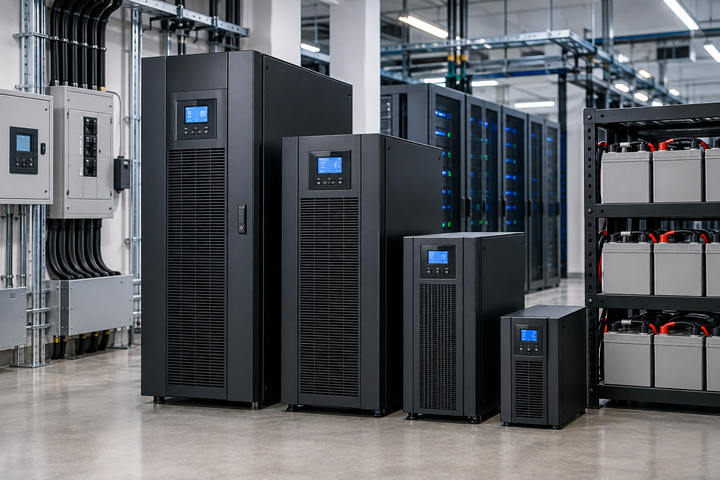
A modern UPS system typically includes:
- Battery bank
- Rectifier
- Inverter
- Static bypass switch
- Monitoring platform
- Control circuitry
- Power distribution equipment
- Cooling systems
- Communication interfaces
- Battery management systems
Each component contributes to maintaining continuous and reliable power delivery.
UPS Components Overview Table
| Component | Primary Function |
|---|---|
| Battery Bank | Stores backup energy |
| Rectifier | Converts AC power to DC |
| Inverter | Converts DC power back to AC |
| Static Bypass Switch | Provides alternate power path |
| Monitoring Platform | Tracks system performance |
| Battery Management System | Monitors battery health |
| Cooling System | Maintains operating temperatures |
Main Types of UPS Systems
Offline UPS Systems
Offline UPS systems provide basic power protection. Under normal conditions, connected equipment receives utility power directly.
When a disruption occurs, the UPS switches to battery power.
Line-Interactive UPS Systems
Line-interactive systems regulate voltage fluctuations without immediately relying on batteries. These systems are commonly used in office environments and network infrastructure.
Online UPS Systems
Online UPS systems continuously process incoming power through rectifiers and inverters. This design provides the highest level of protection and power quality.
UPS Types Comparison Table
| UPS Type | Protection Level | Transfer Time | Common Applications |
|---|---|---|---|
| Offline UPS | Basic | Short Delay | Personal Computers |
| Line-Interactive UPS | Medium | Minimal Delay | Offices and Networks |
| Online UPS | High | Near Continuous | Data Centers and Healthcare Facilities |
How UPS Systems Work
- Utility power enters the UPS system.
- The rectifier converts incoming AC power into DC power.
- Batteries are charged continuously.
- The inverter converts DC power into stable AC output.
- Monitoring systems track voltage, frequency, and performance.
- During power disruptions, batteries instantly provide energy.
- The inverter continues supplying electricity to connected equipment.
- Once utility power stabilizes, batteries recharge automatically.
Benefits and Advantages
UPS systems provide several important advantages:
- Continuous power availability
- Improved power quality
- Protection from electrical disturbances
- Enhanced operational reliability
- Reduced downtime
- Improved equipment lifespan
- Better data protection
- Enhanced infrastructure resilience
- Support for critical operations
- Improved monitoring capabilities
- Greater electrical stability
- Protection for sensitive electronics
Industry Applications
Data Centers
Data centers use UPS systems to support servers, storage devices, networking infrastructure, and cloud platforms.
Healthcare Facilities
Hospitals utilize UPS systems for medical imaging equipment, monitoring devices, and critical healthcare operations.
Telecommunications
Communication networks rely on UPS systems to maintain connectivity during power disruptions.
Industrial Facilities
Manufacturing operations use UPS technologies to support automation systems and production equipment.
Financial Institutions
Financial infrastructure depends on uninterrupted power for transaction processing and communication systems.
Commercial Buildings
UPS systems help maintain building operations, emergency systems, and communication networks.
Utility Control Centers
Control centers use UPS systems to support monitoring platforms and operational technologies.
Real-World Examples and Applications
Example: Data Center Operations
A data center utilizes online UPS systems to maintain power continuity for servers and networking equipment during utility outages.
Example: Hospital Infrastructure
Medical facilities use UPS technologies to support diagnostic equipment and patient monitoring systems.
Example: Industrial Automation
Manufacturing plants utilize UPS systems to prevent production interruptions caused by electrical disturbances.
Important Factors to Consider
Organizations evaluating UPS systems should consider:
- Load requirements
- Runtime requirements
- Battery technology
- Scalability
- Efficiency
- Power quality requirements
- Environmental conditions
- Maintenance requirements
- Infrastructure compatibility
- Monitoring capabilities
Common Challenges and Solutions
| Challenge | Impact | Solution |
|---|---|---|
| Power Outages | Operational Disruption | UPS Battery Backup |
| Voltage Fluctuations | Equipment Stress | Voltage Regulation |
| Battery Aging | Reduced Runtime | Battery Monitoring |
| Electrical Noise | Power Quality Issues | Power Conditioning |
| Equipment Downtime | Productivity Loss | Redundant UPS Architecture |
UPS Best Practices
- Monitor battery health regularly.
- Test backup systems periodically.
- Maintain proper ventilation.
- Review runtime requirements annually.
- Monitor load growth trends.
- Implement predictive maintenance practices.
- Maintain environmental controls.
- Update monitoring platforms regularly.
- Document maintenance activities.
- Train personnel on emergency procedures.
Maintenance Approaches
Preventive Maintenance
Scheduled inspections and testing performed at regular intervals.
Predictive Maintenance
Uses operational data and analytics to identify potential failures before they occur.
Condition-Based Maintenance
Maintenance activities are based on equipment condition and performance indicators.
Reliability-Centered Maintenance
Focuses on maintaining the most critical components and operational functions.
Future Trends and Industry Insights
UPS technology continues to evolve through several emerging developments.
Lithium-Ion Battery Adoption
Lithium-ion batteries are increasingly used because of their longer lifespan and improved energy density.
Intelligent Monitoring Platforms
Advanced monitoring technologies provide deeper visibility into UPS performance and battery health.
Artificial Intelligence Analytics
AI-driven analytics improve predictive maintenance and operational optimization.
Digital Twin Technology
Digital twins enable virtual monitoring and performance simulation of UPS infrastructure.
Energy Storage Integration
UPS systems are increasingly integrated with broader energy storage strategies.
Smart Facility Infrastructure
Connected facilities utilize intelligent UPS monitoring and automation technologies.
Edge Computing Support
Growing edge computing deployments require distributed power protection solutions.
Expert Insights
UPS systems have evolved from simple backup devices into comprehensive power protection platforms. Modern installations combine energy storage, intelligent monitoring, automation, and advanced power conditioning technologies to support increasingly complex digital environments.
As organizations continue expanding digital infrastructure, UPS technologies will remain essential for maintaining operational continuity, protecting equipment, and supporting resilient electrical infrastructure.
Key Takeaways
- UPS systems provide continuous power during electrical disturbances.
- Batteries, rectifiers, and inverters are core system components.
- Online UPS systems provide the highest level of protection.
- Power conditioning improves electrical quality.
- UPS systems support critical infrastructure across many industries.
- Intelligent monitoring enhances operational visibility.
- Predictive maintenance improves reliability.
- Lithium-ion technology is influencing future UPS development.
- Modern UPS systems support digital infrastructure growth.
- Future systems will become increasingly intelligent and connected.
Frequently Asked Questions (FAQ)
What is a UPS system?
A UPS system provides continuous electrical power during utility power disruptions.
What does UPS stand for?
UPS stands for Uninterruptible Power Supply.
How does a UPS system work?
A UPS stores energy in batteries and automatically supplies power when electrical disruptions occur.
What are the main types of UPS systems?
The three primary types are Offline UPS, Line-Interactive UPS, and Online UPS systems.
What is an online UPS?
An online UPS continuously supplies power through inverter-based operation and provides high-level protection.
What is a line-interactive UPS?
A line-interactive UPS regulates voltage variations while providing battery backup when necessary.
What is power conditioning?
Power conditioning improves power quality by reducing voltage fluctuations and electrical disturbances.
What is a battery management system?
A battery management system monitors battery performance, health, and charging conditions.
Why are UPS systems important for data centers?
They help maintain operational continuity and protect critical digital infrastructure.
What industries use UPS systems?
Healthcare, telecommunications, manufacturing, finance, utilities, education, and commercial facilities.
What is predictive maintenance?
Predictive maintenance uses operational data to identify potential equipment issues before failures occur.
What is a static bypass switch?
A static bypass switch provides an alternate power path when required.
What battery technologies are used in UPS systems?
Lead-acid and lithium-ion battery technologies are commonly used.
How do UPS systems improve power quality?
They help regulate voltage, filter disturbances, and maintain stable electrical output.
What is the future of UPS technology?
Future UPS systems will increasingly incorporate artificial intelligence, advanced monitoring, digital twins, and integrated energy storage technologies.
Conclusion
Uninterruptible Power Supply systems are an essential component of modern electrical infrastructure. By providing continuous power during outages and improving power quality, UPS technologies help support critical operations across data centers, healthcare facilities, industrial environments, telecommunications networks, and commercial buildings.
As digital infrastructure continues to expand, UPS systems are evolving through intelligent monitoring, advanced battery technologies, automation, and integrated energy management approaches. Understanding these systems provides valuable insight into the technologies that support reliable and resilient electrical operations.